Category Archives: essays by todd moore

gimme danger

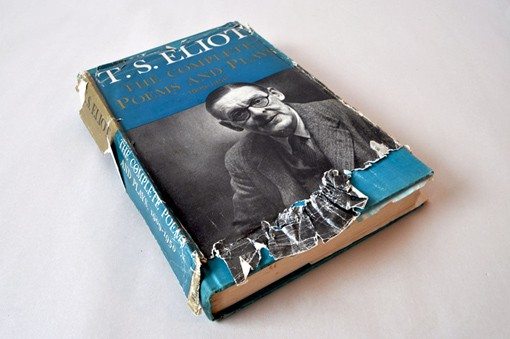
book-eliot

Not

long ago while rummaging around in a huge dark chaotically claustrophobic bookstore I pulled T. S. ELIOT: THE COMPLETE POEMS AND PLAYS off a shelf and found a dead cockroach on page 37, pasted to the page just above the title The Waste Land. It was a large cockroach even in its shrunken, blackened state, the shell crumbling, the legs all but gone. It almost looked like a decaying question mark, an epitaph that Eliot hadn’t even considered.

I almost bought the book just because of the cockroach. Then decided that I had enough cockroaches at home, both alive and dead. Not to mention books by and about Eliot. Still, this presented an interesting problem. Why did this insect just happen to be crushed on the first page of The Waste Land? Had some half baked trickster caught it and slammed the book shut on its quivering body or had it simply crawled into the book while it was spread open and been accidentally killed when an inattentive reader flipped the book cover shut?

Personally, I took the dead cockroach to be some kind of sign, some premonition for the coming end of poetry in the twenty first century. And what better portent than a dead cockroach stuck to the first page of The Waste Land? I fell in love with the perversity, the fucked audacity of it. In a way it’s almost poetic. And, maybe that might be the supreme irony. A metaphor signalling the end of poetry. Or, could it almost be signalling the beginning of an undreamt anarchy?

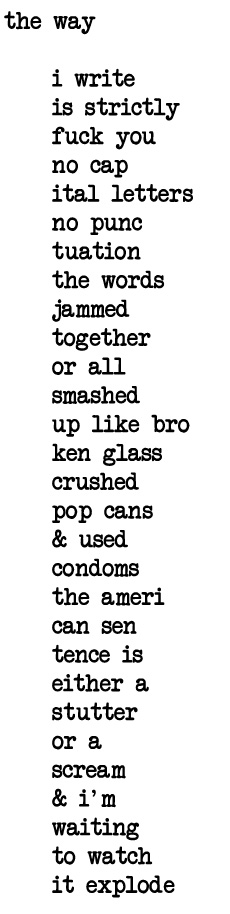
If you are a writer at the deadfuck end of the twentieth century and the buttfuck beginning of the twenty first century then you are pretty much aware that you are working in the salvage yard of language. Salvage yard might be a polite way of referring to the shitpile alphabet we all muck around in. Or, what’s left of it.

For every hundred people who actually read poetry there are probably ten million people who listen to rock n roll. For every thousand people who know the author of HOWL there are probably fifty million people who can tell you who made the song Kentucky Rain famous. For those ten thousand people who had to memorize Stopping By Woods On a Snowy Evening, there are a hundred million people who have I Want To Hold Your Hand imprinted on their psyches.

Except for the books of Charles Bukowski, the phenomenon of HOWL, and ON THE ROAD which isn’t poetry but comes damned close to it in some places, nobody buys poetry and nobody reads poetry all that much. If at all. Unless it is the lyrics to some pop song, unless it is associated with Kurt Cobain or maybe Bob Dylan.

Contemporary poetry, the kind you might find in The American Poetry Review or Poetry Magazine or The Paris Review is mainly beyond boring. It’s so boring that I doubt that even any poets publishing in those journals ever read it. Try reading a John Ashbery poem or a Robert Pinsky poem or a Mark Strand poem and you’ll see what I mean.

This is the kind of poetry taught in writing schools. This is the kind of poetry that the big prizes are awarded to. This is the kind of poetry that gets put on the shelves of Barnes & Noble and Borders. This is the kind of poetry that is taught in English Departments and is written about by critics. Critics that no one except other critics bother to read. This is the poetry of the Canon. This is the reason that poetry is a rotting corpse propped up in the middle of our culture and ultimately placed at the dead center of Western culture.

And, anyone with half a brain and what passes for a university education knows that reading this kind of poetry is a futile endeavor. Futile because it puts the reader to sleep. Futile because it basically offers the reader nothing. No passion, no risk, no danger, no love, no violence, no threat whatsoever. If I gave you the opportunity to read the latest book of poetry by Susan Howe or a chance to see the latest thriller by the Coen brothers, what would you choose? The funny thing is that I marginally like some of Howe’s work, but I’d choose the Coen brothers. Because going to the movies is maybe among the last tribal adventures readily available to us.

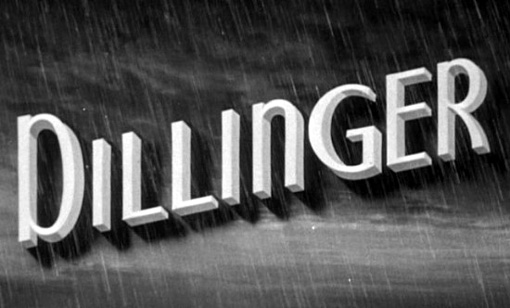
There really isn’t much poetry out there that could compete with 3:10 TO YUMA, NO COUNTRY FOR OLD MEN, or THERE WILL BE BLOOD. Sometime around the 1980s or early 90s american poetry caught language leukemia, cancer of the word. By that time it had stopped being tribal while rock n roll and the movies became totally tribal. American poetry shortly after HOWL had also stopped being primal. Primal in the sense that it came passionately and irreverently right out of the blood. It had stopped being risky. Except for Bukowski. Except for levy. Except for Micheline. The early Outlaw Poets and those who came after. Kell Robertson, Tony Moffeit, S. A. Griffin, John Macker. Except for DILLINGER. Except for the archetypal volcano boiling at the heart of DILLINGER.

The Outlaw Poets are the only ones left who write with passion, who write with authenticity, who write with and through and painted with blood. Mainstream american poetry has become too polite. Mainstream american poetry has become too safe. Mainstream american poetry has become too educated. Mainstream american poetry has become cluttered with too many college degrees. The last thing we need in poetry is sophistication. The last thing we need in poetry is good taste. Fuck good taste. I’d rather dance with the bone eaters. The last thing we need in poetry is intellectual allusion. I don’t give a fuck about the way a line from FOUR QUARTETS might play into a postmodernist poem. I don’t give a fuck about the way a line from Neruda might become a major theme in a sonnet. I don’t give a fuck about the way a line from Ariel resonates with the theme of suicide in a lyric. The truth is most first class allusions are nearly always better than the poems they appear in. The Waste Land is the major and best exception to that rule. Most great literary allusions only serve to prop up second and third rate poetry. Or, they chase us back to the poems and stories they came from, leaving the poems they appear in nearly forgotten.

Mainstream american poetry has become a literary landfill. A huge pulsing dump where there is no smoke, no fire, because nothing is burning. It is just an enormous stinking corpse dumped at the septic center of our culture. And, while we may survive as a culture through great movies and music that speaks primarily to the blood and the crotch, we still need the kind of primal danger, the kind of primal excitement that comes out of the written and spoken work. We need more than the black cockroach pasted above the title of The Waste Land. We need the kind of poetry that slices us right down to the veins and leaves us shaking. We need sweat and we need sex and we need danger we need crotch and we need the violences of all our failed and pulverized dreams conjured into something more than the tame shit that major american presses are currently offering. We need it as raw and real as RESERVOIR DOGS or HEAT or DIABOLIQUE or FARGO or M.

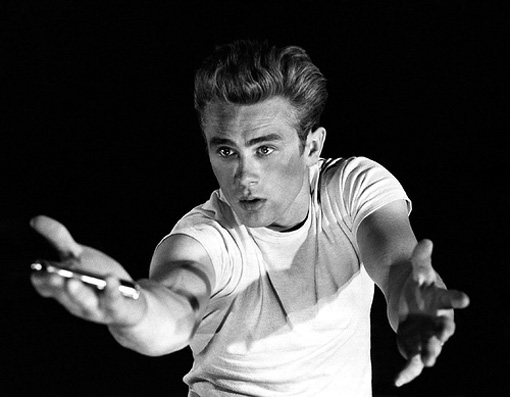
Fuck all that shit about breath and breaking the line and erasure in poetry. Gimme danger, gimme blood, gimme cunt, gimme speed, gimme a fist in the face, gimme a slug in the guts, gimme the edge where James Dean stands staring at the wreck below and the desolation of the Pacific Ocean. Gimme the guts and the bravery to write about the hope and oblivion of all of our dreams, savage and bloody and howling and american.
 

1 Comment

Filed under essays by todd moore

falling in love with danger

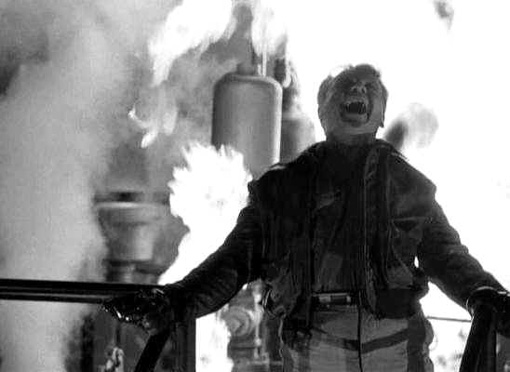
Falling in love with danger. Falling in love with the passion of danger. Falling in love with the thrust and plunge of danger. Falling in love with rain painted pistols in PUBLIC ENEMY. Falling in love with the unmistakable sound of a switchblade knife when it clicks wide open in REBEL WITHOUT A CAUSE. Falling in love with Chandler’s THE BIG SLEEP, Bogart’s voice going rich with the possibility of assault when he talks about the casual syllables of desire and death. Falling in love with Cody Jarrett’s look and howl of the purest of crazy in WHITE HEAT. Cagney doesn’t know it but when he opens his mouth to yell, Top of the world, a slice of dark energy spills out and dances across one of the gas tank’s guardrails.

Falling in love with danger is what being an Outlaw Poet is all about. Falling in love with all of the danger that america can offer. The midnight promise of it. Falling in love with all of those dangerous black and white movies. Peter Lorre saying Adio Casablanca. When I was a kid, I remember the thrill of entering a movie theater, especially in the summer, and getting hit with that blast of refrigerated air which smelled of popcorn, perfume, restroom cleaning fluids, rancid candy and gum that had been stuck to the floors for years, and if dreams could smell, then an ocean of dreams packed with terrible longing.

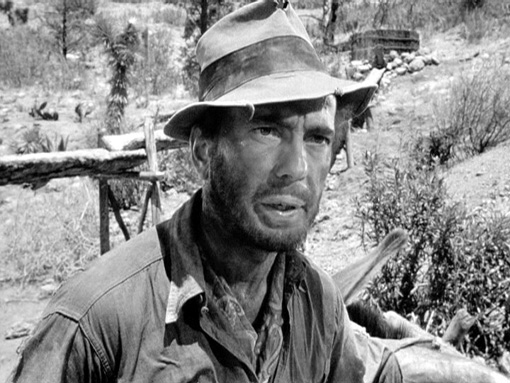
Falling in love with that zip gun agonized longing because that is really where america dreams. The longing for fame and money and celebrity and love the suffocating longing for something. Dancing for something dancing for nothing in THEY SHOOT HORSES DON’T THEY. Brando telling Rod Steiger in ON THE WATERFRONT that he could have been somebody instead of a palooka. Gatsby showing Nick Carraway war medals and a drawer full of silk shirts. Gatsby has the strong after shave stink of money on him. The look Bogart gets in his eyes in THE TREASURE OF SIERRA MADRE when he talks about gold. Just the way he says the word gold still sends a shiver along my spine. And, Bukowski in all of those interviews that he gave, especially the cracked and beaten up early look of him where he somehow knows he is on the verge of something big, even in his most out of control and boozed up moments like when he kicks his girl friend off the couch, kicks her to the floor the sheer rage of him then and the rage of what he somehow realized was happening that he was becoming famous and then more famous and more famous and that fame had somehow hinged on just how fucked up he looked how really trainwrecked he appeared on the screen. In those electric moments both Bukowski and Bogart became spiritual brothers. The dreamed in blood and they smelled of blood.

Falling in love with an engine cranked american frenzy. Falling in love with that pure american frenzy which is part of the outlaw part of the noir part of the renegade part of that thing in the early Jack Palance when he was speaking as soft and as low and as controlled as possible but you can practically see that danger and that rage well up in him and it’s in those moments he comes as close to a caged jaguar as anything, a caged black jaguar pacing back and forth through the intensity of its own shadow. And when he did finally explode something in me exploded as well. For one brief second, something short circuited and blew all to hell.

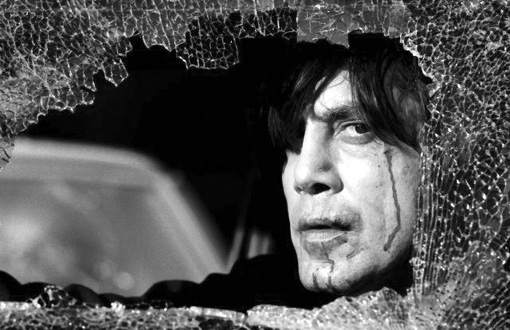
Falling in love with danger because danger is outlaw pure outlaw in this our forever lost midnight republic of america. Falling in love with Anton Chigurh the serial killer of NO COUNTRY FOR OLD MEN. Falling in love with the look of Chigurh who is played by Javier Bardem. I have seen this film several times and each time I watch it I can’t take my eyes off the way Bardem plays it. He could almost be another Jack Palance in the way that he holds himself, the way that he talks, the self assured way that he conducts his ritual killings with a cattle stun gun. The performance is absolutely low key the rage held back in coiled back into a kind of bomb ticking silence. Bardem got it, Bardem reached down into the rich murderous soil of america and pulled it out the way a sorcerer might pull a demon out of his clothes.

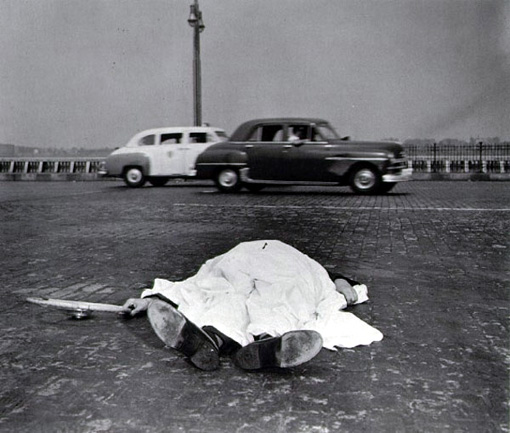
Falling in love with Weegee’s photography. The quick snapshots of New York street hustlers, hookers, pimps, freaks, con artists, the down and out, people sleeping on fire escapes, corpses on the sidewalk. I can’t get the photo out of my mind, the one of a dead gunman lying face down on the cement, his one hand reaching out for a pistol that has slid several feet in front of him. Weegee understood the american danger I am talking about. Weegee understood all of that pent up longing for something anything give it to me one last go around for the money the fame baby and he got all of that revved up juice into his snapshots. Photos that he developed in the trunk of his car. The trunk of his car which became the origins for all of america’s dark photogenic dreams. That and the room where Jim Thompson typed his novels. And, fuck yeah, it is typing, typing so hard and fast for the fame and the glory and the money that the fingers ache with the energy and love of the story and the longing shoved back inside the story. And, the renovated chicken house where Kell Robertson lives and writes poetry about being fucked up and neglected and lost in the west. Those caves of american danger and american darkness and american outlaw dark essence of outlaw.

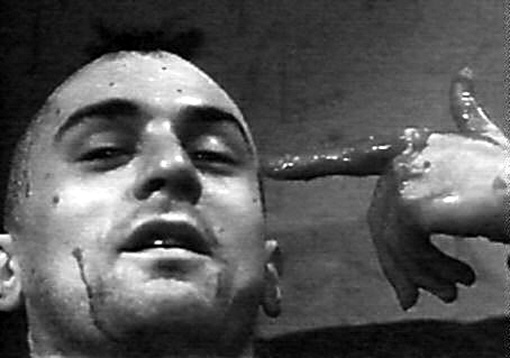
Falling in love with Steve Buscemi’s lurking menace in RESERVOIR DOGS and Harvey Keitel’s corpse and blood knowledge in PULP FICTION and Joe Pesci’s mercurially dangerous killer in GOODFELLAS and Robert DeNiro’s self righteous gunman in TAXI DRIVER. And, knowing way beyond everyday knowing that these archetypes are all variations of the primal american outlaw. And, somehow, secretly, subversively we love them truly and deeply, one and all. We couldn’t do without them.

At the end of NO COUNTRY FOR OLD MEN while the screen credits were rolling, a friend leaned over in his seat and said, They didn’t catch the bad guy. My only reply was, There is no redress for evil in america. But, I think the problem is much more complex than that. I think the reason that the Coen brothers and Cormac McCarthy who wrote the novel let Chigurh escape whatever passes for justice in this country is because on some malevolently transcendental level, Chigurh is us. We love it when Bruce Willis shoots down helicopters and blows up buildings in the movies. We grant those kinds of action heroes a certain violent immunity. The only difference between a Bruce Willis character and an Anton Chigurh is that Chigurh just simply kills for the purity of killing. His presence has something to do with the definition of an america that is almost too dark too demonic to comprehend. You can only get it viscerally. Through the eyes through the skin.

When NO COUNTRY FOR OLD MEN concludes, Tommy Lee Jones who plays the aging sheriff retires and when he is asked why, he says that he is overmatched. However I think maybe on some deeper psychological level he didn’t completely understand, he began to realize that in another incarnation, he might have become an Anton Chigurh and that thought scared him even more than Chigurh ever could.

Falling in love with the danger that lives in outlaw poetry. Falling in love with outlaw poetry because it is the only poetry in america now that resonates with that terrible pentup longing that america is famous for. A longing that the first paragraph of RED WIND is saturated with. A longing beyond longing in THE KILLER INSIDE ME and BODY HEAT and THE SUN ALSO RISES and THE MALTESE FALCON. The kind of longing always brings danger and the promise of murder.

Falling in love with danger because it is the only thing in america that resonates with energy. Just as in america, the dangerous man is the only one who is truly alive. And, danger is the life blood of everything that passes for poetry anywhere on the face of the earth. Meursault is dangerous. Strelnikov is dangerous. M is dangerous. Doctor Benway is dangerous. Dillinger will always be dangerous. Guernica remains tremendously fascinating not because of its politics but because of its explosive depiction of danger and death. Guernica is a constellation of continuing danger. Outlaw Poetry is dangerous because it goes to the deepest part of our cultural dreams. And it is doubly dangerous because it is also a weapon. The poem is the fastest gun any poet can know.


1 Comment

Filed under essays by todd moore

the dark country

They found a body in the Rio Grande today. The back of the head was blown off. Most likely by a shotgun at very close range.

I am haunted by the ghosts of the outlaw poets. I am haunted by certain lines from their renegade poems. d.a. levy stands in the doorway talking. He says, when i look for the quiet place, i sometimes find a pale horse and ride to the clouds. I love those lines and I love THE BOOK OF THE NORTH AMERICAN DEAD where they came from. I am haunted by the ecstatically apocalyptic faces of the outlaw poets. Haunted by the broken clown face of Jack Micheline haunted by the punched up potato face of Gregory Corso haunted by Tony Moffeit’s Billy the Kid’s face haunted by Kell Robertson’s weatherbeaten John Grady Cole face haunted by Mark Weber’s jazztrickster thousand riff face haunted by Michael J. Pollard in John Dorsey’s face haunted by S. A. Griffin’s pale rider’s face haunted by Raindog’s ride the dark country face haunted by Dennis Gulling’s Wisconsin Death Trip face haunted by Ron Androla’s weed and whiskey face haunted by John Macker’s Sam Peckinpah face.

Haunted by the faces and poems of all the best outlaws. Haunted by an america that is so Guernica broken it almost could never be painted again. And yet absolutely must be. Haunted by the rotting head of a coyote I once saw spiked on the top of a fence pole out in the badlands. Haunted by Doc Holliday’s Wells Fargo shotgun haunted by Billy the Kid’s Colt 41 haunted by Frank Hamer’s Browning Automatic I love you rifle haunted by all of Elmer Keith’s long magnum mother immortal dreams haunted by William S. Burroughs’ shaman danced automatic.

Haunted and in love with nightmare raving in an america of love and death hauntings. Haunted by the way Heath Ledger painted his mouth a ripped garish red for his Joker role in Batman. Haunted with everything that looks like a wound in an america where the tongue loves to go in explore the blood. Outlaw america, bullet wound america, Dillinger america.

I heard the woman being strangled by a toaster cord. It sounded more like a round of rough sex.

I am haunted when I read MALDOROR I am haunted when I read ADVENTURES IN THE GUNTRADE I am haunted when I read BLUES FOR BILLY THE KID I am haunted when I read A SEASON IN HELL I am haunted when I read THE WASTE LAND I am haunted when I read HOWL I am haunted when I read I WANT A NEW GUN I am haunted when I read THE KID IN AMERICA. I have to read all of the outlaw american kids. I have to know where they live.

The first time I read A SEASON IN HELL I had trouble staying in a chair. I kept getting up and pacing around. I kept wanting to read the lines aloud. I kept wanting the walls to read with me. I kept walking out into the darkest corridors of the hotel to see if Rimbaud was maybe crouched in a corner with a gun in his hand. The first time I read HOWL was in a car, Dickie Boy was driving and I was reading the lines aloud to him and he kept saying Christ because we’d never heard anything like it and pretty soon I was feeding him lines and he was yelling them out the window to people on the street. When I stop to think about it now I truly believe that Ginsberg could just as easily have written HOWL in Paris and Rimbaud would have had no trouble writing A SEASON IN HELL in San Francisco.

When the next door neighbor hanged herself from a basement beam, I heard her kick the folding chair over.

And when I was writing THE CORPSE IS DREAMING I got so wired into the narrative flow that the skin on my back was starting to shake and the movement went all down my arms and I could even feel it in my hands. I could feel Dillinger’s death voice moving all over me his breath or no breath covered me and even after I stopped writing it was still going inside as though pieces of his dying had gotten into my muscles and bones was inextricably tangled into all of my dreams.

And, the whole time I remember little places in between getting the lines where I wondered what Raskolnikov would have thought about this shot to hell mumbling, where I wondered what Hemingway would have thought about this dead man talking, where I wondered if Faulkner would have gotten into the broken stream of this fractured blood whispering, where I wondered if Nietzsche would have put his Zarathustra mask on for the death death death tick of Dillinger’s raving.

In John Macker’s most recent book WOMAN OF THE DISTURBED EARTH, Turkey Buzzard Press, ten dollars, the poem Peckinpah’s Typewriter has these lines. I’ve ascribed all sorts of/snakebit tequila/mysticism to it. He’s writing about finding an old typewriter out behind his New Mexico house and imagining it’s Peckinpah’s Typewriter. All by itself, the poem stands on its own as a solid piece of work. However, on another level, the poem becomes something like one of the key metaphors for Outlaw Poetry. Inherent in that typewriter image are all the gone dreams and wrecked alphabets of a former america. In this respect the poem assumes an important centrality to any understanding of what Outlaw Poetry is all about.

And, what it is about is somehow rescuing Peckinpah’s Typewriter, even if it doesn’t work, even if all the keys have been forever rusted together. Even if the carriage is frozen and fifty years of dirt are packed inside it. Peckinpah’s Typewriter is the symbol for an older more primal american alphabet and Macker, by example, is asking us to rescue that alphabet, is asking us to revive that old fugitiveness, all those inspired “last gasp novels written/on the homicidal edge of/barstow in/motel rooms/that smell/of weaponized rhetoric &/apocalypse…” Essentially, Macker is calling for a more edgy dangerous poetry. A poetry that will to take huge chances because the stakes for writing poetry are really all or nothing.. You not only bet with your blood, you bet with your bones, your skin, your breath, your eyes.

Frankie T put the shotgun shell next to his ear, shook it, and said you can hear the powder moving around inside.

Writing an Outlaw Poem is a lot like getting into a souped up hotrod like James Dean did in REBEL WITHOUT A CAUSE and driving to the edge. Not just the edge of the poem, but to the edge of america, to the edge of the culture, to the edge of the enigmatic american nothing with no hope no possibility of ever returning. Once you are that far out you are gone.

When I wrote DILLINGER’S THOMPSON, I let Dillinger shoot off the locks on the doors of america’s cellars. The Thompson bucked fast in his hands oblivion was buried deep in his laugh. I let him continue firing until he blew the wooden doors themselves into big jagged splinters. When he finished, I went over and picked one out of the desperado grass. Then I walked to over what was left of the cellar door and looked down the steps. Those underground rooms were swimming with darkness.

When
Rainey got drunk he motioned me close and said don’t tell anyone I said this but when it gets dark I can hear the preacher from THE NIGHT OF THE HUNTER breathing behind the clothes in my closet and when I go to sleep he talks to me he tells me things from his dark country.


Leave a Comment

Filed under essays by todd moore

cold fire, molten ice

What I’m trying to imagine is the first time that Shakespeare realizes that Hamlet is Hamlet. What I’m trying to imagine is that moment when Shakespeare knows that Hamlet is something more than some lines in a play he’s writing. What I’m trying to realize is that instant when Shakespeare is having a drink with a friend and Hamlet walks past him in that tavern and then glances back. What I’m trying to imagine is Shakespeare waking up in the middle of the night to find Hamlet sitting on the edge of the bed.

Or, think of Dostoevsky and Raskolnikov. Dostoevsky is walking down a crowded city street and a nervous young man rushes past, half whispering under his breath and his coat parts for the briefest of seconds and Dostoevsky catches the shape and glint of a hatchet blade inside. Or, think of Raskolnikov following Dostoevsky down a shadowy alley, always just a few feet behind. Or, think of Raskolnikov sitting just a table away in a restaurant staring at Dostoevsky unblinkingly, staring and mouthing words that Dostoevsky is unable to make out. Or, think of Raskolnikov waiting on the street outside Dostoevsky’s apartment. Just waiting there and staring up at the window where Dostoevsky is watching just behind a curtain. And, in each of these instances Dostoevsky is beginning to feel something way back in his very core tremble a little.

And, maybe Huck Finn was always just underneath Mark Twain’s skin. A slight touch of him, a twitch, a nerve end quivering. And, whenever Twain went near a river or a stream he could feel Huck moving around restlessly inside. He’d seen a hundred Hucks, maybe even a thousand Hucks along the banks of the Mississippi, or on the San Francisco waterfront. A thousand Hucks just itching to light out for the territory, any territory so they could get the hell out because america is the place to escape from and the territory to escape to. And america is the territory of all territories, the hole in the wall for every outlaw poet and river rat in the world.

And, I’m trying to imagine Ahab in any given seaport lunging down the street on that whalebone leg. Lunging through mobs of seamen with a rage of energy piling out of his face. I’m trying to imagine Ahab asleep and his bed has become a whaleboat and the white whale is a solid wall before him and I’m trying to imagine Melville dreaming this. Or, it’s not really a dream but an assault of images coming at him while Hawthorne is trying to or trying not to explain the meaning of the Scarlet Letter and Melville doesn’t hear him or hears him and watches Ahab reaching for that white wall of fury. I’m trying to imagine that and while I see it I can feel Melville begin to shake imperceptibly. Hawthorne doesn’t notice it because Melville’s shaking takes place inside, originates from the marrow as the epicenter of all quakes and drives out toward the blood.

And, Ginsberg. I can’t imagine madness but I can imagine howling. I can see a mouth taking shape in the half dark. I can see the shape of the mouth and the way that it works against itself as though it is trying to eat itself, as though it is trying to devour itself in the american darkness. I can see Ginsberg pacing back and forth between his bed and his typewriter. He gets a line and types it out and the goose bumps are forming along both forearms and it is summer but suddenly he feels so cold with poetry that he has to walk to shake off the chill. And, then the words pile up inside him so much that he has to sit down and type and the typing is a form of his rage and his fury and he types as quickly as possible until his hands start shaking and then he has to go and sit on the bed and it is back and forth like this because the poem won’t let him be quiet or comfortable or warm and the mouth is back howling and trying to devour as much of itself as possible.

And, I can imagine Baudelaire walking in Paris. Just walking it is night and he is walking because any kind of movement will shake off the demons which are also the poems that he is getting always walking the night air is bracing but the poems are heating him up from the inside he loves that feeling and also the feeling that he can just reach out in the air and grab a magical sentence it is hovering near him above him swirling around him and he passes a prostitute she smiles at him and suddenly she is a poem and is in a poem and he is in love with the poem and her cheap perfume and the night it feels as though he is flying into and out of himself he is vibrating through a whole swarm of poems death and flowers and evil and love are his muses he is crawling with words.

I’m trying to imagine the very first time Cormac McCarthy channelled Judge Holden. By channel I mean saw, by channel I mean envisioned, by channel I mean discovered, by channel I mean beheld. And, yes, I know there was a real Judge Holden but that Judge could never have been the one McCarthy created. That Judge could never have been a seven foot tall albino with superhuman strength and total mythic and godlike knowledge. That Judge could never have been so murderous and immortal. I’m trying to imagine McCarthy maybe hiking out into the Sonoran Desert it’s a hot day and the heat is coming off the earth in waves and McCarthy is playing a game of pretend while he walks because it passes the time he pretends he is B. Traven and Fred C. Dobbs is walking toward him leading a pack mule loaded with gold dust and wouldn’t it be wonderful to come across a treasure like that what would he do with that much money and suddenly McCarthy finds himself walking in the shadow of a very tall man a man who is blindingly white but somehow needs no protection from the sun’s rays because his skin refuses to burn and this man is talking is telling McCarthy about the secret key to the universe as well as a story about violence and love and scalps and death and the fate of an america so in love with its murder and that may have been that could easily have been the nano second flash and birth of the infamous Judge Holden. Or, maybe not but even if it wasn’t I’d still love to believe it was.

The only way that I can dream about how other writers created that character of all characters that nightmare epic of all nightmare epics, that poem of all poems is that I know how it happened to me. I know how I felt. I remember that shot of something shooting up my spine when I realized that Dillinger was my treasure of the sierra madres, was my Ahab and white whale, was my Raskolnikov, was my Judge Holden. And, it isn’t so much remembering what actually happened as it is remembering what mythically happened. I know it was a Saturday night in April, 1976 and I was restless and bored and excited and exhausted. I wanted to run the hundred yard dash full out revved to the max and I wanted to grab a book off the shelf and read a thousand pages and I wanted to tell someone a story that went on forever and I wanted to walk on the ceiling and I wanted to play tag with a rattler. I wanted something I wanted everything I wanted the everything of nothing I wanted to kidnap death’s shadow and ransom it back to him. The short Dillinger poems I’d been working on to make a sequence were stalled going nowhere I wanted a drink I wanted to be so drunk with everything that the words coming out of my mouth would catch fire. Then the title ignited me. I had the title first before I had anything else but because I had that title I also realized that I owned the poem. The Name Is Dillinger. The whole thing was so obvious and simple like finally inserting the frozen key into the white hot lock. And, the door opened wide. And, suddenly it felt as though I was assaulting my black steel Royal, arm wrestling the words out of the worm hole of its darkness.

Finding Achilles, finding Huck Finn, finding Song of Myself, finding Ahab, finding Raskolnikov, finding A Season In Hell, finding Holden, finding Hamlet, finding Dillinger. These are the singular and primal moments of a writing life. The only way I can describe what happened is to imagine it, to dream it all back as though it was happening for the very first time. We live along a fault line of visions and dreams. Little bolts of lightning wait in our clothes.


1 Comment

Filed under essays by todd moore

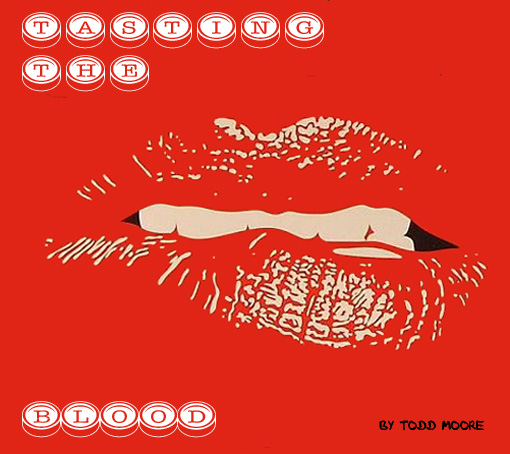
tasting the blood

I found the blackjack just a few yards away from a railroad switch. It was lying right out in the cinders like it had just been dropped. I picked it up and slapped the jack head into the palm of my hand. The impact stung my skin and made the bones in the palm of my hand ache. I looked up and down the tracks to make sure nobody saw me pick it up. Then I walked down through the weeds and then through a hobo jungle before ducking underneath the old railroad bridge where I could get a better look at the jack.

It was all black, had some wear on the grip and some nicks and dings in the slick hard leather on both sides of the head. Also, on one side scratched in the leather was the word Whiskey and the words I think I killed. The rest of the sentence was either worn out or simply left incomplete. I slipped my hand into the knuckle band and let the leaded weight of the jack drag my hand down a little.

When I showed the jack to Jerry he said, How much do you want for it? At first, I didn’t want to sell it. I liked the way it felt when I swung it around and I liked the way it bumped against my leg when I slid it into my right front pocket. But Jerry kept saying, I gotta have it, I gotta have it. His old man was in the next room sleeping off an all night drunk and I was afraid Jerry would wake him up. He was a dangerous man, sober or drunk. Finally, Jerry threw a switchblade and a five dollar bill on the table and said, With that I can kick the shit out of the old man any day of the week. Come on, lets trade.

I’ll think about it, I said. I watched Jerry’s face fold up somewhere between a frown and sheer rage. Okay, he said. But I wanna do something. What’s that, I asked. Lets go down and see Frankie.

Frankie will kick the living shit out of you and then he’ll start in on me, I replied hefting the jack. Not with that he won’t. Why don’t we break it in on Frankie, Jerry said. He smiled and the white scar on the right side of his face smiled, too.

We found Frankie sitting on a bench outside Reno’s Billiards. He was reading a Batman comic book and only looked up when he heard the steel clips on the bottoms of Jerry’s shoes clicking on the pavement. Frankie put the comic book down and said, You coming back for more of the same. Frankie had one eye. He’d lost the right when somebody had smashed a long neck beer bottle across his face and a sliver had stuck in his eye.

Jerry waited for Frankie to come in close. Frankie’s main thing was to get you around the neck with his left arm and then deliver half a dozen cheek breaking blows with his right. I’d seen him fight before and he always operated the same way. He was big enough and strong enough and never had to change his tactics.

As soon as Frankie hooked that arm out to make a grab, Jerry ducked in and slammed Frankie hard in the face with the jack. I heard it connect. It sounded like something crunching underfoot. Frankie stepped back, almost stumbling. He had his right hand up to his face and there was blood at the corner of his mouth. You motherfucker, Frankie said. The words came out of him like a low growl.

When Frankie rushed in, Jerry was ready. He meant to hit Frankie in the nose. I remember once when his old man was trying to tell us how to fight. Go for the nose, he said, lunging around the room drunkenly with his fists held out against the black air. The nose is what you wanna break. Shatter the nose.

Jerry’s blow caught Frankie just above the right ear and mussed up his ducktail and he almost went down but caught himself on the sidewalk. When he stood up he had a thin streak of blood starting to come out of his hair. Jerry was laughing and that really got Frankie. The laughter that came out of Jerry was thin and high pitched, just this side of a howl.

Frankie said, Now, I’m gonna kill you real good. He walked toward Jerry with both hands out. He was big and his hands were big and the blood on his face gave him a spooky, desperate, broken look. Jerry stepped back from the first roundhouse and then walked in swinging the jack from high up, bringing it down hard across the middle of Frankie’s face. I’d heard that sound before. It sounded like my old man’s razor strop when it landed. Frankie was just starting to fall sideways and Jerry was right there hitting him again and again. One in the jaw, one across the eyes, one in the ear.

Frankie was still in midair when a guy called Crackers ran out of the pool hall and grabbed Jerry from behind. By this time Frankie was sitting on the sidewalk with the blood coming down his face in three streams. He was trying to get up but his legs wouldn’t work and after a couple of tries he just stayed there, shaking his head, with the blood going in all directions.

When Jerry broke free of Crackers the blackjack came out of his hand and bounced once on the sewer drain before it rolled through the opening in the iron grate and splashed in the gutter water below. Crackers looked over at Frankie who was still shaking the blood off his face and said, You want me to call the cops? What, Frankie said, trying to get hold of a parking meter so he could stand up. I said do you want me to call the cops? Fuck the cops, Frankie said. No cops. Okay, Crackers replied. But you little fuckers better take this shit down the street before I change my mind.

Jerry winked at me and we walked a block to the movies. An old double bill of George Raft gangster films were playing and the usher knew us and let us slip in for free. I bought a large coke and a popcorn. Jerry said he wasn’t hungry and then ate half of my popcorn anyway. There was a scene where Raft uses a 45 auto to pistol whip a guy and Jerry said, See that. He was shaking all over. Then Jerry leaned close and said, I tasted his blood.

You what, I asked. During the fight I tasted his blood. And, you know what. It tasted so good.


1 Comment

Filed under essays by todd moore

machine guns, guernica, and the outlaw poem

want a poem to be as fast as a machine gun. I want a poem to be as sleek as a machine gun. I want a poem to be as deadly as a machine gun. I want a poem to speak to me the way a machine gun speaks to me. I want a poem to roar like a machine gun. I want a poem to dream with all of its fury and its beauty the way a machine gun dreams its way into all of our violences and our loves. I want to ride the swivel of a poem the way Warren Oates rode the swivel of that machine gun in THE WILD BUNCH.

want the words of a poem going off in a machine gun second ecstatically and with the black energy of HOWL, with the frenzy of the last burst of machine gun fire in BRING ME THE HEAD OF ALFREDO GARCIA. I want a poem to be as pared down and murderous as a Browning model 1917 or Ahab’s harpoon or Chigurh’s stun gun. I want the forehead lifted off with everything still going, the words and images fucked and wonderful, a raw stew swimming. I want to get into General John Thompson’s machine gun dreams and see if there is a poem in there, in the darkest parts of his anarchy and his love. I want a poem that can pack both recoil and meditation into one long shaking groin shattering burst. I want a poem that can channel both death and the duende into one quick machine gun flash. I want death to be in there because without the threat of death, without the fear and threat of instant death, what good is a poem anyway. What good is a line of poetry, one word of poetry without the blowing up wildness of machine gun chatter. And, I want to imagine a miniature Guernica where particles of blown off heads are part of the ignition. Are the swirling stew of the ignition. I want to imagine an idea going off in a head like a machine gun slug, I want to imagine the kind of poem that blows the motherfucking shit out of all the tame poetry, the blah blah fat line and doddering stanza of whatever passes for poetry but isn’t because it lacks nerve and blood and muscle and dream.

want the machine gun from Agua Verde, I want the machine guns of Gallipoli, I want the machine guns of the Somme, I want the machine guns of Pork Chop Hill, I want the machine guns used by the battered bastards of Bastogne, I want the machine guns of La Palancer, I want the machine guns of Shanghai, I want the machine guns of Baghdad, I want the machine guns of Dien Bien Phu and Khe San, i want the machine guns of Iwo Jima and Wounded Knee, I want the machine guns of Saigon, I want Pancho Villa’s and Al Capone’s machine guns just to see if they pack as much power as a page from THE NORTH ATLANTIC BOOK OF THE DEAD or SKINNY DYNAMITE or DILLINGER or BLOOD MERIDIAN or THE FLOWERS OF EVIL. I want that power I want that intensity I want that magic I want that murderously blunt and rushing force jammed stacked stuffed stomped down hard into a line of poetry, shoved down and then down and then down into the extreme screaming id of a line of poetry so that when that poem goes off, all of poetry goes off in a kind of spontaneous chain reaction that sets a whole culture on fire with the kind of burning that nothing and I mean nothing can put out.

want a poem that kicks up as much dirt as a Gatling gun slug fired at a target set into a hill. I want a poem that somehow takes the top of Ishmael’s head off but doesn’t kill him; instead it sets all of his blood and brains on fire and for the first time he is able to have a real conversation with Ahab, the kind of talk that is lit with incendiaries and gasoline and nitro.

want a poem that opens with everything ablaze and an old man is telling a story to a corpse whose ears are blown off. I want a poem that I can pull out of a bonfire before it explodes. Or, maybe while it explodes. I want a poem that takes me directly into the great american darkness that rides me straight into the trajectory of slugs fired at Matewan or Columbus or Brownsville. The american duende is nothing less than a casualty list with bullet holes decorating it. I want to touch the electric wire of murder no poet I know of has ever done that.

want to go chilled and shaking into the machine gun fever of a poem and come out born into a speaking in tongues frenzy. I want to touch Gatsby the second he is hit by a bullet I want to listen along with Tom Joad to cops shooting at people out in the street I want to stumble with Jimmy Cagney riddled with bullet holes along a rainswept gutter I want to fall into that death alley with Dillinger and I want to feel the way those bullets have scorched and frenched all of his dreams.

want a poem to rip me apart like a Thompson. I want to feel those words go in and in and in like slugs Al Pacino or Mad Dog Coll might squeeze off. I want to be hit with those machine gun words the way that William S. Burroughs must have been hit by the same kinds of words when he wrote THE LAST DAYS OF DUTCH SCHULTZ about old Dutch getting all shot up while taking a long and loving piss in a men’s room. I want to feel Burroughs getting eaten up with the words that were coming at him and I want to feel the way Dutch felt when he was being shot while standing at that urinal, the slugs howling through him like furious insects, airborne piranhas. I want to feel that because if I don’t feel that then I will never know the howl and grainy feel of american poetry.

want a poem to knock me into little machine gun shot up pieces and then put me back together again, all wounded and stuttering. I want a poem to blow me shaking and shivering up against a wall the way Bugs Moran’s gang was torn all to hell by shotguns and machine guns that St. Valentine’s day morning in a gritty Chicago garage with the smell of oil cans and gasoline fumes and shaving cream and armpit stink in the midst of blood splashing into the air and bits and pieces of bone coming off the dead who were careening against each other while they crowded into the death air of oblivion.

What I want is the real american poem again. Or maybe for the first true and authentic time. The real american poem where everything and anything is possible. The way it used to be with the novel. I want a machine gun poem to blow the everlasting and cowardly shit out of a poetry establishment that runs poetry as though it were a country club and a banana republic, every literary prize stinking of crab crotch and blowjobs.

want a poem that can be locked and loaded like a machine gun, like Dillinger’s Thompson, like Pike Bishop’s Browning. And, why not? I want wildness in a poem I want frenzy in a poem I want velocity in a poem I want danger in a poem I want the threat of death to always be in a poem I want fear and I want nightmare and I want oblivion especially the kind of american oblivion we pay for and dearly love at the movies. Above all, this is what I’m calling for. Dreams and machine guns and Guernica and the first and last mojo of the Outlaw Poem.


Leave a Comment

Filed under essays by todd moore

american metaphors, visions, and nightmares

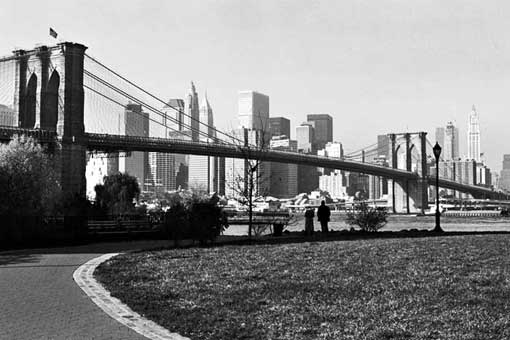
Every culture is composed of its own secret cluster of metaphors. America is no exception. If I mention the white whale most intelligent readers will know what I am talking about. If I mention the letter A most intelligent readers will know what I am getting at. If I mention the Brooklyn Bridge most intelligent readers will know where I am going. If I mention the eyes of T.J. Eckleburg most intelligent readers will guess what this is about. And, there are many more metaphors I could add to the mix. How about Faulkner’s bear? How about Stephen Crane’s red badge? How about Mark Twain’s raft and Hemingway’s wounds? The point simply is a culture is made up of a cluster of psychic metaphors from the very best of its literature. Without metaphors that carry weight, authority. and mystery, it is useless to read a culture because there is no culture.

When I speak of metaphor what I am really referring to is a culture’s central core of meanings where all ideas, all books, all stories, all dreams, all art, all literature converges, comes together and forms something at times that may even be greater than the culture itself. This kind of metaphor gathers all of a culture’s dreams and histories together into one tangled skein of reference and desire. For example, think of Homer and Greece, Shakespeare and England, Tolstoy and Russia. Here you don’t just have writers. You have whole galaxies of meaning. You have the central dream cores of entire civilizations. Great novels and great poems don’t just inform a culture, don’t just lay the groundwork for the future of that culture, they become the essence of that culture. Is this a Jungian idea? Very likely, but my emphasis here is on separate cultural identities and not mankind as a whole. Though, all of mankind ultimately becomes part of this process.

Which leads me to this question. Where are the major metaphors from the last thirty years for america? Think about it for a moment. Is there a metaphor from a long poem written by an american in the last thirty years that can withstand comparison to say Hart Crane’s bridge, Eliot’s waste land, Faulkner’s bear, Fitzgerald’s complex and elusive Gatsby, or Melville’s white whale?

I can think of just three at the moment. Tom McGrath’s LETTER TO AN AMERICAN FRIEND, Ed Dorn’s GUNSLINGER, and of course DILLINGER. As for major metaphors, LETTER introduces The exile or the internal emigré, GUNSLINGER is all about the Western Hero as trickster-clown, and DILLINGER is a forest of metaphors but the one that keeps coming to mind is the outlaw and his machine gun. Dillinger is definitely marginalized and an outlaw, just as the exile and the trickster clown, but he is different in one major respect. He knows that the only way to fight a culture which has marginalized him is to do it with force and what better force to use than the very technology which makes any modern culture powerful? You do it with automatic weapons. McGrath’s exile may know this but doesn’t resort to it. The exile’s revolt is the picket sign, the fist in the air, the protest. Dorn’s Gunslinger may also know this, but prefers to turn the culture inside out with a cosmic laugh. In fact, Dorn is the exact opposite of Ginsberg in this respect. Ginsberg howls his rage and contempt at the darkness. Dorn simply laughs his rage into the void.

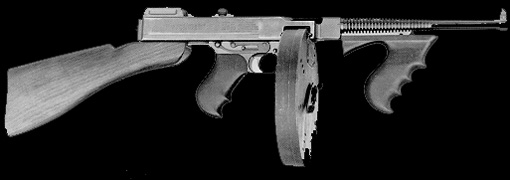
But Dillinger refuses to be beaten down. Instead, he wages war against the people who put him in prison for nine years. And, to do this effectively, he uses a Thompson submachine gun. This is probably one of the most romanticized weapons since the introduction of the Model 1873 Colt Single Action revolver, the gun that won the west. The Thompson entered the movies with Scarface, late twenties early thirties. And it has stayed in the movies ever since. The Thompson has been in more movies than I could ever list here. One memorable scene comes to mind in MILLER’S CROSSING where Albert Finney goes up against some assassins who have come to kill him and he takes them out one at a time, mowing them down like a real pro. It’s a beautifully choreographed shootout and after awhile you realize that the Thompson itself is really the star in the gunfire.

Movies like THE WILD BUNCH, BRING ME THE HEAD OF ALFREDO GARCIA, THE GODFATHER, DILLINGER, BONNIE AND CLYDE, LAST MAN STANDING (and I know there are many others) have somehow elevated the Thompson into some kind of mythic status. There is no sound like a Thompson going off and there is no look like a Thompson when you are holding it. The smaller contemporary automatic weapons like the Tech Nine really don’t compare. The Thompson submachine gun has acquired an authority and an authenticity that are essentially unequalled when it comes, not just to using lethal weapons, but to be seen posing with them as well. In some ways, the Thompson submachine gun becomes an outlaw anti culture all by itself in america.

Writing about the metaphor brings me to the two major mysteries in contemporary american literature because the metaphor is inextricably linked to them. First, there is the enigma of Judge Holden in BLOOD MERIDIAN. He is both a monstrosity and a figure of jagged and eloquent grace. To date, no one has adequately reached the heart of what Judge Holden is all about because he is so dark and because very few people can think on the plane that he does. And, this is mainly because Cormac McCarthy gives him no inner life. He talks talks talks talks the way Hamlet talks talks talks but we never get inside him. We never enter his intimate and obscene darkness.

Maybe this is why our most eminent critic Harold Bloom doesn’t understand the Judge’s primal power or his brilliant murderous self. Whatever you may have come to think of heroes in the novel the Judge is the true hero of BLOOD MERIDIAN. And, like the white whale, the Judge will forever remain an enigma notwithstanding the peculiar figure at the end of the novel. If there is to be a showdown between this figure and the Judge, it will be eons from now when it won’t matter much to Harold Bloom or anyone else. What we are talking about is a post apocalyptic shootout. Something that only god or the gods will find amusing.

The second major mystery is Dillinger. For a moment lets forget about the historical Dillinger just as Cormac McCarthy pretty much forgot about the historical Judge Holden. My only concern in the poem has been the Dillinger that I have been dreaming of. No other Dillinger counts. Dillinger is an archetype the way Holden is also an archetype. Dillinger is a myth the way Judge Holden is also a myth. Dillinger is a legend the way Judge Holden is also a legend. Dillinger is also flesh and blood and Judge Holden may or may not be flesh and blood or may or may not be godlike. Dillinger is a bankrobber and is also very capable of extreme acts of violence including murder. Judge Holden is a scalphunter which means he is also capable of extreme acts of violence including murder. In fact, BLOOD MERIDIAN concludes with his murder of the kid, who is actually a grown man, in an outhouse. And, Dillinger actually did kill a man with a Thompson and Holden especially loves to rape and kill children. While Dillinger doesn’t rape or kill children his movie star fame is enormously subversive to an entire society. In other words, both Holden and Dillinger transcend the rules that most men live by. If not gods, they live like gods.

What is fascinating is that the more we think we know about Dillinger, the less we actually know about him. We think we know him because his dream life is so accessible. And, the less we know about Judge Holden, the more we try to know about him. Both characters are essentially unknowable and this makes them deep avatars of the american unconscious. I have no idea how McCarthy may finally discovered Holden. Did the Judge come as a nightmare? Was he based on someone McCarthy may have met in real life? Was he another aspect of Charles Olson who was as huge as the Judge and also as intelligent? Did he originate in Flannery O’Connor’s A Good Man Is Hard To Find? Is he somehow related to the lethal preacher of Davis Grubb’s THE NIGHT OF THE HUNTER? Where did the Judge originate? Who was he before he was the Judge? And, what is he now that he is the Judge? It is my theory that no character in a novel or a poem ever stays the same. That character may remain the same on the page but once someone reads the book, the character changes in the reader’s head and also in his life. And, this is why a character like the Judge or like Dillinger will always have a profound impact on the culture in which he originated. All cultures are impacted and ultimately changed by the great characters created inside those territories. Think of Achilles and Odysseus and Greece. Think of Hamlet and England. Think of Faust and Germany. Think of Baudelaire who was both character and writer and France. A great character brings great changes to his culture. Changes that are profound beyond belief.

As for Dillinger, he came from any number of places. Bits and pieces of him have been floating in and out of my life ever since I was a kid. Unlike the Judge, Dillinger does die at the end of the poem and in real life. But, like the Judge, Dillinger has a way of coming back, reconstituting himself, resurrecting himself in my thoughts and dreams. Dillinger is just as furiously alive as the Judge and Dillinger also seems to have the ability to be both dead and alive even as I write. Call it a conundrum, call it a paradox. Dillinger is like the white whale. He somehow takes all of the harpoons, yet survives. And, even when I someday finish the poem finally and completely, he will survive because he has eaten the wafer of death just as the wafer of death has also eaten him. I think it is because Dillinger has somehow become part of me. After all, he is the ultimate outlaw. Don’t we all secretly and longingly want that? If you are an american maybe you want that most of all.

I have called both Judge Holden and Dillinger complex metaphors appearing in even more complex epics. But, that’s almost an oversimplification. Judge Holden is a scalphunter. Therefore, maybe Judge Holden’s key metaphor is the scalp itself. Scalps were taken to do away with the opposition, namely, the Native American. And, scalps also became legal tender. They could be cashed in. They could be traded for goods or services or money. And, without money, you also do not have a culture.

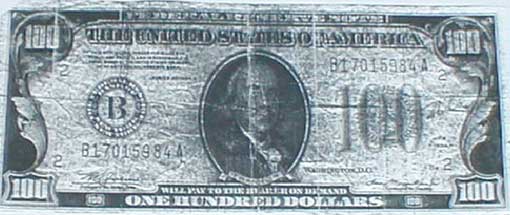
One Hundred Dollar Bill, 1934 series, given to William Hovious by John Dillinger.

Dillinger robs banks. He takes money that a few generations before was used to pay for scalps. It might even be said that, by doing this, Dillinger is attempting to destroy culture. And, even if he doesn’t succeed, he does oppose the Judge. And, while the Judge appears to be ageless and relies on the brute force of his own body, Dillinger is the representative outlaw of his time, agelessly handsome, a kind of Bogartian Don Juan. He prefers the Thompson. He loves that firepower because it is so lethal and so sexual and is undeniably attractive. It is all about being an american and living in america. It is all about defining the dark side of everything american.

Neither character is very much like the other except in the way that they are both charismatic and that they bring a whole cluster of metaphors to the works they appear in. The Judge with his scalps and Dillinger with his Thompson bring an essential darkness to the american epic. The metaphors may never fully explain america. Nothing can ever fully explain america. But, they are important keys to its ongoing visions and nightmares.


Leave a Comment

Filed under essays by todd moore

scorched trinity: dillinger, billie, and machine gun love

I have never been able to think of John Dillinger without the machine gun. I have never been able to think of Pretty Boy Floyd without the machine gun. I have never been able to think of Al Capone without the machine gun. And, then there was Machine Gun Jack McGurn whose name was nothing without the words machine gun. What would all those great gangster movies be without machine guns? PUBLIC ENEMY, LITTLE CAESAR, SCARFACE both the Paul Muni version and the Al Pacino version, THE ROARING TWENTIES, HIGH SIERRA, WHITE HEAT, THE GODFATHER, BONNIE AND CLYDE, THE UNTOUCHABLES.

I remember walking into a gunshop once and noticing several men gathered around a glass counter. I pressed closer for a better look. There, under that glass, was a model 1921 Thompson sub machine gun with detachable stock. In its own peculiar, dark, jagged looking way it was just simply beautiful. I loved the grain of the wood in that light, it had a red tinge to it and there were minor nicks and dings all over the stock and the grips.

The guy next to me said, So, this was Dillinger’s gun. The shop owner shrugged and said, Probably one of many. You think it has killed anybody, the customer asked. The shop owner smiled and said, Your guess. He stuck his hand inside the case and brushed a piece of dirt off the barrel. It isn’t for sale, is it, the customer asked. The shop owner took a step back and said, How do you sell a dream?

I saw a guy stick up a bank with a machine gun once. The man talking was a drifter by the name of Lucky Jack Ross. He was someone I met at the Clifton Hotel. Yeah, I saw this guy come into the bank with a machine gun. It was payday on the railroad. That’s when I lived in Kansas City. The whole thing happened so fast. And, smooth, Christ, the way this guy handled himself, it almost looked like he was dancing. But, it was his machine gun that got everyone’s attention. I don’t think the man said a dozen words the whole time. And, he never raised his voice. I already had my money and was about to drop it in the sack when he looked at me and said, You work in a factory? I looked straight into his eyes and said, No, the railroad. He smiled and said, Keep it, pal. You guys work hard for the money.

The bartender at Blackjack Willie’s told me once his old man had been on the police force at the time of the St. Valentine’s DayMassacre. Said, he was one of the first to arrive on the scene. The way he described it, it must’ve been a helluva sight. They used both shotguns and machine guns. Machine gun slugs had cut this one guy in half right along with his necktie. Said, another guy was lying on his side on the cement floor and the blood coming out of his mouth looked like all of his words had poured out in a red puddle.

When I wrote DILLINGER’S THOMPSON and the introductory essay MACHINE GUN DREAMS, I thought I had emptied myself of everything machine gun. All of it. The dark rich possibilities. The black sugar nightmares. But, over time, I discovered that I had barely scratched the surface where the machine gun, especially the Thompson, is concerned. And, lately, the more I started to think of DILLINGER’S THOMPSON, the more I realized that this was really an american metaphor with depths I had barely explored. I say metaphor because the machine gun is as rich in meaning as Hart Crane’s Bridge, Hawthorne’s Scarlet Letter, Faulkner’s Bear, Melville’s Whale.

I also realized that the machine gun also had to mean as much to Billie Frechette as it did to Dillinger even though she probably never took part in any actual bank robberies. Still, I’d like to think that in her way, she was as obsessed by guns as he was. That’s why DEATH’S MACHINE GUN takes place in Billie’s deepest fantasies and with Dillinger’s most potent rival, Death himself. Because there was a little bit of Etta Place and a little bit of Belle Star and a little bit of Calamity Jane and a little bit of Cattle Annie in Billie and there also had to be that drive toward the danger ground inside her, too. What we do know is that she was as tempestuous in her way as Dillinger was a daredevil in the way that he lived. That’s why I believe, though I can’t prove it, that she carried a little 25 auto under her lipstick, compact, and handkerchief in her purse. Just to be on the safe side.

If DILLINGER’S THOMPSON represents the dark american desire for the ultimate killing machine from a man’s point of view, then DEATH’S MACHINE GUN represents the twin desire from a woman’s point of view. And, I’m not just talking about penis envy. That’s really a simplification of the feminine desire to own a gun. And, in this case, not just any gun, but the kind of firearm that rains death in all directions, everywhere.

Because it’s all about empowerment. It’s all about the action and the juice. It was that way in 1933 and it is still that way. It’s all about claiming control of a life almost guaranteed to be marginal. It’s all about not just claiming control of a marginal life, but also using that kind of power to elevate yourself to a kind of mythic status. I don’t for a moment believe that Dillinger did not know what he was doing with that machine gun. He had to realize that he was not only robbing banks, but that he was also projecting the image of himself in the news the same way that movie stars were projecting the images of themselves in films. And, I also believe that Billie realized what was happening and desperately desired to be part of that larger drama. And, if she did not ever actually own a machine gun while she was with Dillinger, I am pretty sure she damned well dreamed of it. And, those kinds of dreams almost always include Death as the bargaining agent.

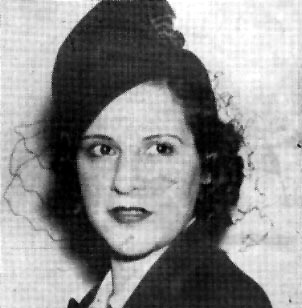
Billie FrechetteI’m looking at a snapshot of a man in a dark suit bending over the body of someone he has just killed. He is holding a Thompson over the corpse as though it is some kind of magic stick. It almost looks like a kind of ritual. As though that machine gun is being held there so that it can get a good look at what it has murdered. The man in the dark suit and stetson hat is staring at the back of the man’s head which has been partly blown away. I’m wondering if he is trying to see inside the man’s head, trying to discover the answer to the riddle of death itself. I am also wondering if the man with the machine gun might be shaking a little with the excitement of what he has just done. Shaking with the knowledge that his bullets have made the blood drain out of the dead man’s head onto the floor. And, maybe he is also thinking that the machine gun is also excited and is shaking, too. And, somehow the man and the machine gun and the dead man on the floor drowning in his own blood are forming some kind of dark american trinity. The same scorched trinity where Billie Frechette dreams of taking communion.


1 Comment

Filed under essays by todd moore

the exalted scar and the annointed cure

I’m sitting at my desk playing with a switchblade. Clicking it open and shut, open and shut, open and shut. And, falling in love with the way that the long blade swings out into the bright air, like a steel erection that is always hard. Playing with a switchblade has become a sometime ritual I do just before writing. I do it for good luck and am reminded of the way that Switchtrack Jimmy used to dip his finger in a shot glass and touch a drop of whiskey to his forehead just before taking it down straight. Then he’d give my old man a look and say, it’s the next best thing to crossing yourself.

Before I sat down to write the essay that turned into DREAMING OF BILLY THE KID, I spent a few minutes fucking around with a 22 caliber revolver manufactured by Heritage Arms. It looks just like an old Colt single action and when I run the cylinder down my shirt sleeve I can feel it kissing me with its steel and I pay close attention to the rich dark clicking sound that the turning metal made. The thing is you gotta play with guns if you are going to write about Billy the Kid. It’s also a way to acknowledge the presence of death which is everywhere. Especially, if you write poetry. Especially, if you write straight out of the blood and marrow and guts of poetry. The presence of death hovers all around in the air is in the walls infests the clothes we wear is in the trees the water infects the alphabet every line of poetry is a death song that’s why the best poetry is like a left hook that slams you along side the head. A left hook you never really recover from.

Some things you write, if you truly do it from the night, the soul, the heart, the skin, the dream of yourself, you never get over. You think you can because there is always the new poem, the new book that you are dreaming but that old haunted book is still back inside you talking its deathtrash and if you listen closely you can just barely pick up the way that song is going. I would put money on the table that Melville still had MOBY DICK going in his head twenty years after he wrote it. And, don’t tell me Kerouac wasn’t still possessed by ON THE ROAD those last years before died. And, NAKED LUNCH was Burroughs’ central nightmare, love song, and dream. And, it’s a miracle that THE BLIND OWL didn’t drive Sadegh Hedayat completely mad. Keep in mind, he did eventually kill himself.

Now, when I go back to DREAMING OF BILLY THE KID, it feels like I am playing with that sixgun. Reading back into it just to get the feel of the way the words flow, I am reminded of that 22 caliber pistol, the way I can cock it back, the way I can aim it, the way I can squeeze that trigger and imagine that there is a live round waiting under the hammer, the way that hammer will fall and the way that pistol will sound when it goes off.

Isn’t
that the natural way to feel about a novel? Especially, a haunted novel. Isn’t that the natural way to feel about a long poem? A demon inhabited long poem. Isn’t that how Rimbaud felt about A SEASON IN HELL? Isn’t that how Baudelaire felt about FLOWERS OF EVIL? Isn’t that how Franz Kafka felt about THE TRIAL? Isn’t that how William Faulkner felt about THE BEAR? And, isn’t that how Cormac McCarthy felt about BLOOD MERIDIAN?

Maybe, maybe not. But, that’s how I felt and feel about writing DREAMING OF BILLY THE KID. And DILLINGER, especially The Dead Zone Trilogy, The Sign of the Gun, Russian Roulette, The Name Is Dillinger, and many more than I have room to name. With the novel, though it was different. I wrote the Dillinger sections separately and with a certain amount of time in between. With DREAMING OF BILLY THE KID, it happened intensely over a period of eight to nine months. The writing was compressed, almost violently compacted, and it felt like a psychic carnival burning inside my skull.

I do have to admit writing Dillinger’s Thompson felt nearly the same as holding a real one. And, if you’ve held one, you know what I mean. Hemingway held one. Dillinger held one. I’d like to think that McCarthy held one. But writing DREAMING OF BILLY THE KID became for me the same as entering the dark and bloody ground, the killing floor, the place of violent spirits, the cave of half devoured bones. And, if you ever get to that place, then you know exactly what I mean.

What happened when I wrote DREAMING OF BILLY THE KID was I entered into the longest, most intense writing experience that I have ever gone through. I’ve written novels before, most were failures, and were nothing like the Kid. However, writing this novel felt like a conjuring every single day that I worked on it. The novel was relentless. It spoke to me like a poem, it sang to me like a poem, it haunted me like a poem. But it insisted on being called a novel.

And, it also insisted on my working on it at all points and in all places. It didn’t want to be written sequentially the way that most novels are composed. I might be working on a scene from the front part of the book after I had already written sixty or seventy pages. When I finished with that I might jump from there to a later scene and work on that. And then some line or remark might occur to me and I’d recall a place near the middle of the book. And, it would go on like that, back and forth. Or, I might ransack an old western pulp novel for a phrase that I would find myself reworking. Or, I might find a phrase that would suggest a totally new scene and I would discard the phrase, write the scene and then salvage two or three words from that phrase and work them in somewhere else. The process was write, rewrite, rewrite the rewriting, then insert something into the revision and then fracture the revision and rewrite that for another place in the novel. I rarely ever left any passage as I had written it. Sometimes the novel became a rubics cube where the words were easily moved from space to space, slot to slot. Or, the paragraphs were shifted and shuffled and splintered. It felt as though I was blowing Olson’s Composition By Field into a linguistic quantum space. The novel, all of it, the lost parts, the revised pages, the early sections I saved, the ones I threw away, the pages I got in my sleep and only remembered parts of, the pages that I deliberately deleted, the original germ for the novel which was the essay, all and the dream origins of the novel that came to me as phantom texts, formed an ideal version of DREAMING OF BILLY THE KID. And, somehow I know that that absolutely ideal version exists in Borges’s Universal Library.

So, I had to handle guns and I had to handle knives just to keep the energy flowing from the visceral touch of a weapon to the way the spirit of that touch would enter the novel because I knew then just as I know now that death surrounds us, the feeling of death, the energy of death, and the counter energy of the novel which began to think for itself and anticipate the death energy so that it could transform the language of the novel into the language of life in conflict with death. The counterweight of all the great novels swings through the black holes and all of the cosmos against the night energy of death and oblivion.

And, if you think a novel or a long poem does not begin to think for itself in the process of being composed, insist on dreaming in the angel of death struggle of being created, then your dreams are no more than the depth of your thumb nail. CRIME AND PUNISHMENT is a universe of hysterical thinking. MOBY DICK is a whirlpool of nervous debate. AS I LAY DYING is death trying to talk itself through the surface of language. THE WASTE LAND is a death song trying to heal what it can of the language. You cannot write a great novel or a great long poem without some kind of violent conjuring and some subsequent healing through the way that it talks. Because somewhere in between the violent conjuring which invokes the primal energy and the end of the talking to end all talking, the writer must find a way to heal himself in the death song finale. DREAMING OF BILLY THE KID is both the exalted scar and the annointed cure. It is an apocalyptic death song for Outlaw America.


Leave a Comment

Filed under essays by todd moore

the great american poem

More than fifty years ago when I first got the idea that I was a writer, I remember my old man telling me during one of his classic binges, kid, he used to like to call me kid when he was drunk out of his skull. Kid, he said, if you’re gonna be a writer, stick to the novel. It’s your whore, it’s your bitch, it’s your fantasy lover. Stay away from the poem, cuz boy the poem doesn’t pay shit.

And, what he said was so true. He never wrote a line of poetry that I knew of, but somehow he realized that it was the novel, THE GREAT AMERICAN NOVEL where the real cash was. And, that’s how I got started out on the novel. And, it took me the better part of twenty years before I realized that I wasn’t writing for the money. I was writing for everything but the money. I was writing for the quest, for the absolution, for the lingo, for whoever the hell I ever was or would ever be. I was writing for the whiskey and I was writing for the music. But, it wasn’t for the money. That was true in 1969 and it’s still true today.

That’s why, for me, it’s THE GREAT AMERICAN POEM. Or, maybe I should just say, the great american poem. Because there has always been a great american poem. It just hasn’t had the press that the novel has had. But, the great american poem has been there at least as long as the novel. Somehow, MOBY DICK wouldn’t seem the same without SONG OF MYSELF. And, HUCKLEBERRY FINN would somehow come up light without THE COLLECTED POEMS of Emily Dickinson. In the twentieth century, THE WASTELAND is counterweighted with THE GREAT GATSBY, THE SUN ALSO RISES with THE CANTOS, PATERSON with THE SOUND AND THE FURY. Most of the great american poems of the twentieth century have been naturally paired with the great novels.

But, strangely enough, after 1950 the pairings have been less and less easy to make. We could compare THE ADVENTURES OF AUGIE MARCH to THE MAXIMUS POEMS. We can conjure INVISIBLE MAN and HARLEM GALLERY. We could marry BLESS ME ULTIMA to Creeley’s COLLECTED. We could hook THE KID up with GUNSLINGER. We not only could but are almost required to fuse HOWL to ON THE ROAD. Or how about POST OFFICE and POINT BLANK, both much later than 1950. Feel free to fill in the blanks for your own favorites. Still, somewhere after 1950 it has become more and more difficult to find the sparks going back and forth between THE GREAT AMERICAN NOVEL and the great american poem. And, it is just there, in those sparks that the american psyche is located. It isn’t just in the novel or the poem but it is in both, in the fireworks of both, that you’ll discover what it means to be a writer in america.

After the 1970s you really have to work hard for the pairings. There is LETTER TO AN IMAGINARY FRIEND but it has no 1970s contemporary novel that comes to mind. You have to go back to 1939 and THE GRAPES OF WRATH. And, of course, Leo Connellan’s CROSSING AMERICA is a natural partner for Cormac McCarthy’s THE ROAD. Or, how about Kell Robertson’s A HORSE CALLED DESPERATION and Tom Lea’s THE WONDERFUL COUNTRY?

And, I am sure there are other books that could paired, but not as easily or with such grace and power as those novels and poems before 1950. The question is what happened to the sparks? Where did that mojo go? What happened to that secret intensity going back and forth between the great american novel and the great american poem? And, here I am simply going to overlook ninety nine percent of the academics writing the long poem because I have not yet found a contemporary long poem with any real substance (read power, read the magnetic quality to grab you by the shirt front and pull you shaking into its mystery). Lets try to make this plainer. I have not yet found a contemporary long poem with the kind of power that could match PATERSON, THE WASTELAND, THE BRIDGE, THE CANTOS, MAXIMUS LETTER TO AN IMAGINARY FRIEND, HOWL or GUNSLINGER. There is no current long poem outside the Outlaw Poetry Movement that has the endurance to hold up over a long period of time.

During the last fifteen or twenty years I have read so many bad long poems, so many boring long poems, so many weak long poems I am sick to the guts and I am sick to the spirit of what passes for the great american poem, especially in the mainstream press. If I never read another ho hum page of John Ashbery, I will be supremely happy. If I never see another crossed out line of Susan Howe’s I will be ecstatic, if I never see another faux symbol page from THE TABLETS (inside joke or no inside joke) I will be lauging beyond laughing. The reason, amigo, nobody reads poetry anymore is that it has been theorized so thinly and delicately you can’t even find it on the written page. In short it is a joke no one finds funny anymore.

The only thing that is not a joke is the Outlaw Generation. At least here, you can find a poetry of substance, a poetry of authentic ambition, a poetry of genuine power. I continue to be impressed by John Macker’s ADVENTURES IN THE GUNTRADE. I continue to admire Mark Weber’s PLAIN OLD BOOGIE LONG DIVISION, I continue to return to Kell Robertson’s A HORSE CALLED DESPERATION, I continue to be drawn back to Tony Moffeit’s voodoo and duende conjured BLUES FOR BILLY THE KID, I continue to be surprised by S. A. Griffin’s NUMBSKULL SUTRA, Ron Androla’s POET HEAD, Raindog’s ROADKILL. In my opinion, THE GREAT AMERICAN LONG POEM is THE GREAT AMERICAN NOVEL dreaming.

When you work in the small press and specifically when you are an Outlaw Poet, you have to do it all. You have to write the poem, often times you have to become your own best editor, you have to more often than not become your own publisher, you have to find the people who will review you, you have to distribute the book you publish, and because of the net, you have to invent or reinvent whoever the hell it is that you are. If you are shy about this, if you are the least bit reticent about getting your name out there, you are dead. You are deader than dead. The half horse half alligator brag still applies. And, I have plenty of YAWP left in me.

Which translates into — there is nothing timid about me. That’s why I am going to suggest to you the final pairing of novel and poem. Maybe, suggest is too tame a word. Lets just say I am going to tell you because TELL is what I do.

The two books which probe the psyche of america more powerfully than any other novel or poem published during the last twenty years of the 20th century or the first decade or more of the 21st century are Cormac McCarthy’s BLOOD MERIDIAN and my long poem DILLINGER. When I say probe what I really mean is that both BLOOD MERIDIAN and DILLINGER actually are trenching back into the deepest parts of the american psyche. Both novel and poem are powerful and authentic extended works of the contemporary literary imagination or whatever passes for it in the kicked and fucked wreckage of this nation. Both novel and poem present violent scenes as unflinchingly as anything written in the american language. Both novel and poem inquire into the origins and essence of the violent scripts and fantasies of the american dream. Both novel and poem run counter to what it means to live in a civilized country. Both novel and poem present variations on the essential archetypal american. No other novelist since William Faulkner has attempted that. No other major poet has ever tried that, and you can search Pound, Williams, and Olson a very long time and never find anything that even comes close to what you will find in DILLINGER. And, no other novelist or poet writing today has equaled these achievements. They represent the dream and the nightmare of america.
dillingerone.jpg
dillinger.jpg

Leave a Comment

Filed under essays by todd moore