Category Archives: essays by todd moore

that terrible shaking in the blood

Writing

Dillinger involves a terrible shaking in the blood. A feeling that somehow I have been shot and that the wound is a through and through and that while everything’s ultimately going to be alright though there is a lot of blood showing and the wound has suddenly grown a mouth and is trying to talk but all it can do is stutter and drown in the blood. I’d been going a little crazy all day with the idea that I had to write something about Dillinger but I didn’t know what. Like I was trying to ghostdance something out of my dreams and it felt intense the way it was building up inside, intense I wanted to climb behind the wheel of a very fast car like in REBEL WITHOUT A CAUSE, turn on the ignition, and burn rubber out of the lot and down the highway. That was the feeling though I didn’t have a title for what I wanted to write, or rather what I had to write what I was spooked to write because whenever I felt this way it wasn’t a matter of wanting to write anything, it was a matter of having to write something and having to do it pronto, now, suddenly, because the sparks were gathering all over my fingers and I didn’t really have a choice. And, I hate it and I love it when it gets that way because it feels like the fires are getting all ready to start by themselves. Born again begins with the invocation of sparks.

I wanted

to do something machine gun frantic. I wanted to do something out of control. I wanted to do something where the machine gun is so out of control that it is actually in control. Like Al Pacino in SCARFACE. But, I’d already done the machine gun with Dillinger’s Thompson. Then I’d done it again. And again. And again. With Baby Face Nelson. With Billie Frechette. I could always write a section and throw it away. I could always write twenty rapid fire pages and toss them into the fire. Where they were probably born anway. Or put them through the shredder. Or just simply tear them across and across and across in a kind of violent stumbling frenzy feeling the way the words were torn into pieces and then going away from me like damaged universes. There is something horribly wonderful about destroying a twenty page poem and watching that nightmare vision fall away from my fingers in lacerated pieces.

But

this was going to be different in the way that the different cracks toward the new, I could feel it the way I could feel The Name Is Dillinger when the first sparks of it flashed across my nerve endings. I could feel it the way I could feel the way The Corpse Is Dreaming was singeing the hair up and down on my arms. I knew this was going to be cankered with strangeness and I had to get it down but I wanted to enjoy the feeling and the frenzy. And, the only way to do that was go out somewhere up in the mountains, sit on the patio of a sidewalk café or coffee house and watch the storm clouds fill up with lightning over lightning and just let the poem happen. It felt like I was standing on the threshold of a dream I was watching. That’s when I got the first line. Or, really just the first words. Born again. I had heard those words so many times before I was sick of them. But, I’d only heard of them in connection with religion. Especially, fundamentalist religion. And, my born again baptist uncle who was always trying to get me to go to church with him when I was a kid. Who reportedly knew how to speak in tongues, though I’d never heard him. He liked to brag how he’d been born again in the blood of the lord. That he would go up in the rapture. He knew it more than he knew anything else in the world. He liked to tell me that I needed to be born again, too, or I’d be lost forever. The thing he didn’t know was I wanted to be lost forever. I wanted to be so lost that I could never be found. What I used to do when I saw his car pull up in front of the hotel on a Sunday morning was take off out the back door and head down to the railroad tracks and the river. I liked being down there with the drifters, the hoboes, the derelicts, the alkies. I especially liked it because I felt free with the lost. I felt totally and utterly free.

But

born again, now with Dillinger and a machine gun. Born again now brought all kinds of new possibilities. Just the idea of born again with the machine gun appearing in the same sentence sent the electricity flying through my blood. Born again in the blood of the machine gun. Born again in the flash of the gunfire. Born again in the machine gun moon. Born again in the machine gun’s shadow. I was writing the lines down as fast as I could. The machine gun sleeps in the born again fire. Death gives the best head when a machine gun goes off. I had no idea how these lines would finally go in the body of the poem but I knew it really didn’t make any difference once I started writing because they were all scrambled up in a wild velocity in my head and they felt good that way so I knew they would feel good almost any way I could get them down on the paper. It was like trying to arrange fire inside fire. No matter where you stuck the flames they got all mixed up in other flames.

Now,

that all kinds of lines were coming to me, I knew I had to have stories. A poem like this is no good without stories. I had to have Dillinger talking in between the born agains and I had to have Baby Face talking in between the born agains and I had to have Billie coming in and going out of the born again talking, I had to have the born again sexual feel of her because born again is really no good without the presence of sex and being intensely alive and firing a machine gun that also felt intensely alive and I had to have the sound of her voice the sound of her dreams the rough darkness of her desire and Dillinger had to somehow be part of it all because whether he says it or not it is his dreams or his big dream of money and bank robbery the movies and the violent thrust of his body his entire outlaw presence shaking and whispering and pulsing through all of it the entire poem is what makes Dillinger Dillinger.

I wanted

to take born again to the edge of the american precipice, I wanted to ride born again into the royal gorge of exuberance, desire, and destruction. I wanted to marry the words born again to the murderous shaking of machine gun recoil. And, I know no one had ever tried to do that before. No one ever dared.

And,

the whole time I was writing born again it seemed as though I could hear someone back in the darkness speaking in tongues. It began as a kind of low chattering hum that I couldn’t tune out. No matter how hard I tried to plunge into the poem, that stuttering hum persisted until it became a kind of trembling rhythm. Until it became a separate song that someone was singing behind me, though rationally I knew no one was there. No one except the poem was there. The poem, the blood of the poem, the thrust of the poem, the ghost body of the poem had somehow made itself manifest in its sound and it was the sound I was playing off, riffing off, improving off, dreaming off. I had somehow conjured the body, the skeleton of the poem through its sound and I was listening to the whole poem speaking in tongues while I was writing it down. And while the poem was speaking in tongues I was born to the machine gun, the death song, the words.

1 Comment

Filed under essays by todd moore

what I want to know

I’m

sitting across from a poet in a local coffee house. He’s reading his latest poem to me in a kind of low studied breathy performance voice. There are echoes in it of Bukowski, Locklin, John Yamrus, maybe a line or two of some of my stuff. When he gets to the end, he looks up and says, Well? I tell him about the echoes and he says, Yeah, so what? Nothing, just echoes, I reply. He shrugs, says, I came late to the game. Don’t hold it against me. Beyond that, what do you think? It’s good I say. Because it is good. I pause a couple of seconds while the poet takes a long sip of coffee. Then I say, what’s it worth. He gives me a what the fuck look, then says, actual value. Yeah, I tell him, actual value. Maybe this cup of coffee that you bought me. Would you die for it, I ask. You know, actual blood. Who the fuck are you, Pablo kiss my ass Neruda, or what. Or what, I replied. Then I dropped it.

I’m

at a party. I am slouched way down in an easy chair nursing some weak punch. Trying to burrow a hole in the multitude. And, it’s going just fine until this kid and his girl friend start mako sharking their way toward me in the crowd. There are too many people around for me to make a quick escape so I just sit there, dead meat cooking in a very slow crock, waiting for the inevitable. When the kid gets close, he says like he always says, So what’re you writing? Poetry, I tell him, poetry. What else is there? His girl who has a very dark and sultry look says, You write poetry. Yeah, I reply, trying to underplay the all too underplayable. Trying to think of something else to say and recognizing the entire bottomless futility of the situation. The kid interrupts with, I’ve been meaning to write some poetry for awhile now, I got this incredibly fucking beyond the beyond idea for something really kickass but you know how it is. I lie and say, Yeah, but I don’t know how it is. I have never known how it is. Dark and sultry says, Lonny here tells me you are a great poet. What is Lonny snorting, I reply. The kid laughs into his beer. What kinda poetry do you write, dark and sultry asks. I sink a little farther down into the easy chair and the guy sitting next to me who has actually read my stuff says, Violence and gore, guts on the floor. He says it with a lot of phlegmy gravel in his voice. Dark and sultry gives me a you have just dropped your pants look and says, Cool. Tell me one. I flash a weak smile and say, I don’t do impromptu. No shit, she says. Not even a line? Nada? Not a syllable, I tell her. Too bad, I love violence and gore. NO COUNTRY FOR OLD MEN. Shit like that. So, I get it. There is a teasing sound byte pause. Maybe they’ll arrest you for it, she adds. You know, like in Russia and you could become famous. Would you go to prison for it? I was all set with a bullshit reply when someone tapped her on the shoulder and she ducked back into the crowd, licking the glitter off her lips.

A

guy from Indiana writes, If you send me all three Kangaroo Court titles of DILLINGER, I will send you a switchblade knife. It has staghorn grips, the blade is six inches long, and the action on the knife is nice and clean like the sound of a pistol being cocked. How can I resist? I get the three Kangaroo Court Dillingers in the mail the same day. Somewhere way back in my head though I don’t really expect the guy to send me the knife. I figure he’ll go back on his word. It wouldn’t be the first time but in about two weeks I get this package in the mail and when I open it I discover not one but two switchblades. A big one and a smaller one, both with staghorn grips. A rubber band holds a note to one knife. It reads, I stabbed a guy with one of these. I figured you would like it. Dillinger, too. I hope you are making a lot of money from this. Maybe I will start writing, too. Then again, maybe not. If it’s going to eat into my drinking time, then not.

I am

on the list to read next. This is a house reading. We are all sitting in a circle in this faux Victorian living room. The family dog is trying hard to sniff my crotch while I am trying to arrange the three poems I plan to read. The woman I am sitting next to is going over a poem about her father’s Viet Nam War campaign hat. It has a flag pin stuck along the side. The pin shows wear in some of the red and the blue. She is moving her lips but not saying the words out loud. She sees that I am watching her and says, Did you know that I can summon the duende out of this hat. No, I tell her. I didn’t. It is a white duende she adds. Very sweet. Nothing but happy endings. The man reading is doing a poem about burying his favorite parrot. He is weeping. When he finishes he brushes a tear away from his cheek and sits down to a healthy round of applause. The hostess who is also the emcee says my name outlaw poet and a few other things and I get up and stumble over the crotch sniffing dog. I decide I’m really only good for one poem if that. I pick out something with an edge to it. That’s what most people have come to expect from me. I stand next to an old piano which is missing some of the keys. If this were a saloon, I’d be looking for a torch singer. Billie Holiday would be perfect. With Dooley Wilson on the ivories but I could never be that lucky. I feel as though someone has already thrown a plate of ripe shit and it is poised between me and the wall. In my imagination I can already see some of the soft turds splatter. Then I start in. Some lips are already beginning to separate from teeth in the beginning rush of inauthentic smiles.

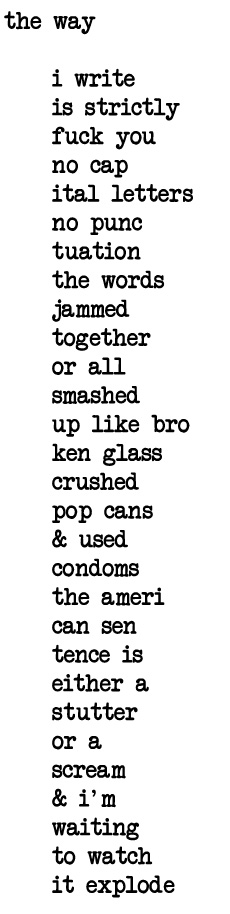
the way

i write
is strictly
fuck you
no cap
ital letters
no punc
tuation
the words
jammed
together
or all
smashed
up like bro
ken glass
crushed
pop cans
& used
condoms
the ameri
can sen
tence is
either a
stutter
or a
scream
& i’m
waiting
to watch
it explode

There

was no applause. A kind of white silence settles over everything. Those lips never make it into smiles. The teeth barely stay hidden. A woman with her hands clasped over her eight year old daughter’s ears said, What did he say? A guy leaning against a shelf of leather bound gold embossed Zane Grey novels said, Would you call that Language Poetry, and the editor of a local small press wearing his long hair in a pony tail glanced over at the hostess/emcee and said I thought we agreed on a carefully selected list of readers. Poets who see things the way we do. Who invited him? When he said that, pony tail glanced over at me and the man sitting on the other side of me said, What is a poem worth. He smiled and I knew this was a trick question. Then he said, You always pay for reading the good shit. The good ones make you bleed.

Which,

I suppose, is the answer to the question what is a poem worth. A poem is worth whatever you are willing to pay. Whatever you can put on the table. See, nobody else pays for a poem. Which means, you put up it all up. Pulling a Bukowski is a one in a trillion. Pulling a T. S. Eliot you either have to work in a bank or rob a bank, pulling an Allen Ginsberg, well, you get the picture. This is all about whatever it takes to ante up the way that Tony Moffeit anteed up with BLUES FOR BILLY THE KID, the way that Tom House anteed up with THE WORLD ACCORDING TO WHISKEY, the way that Kell Robertson anteed up with A HORSE CALLED DESPERATION, the way that John Macker anteed up with ADVENTURES IN THE GUNTRADE, the way that Mark Weber anteed up with PLAIN OLD BOOGIE LONG DIVISION, the way Ed Dorn anteed up with GUNSLINGER, the way that Ron Androla anteed up with WHAT TO SAY TO DEATH, the way that S. A. Griffin anteed up with NUMBSKULL SUTRA, the way that Tony Scibella anteed up with THE KID IN AMERICA, the way John Yamrus anteed up with BLUE COLLAR, the way Gary Goude anteed up with A CRUSHED ROTTING DOG, the way Raindog did with ROADKILL. What else can you ante if all you have is poetry and blood?

When

I was reading, I wish there had been just one Lee Marvin in the audience. I wish there had been just one Harvey Keitel in the audience. Where the fuck are you when we need you, Harvey? I wish there had been just one Sean Penn in the audience. I wish there had been just one Steve Buscemi in the audience. I wish there had been one Nick Nolte in the audience. I wish there had been just one Humphrey Bogart in the audience. I wish there had been just one Charles Aznavour in the audience. One is all it takes. One is all you need. Someone dragging the night behind him like a corpse that can never be gotten rid of.

I’m

practically paying rent for the dead last booth in this north of the border bar called Pistoleros which dreams that it is jacknasty south of everything anyone has ever dreamt of. Death is trying to get me to do shots with him but I pass because I know once I accept a drink from Death I am down for the ride. In fact, he knows that better than I do. He says, I can make both you and DILLINGER hugely famous, live forever, know what I mean. You wanna be famous, don’t you? Death’s voice comes out of his mouth like a series of loud farts and belches. I shake my head, he says, What do I have to do to sweeten the pot? How about money and fame, he says, smiling. Wadda combo. You can have anything you want. His teeth have black shit on them. He waits several seconds for my reply. When he doesn’t get it, he says, What do you think DILLINGER is worth? I stay silent and this begins to piss Death off. He stretches himself as far as he can to lean halfway across the table, says, I know where you dream, motherfucker. The dead fly on the wall is warning me not to do anything funny, but I can’t resist. When Death gets his head up even with mine,

I give him the finger.

3 Comments

Filed under essays by todd moore

dying with dillinger in the corpse is dreaming

https://www.youtube.com/watch?v=4undCSpNCyM

The question is how do you die

with and through a character like Dillinger? Just how is that done? John Dillinger had become a part of me. He was as real to me as Madame Bovary was to Flaubert. He was as real to me as Hamlet was to Shakespeare. He was as real to me as Quixote was to Cervantes. He was as real to me as Faust was to Goethe. He was as real to me as Ahab was to Melville and he was as real to me as Achilles had to have been to Homer and he was as real to me as Anna was to Tolstoy and he was as real to me as Zhivago was to Pasternak and he was as real to me as Joseph K was to Kafka. Killing a major character means much more than writing down the words, getting the scene right. Killing a major character somehow involves taking away the breath, somehow involves making a show of blood much more than just a fictional ritual, really a very special effect. Somehow involves nothing less than psychic murder to some part of your self.

Nothing Lorca ever wrote prepared me for this. There is nothing in Play and Theory of the Duende that is even remotely connected to conjuring an archetypal character’s death. Lorca is a genius at conjuring the duende for the writing of the poem, but that’s all. He writes nothing about how to kill off a Hamlet or a Quixote. There is nothing written that I know of that deals with murdering Joseph K or Ahab. And, when I stop to think about it, I realize that it wasn’t so much the commercial failure of MOBY DICK that nearly drove Melville to madness. It was the psychic loss of Ahab. And, it’s a curious sidenote that Dostoevsky only lived a few months after the appearance of THE BROTHERS KARAMAZOV. Because Dostoevsky had to know that by murdering Old Man Karamazov he was also murdering his own father, some primal part of his own being as well. The two bloods were merged into that archetype.

I’d read Robert Warshow’s The Gangster As Tragic Hero. I’d seen Bogart in High Sierra. I’d seen Cagney in White Heat. If the poem was going to have any authenticity about it at all, Dillinger had to die. But how was I going to do it? Should I just simply do the section as straight reportage. A crime reporter gets a tip that the cops are positioned outside the Biograph, waiting for Dillinger to appear. It’s simple, it’s clean, and it’s been done a hundred thousand times before. Did I want to write a straight noir finish? The alley would fit. Have lots of long shadows hitting the wall. Have Dillinger crack wise when he realizes he has been cornered. Maybe even have him reach for a gun. I knew I could never beat Bogart or Cagney. They’d already done this to unrepeatable perfection. I had to do something else. Maybe get inside Dillinger’s head but I didn’t want to do the life flashing before the eyes routine. I needed something new, something as visceral as sweat on the forehead and blood in the mouth.

I read THE TIBETAN BOOK OF THE DEAD. I read THE BOOK OF REVELATION. I read some of Elizabeth Kubler Ross’ theories of death and survival. But this had to be a blood thing, total blood. It had to do with real dying and no real promise of survival. It had to be slomo instant, it had to be the shock of bullets invading the body, the rape of the body by gunfire, it had to involve as much of the totality of death as possible. Or is any totality of death possible at all? I didn’t know then and I don’t know now. I just simply had to invent it.

And, by inventing it, I had to feel it, I had to live it, I had to die it, I had to implode into it. Even now, every time I read THE CORPSE IS DREAMING now, I do feel it. I honestly don’t know how I came across the title. I recall taking a look at Herman Broch’s novel THE DEATH OF VIRGIL which is about the last day of the poet Virgil and all the thoughts he had at the time and in the time. It was a four or five hundred page novel it looked clotted with language it looked heavy with so many ideas and it occurred to me that death and the process of dying isn’t so much in the ideas but in the loss of ideas and the speed of the loss. William S. Burroughs’ THE LAST DAYS OF DUTCH SCHULTZ came to mind, but I didn’t want to make this poem into faux cinema. Burroughs had already done that too well. He owned the franchise. I also remembered seeing a book years ago on the shelf in Woodland Pattern, a Milwaukee, Wisconsin bookstore. THE CORPSE DREAM OF N. PETKOV is a short novel by Thomas McGonigle and is about the last few minutes before a man is hanged in Sofia, Bulgaria after the Second World War. I’d thumbed through the book but hadn’t read it though I knew the premise. And, it appealed to me very much. But, the format of the novel with it various type fonts, long paragraphs, lists of names, and other digressions made it all seem slow. The gimmicks got in the way at the instant of the actual death itself. This made them a major distraction to the way death works or instead of saying works lets just say happens.

With Dillinger, this had to happen wham right now with everything in his body shorting out, all of his nerve circuits beginning to fail, his eyes blinking out, his blood slowing down, the feeling in his hands and feet flickering like visceral lights going out. I know McGonigle’s book was more intellectual in approach. And, distanced. Everything is seen from the outside. And, Dillinger was anything but intellectual. Somehow I had to get inside that death with him, just as though I was crawling into a death bed with him. I had to lie next to him, listen to his failing breath. I had to somehow see the clots of darkness gathering in his eyes.

Once I had the line The Corpse Is Dreaming, I also had the title. And, I think I knew against knowing that instead of conjuring the duende for the positive energy of the poem, I had to conjure death for the negative energy of the poem. This probably wouldn’t be so much of a conjure since death always accompanies the duende, but this time I had to focus on death as much as the duende. Maybe even more. The duende brings a positive charge. Death brings a negative charge. I absolutely needed that negative charge and I needed the full brunt of it all the way through the writing. So it could reverberate all through me. And, while I was writing, I could feel death’s negative energy ricochet through all of my dreams. I could feel death’s massive negative energy stutter through every line that I wrote. I could feel death’s negative energy bring such a black charge of electricity that it floored me the whole time that I was writing. Not literally floor me but psychically floor me so that when I finished writing I was totally exhausted.

Years before writing this section I recall hearing a recording of Tibetan priests performing throat singing which is a hypnotically guturral way of chanting a song and while I was writing I could faintly hear this long primal hum and thought that this was the way that language was blurring into all the dark sounds in Dillinger’s head. That this is the way that a corpse really dreams. It isn’t in complete sentences or well chosen words, it is in the wounded language of the man who is dying. That has to be it, that has to be the way that death works on language and thinking. And, even if it wasn’t, then it had to be for Dillinger. And, I couldn’t help but dream it.

The other thing I realized was that I had to try something that I can only call trans thinking or thinking beyond thinking for the writing of The Corpse Is Dreaming and also for The Night Corpse which is the very last section of DILLINGER. Thinking beyond thinking meant for me trying to dig out of Dillinger’s wounded psyche those things he might not be able to express but things that might have fleetingly occurred to him while he was dying. And, thinking beyond thinking meant for me the breakup of his language. The actual going away of the words from his consciousness. In later poems, which will appear in the middle of DILLINGER I have been playing with the speed that words can fly down the page. The way that the conscious mind might play with them in the velocity of the way they occur in normal thought. I love the way that words break up in conversations, in the speed of the way they are used. For me, this is thinking while thinking.

In The Corpse Is Dreaming thinking beyond thinking is also maybe the body’s last ditch stand against death. Even while language is breaking up inside Dillinger’s dying, there is still that attempt to say something even if it isn’t the exact thing or the accurate thing. It is the thing that language and life are still momentarily made of.

DILLINGER is a massive poem. And, while it is still a poem in some kind of progress, it is also a poem that argues persuasively foreclosure. All long poems argue for closure. Some sections of DILLINGER work on me so powerfully it is difficult to go back to them. The Name Is Dillinger is one of them because The Name is filled with so much anti Whitmanian murderous rage. Relentless is another because inside it I can feel Baby Face Nelson’s homicidal and homosexual desire for Dillinger so strongly, so much so that sometimes I can actually feel long wounds of his body beginning to tear apart. But, maybe the most difficult poem of all to read either quietly to myself or to an audience is The Corpse Is Dreaming. Reading this poem is almost like making a promise that I will die right along with Dillinger and that act of dying is psychically exhausting. It is also an open invitation to the death wish, the voyeur, and the assassin. No one can write something like DILLINGER without dying a little. Though the archeytpe of Dillinger is part of the always, the rebirth of the self.

1 Comment

Filed under essays by todd moore

stories, ashes, and fire

There

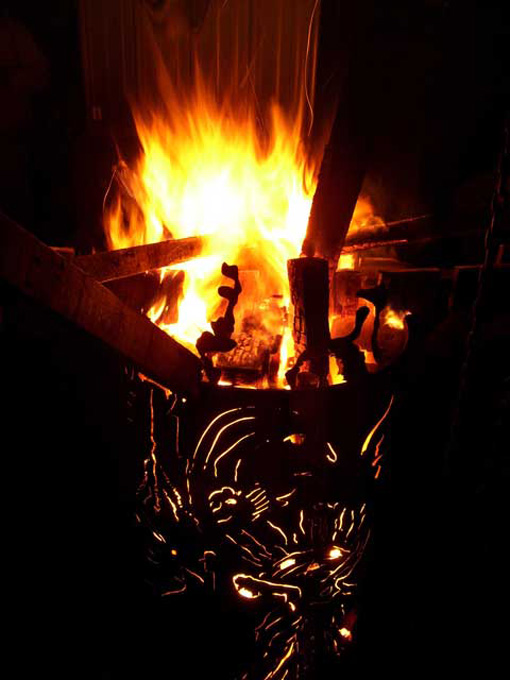
used to be a fire barrel out behind the Clifton Hotel. And, everything got burned up in it. Newspapers, magazines, letters with blood on them letters about nothing but blood, old photographs, bills both paid and unpaid, the cries of the anguished written directly on skin peeled away from the bone. Entire histories of human suffering went into the fire. Along with outlines for stories I couldn’t write, hundreds maybe thousands of poems that died before they were born, names all the aliases of the drifters who floated in and out of that hotel, gambling IOU’s, death threats, secret account books, pages from both Genesis and The Book of Revelations the kid who threw them in said Revelations burned the best. The names of the lost, the names of the dead. Garbage. Everything that could be incinerated was torched in that barrel.

I

was standing there watching the fire crawl up the side of an old shoebox when Jerry ran up and dropped some red sticks into the flames. Then he ran off about twenty feet before he turned and yelled, get the fuck out of there. I said, what were those red sticks. He said, you stupid bastard. Those weren’t red sticks. They were twelve gauge shotgun shells. I ducked behind a wall just as something blew a hole in the side of the fire barrel and all kinds of shit flew out. I said, Jesus Christ, Jerry, are you trying to kill me. He danced like a chicken going bicaw bicaw with his big arms going up and down when the second and third shells went off, some of the pellets peppering the side of the hotel. Goddam, he yelled. Did you see that? I love it when everything blows.

I

watched a guy burn a wanted poster with his picture on it in the fire barrel. I was able to read the name under his photo. I said, is your name really Jack North. He looked at me, took a switchblade out of his pocket, clicked it open, ran the blade up and down his bare arm like he was sharpening the steel on his skin and said, no, from now on it’s Jack West.

Sometimes

the old woman who owned the hotel would come out. She reminded me of a cinder wearing a soiled white dress. She never talked very much. Somebody once told me that she was really into heroin and maybe my old man was her connection, or at the very least her connection’s connection. Once she asked me if I was the one who liked to start fires. I said no. I could have told her it was Dickie Boy Johnson who lived down the street but instead I just kept quiet. I could tell by the way she looked she didn’t believe me. She said if I burned the hotel down I wouldn’t have anywhere to live. Did I really want that? I thought about telling her that living in the hotel was like living nowhere, nowhere at all. But I kept my mouth shut because my old man was the night clerk but I gave her a look. She said you know you are an outlaw, a fucking little firebug outlaw. I said, you better watch out. You’re standing too close to the fire. She put her right hand directly over the flames for a few quick seconds, then took it away and said, you can never be too close to a fire like this. She reached into her purse for a kleenex. I thought she was going for the little 25 auto she was supposed to be carrying and I stepped back. She gave me a bone smile and floated off in the smoke.

Lonny J

liked to tell about the switchman who murdered a hooker, cut her to pieces, and burned them up in the fire barrel. Lonny said he wasn’t living in the hotel at the time but would come by nights and toss big chunks of meat into the fire. I couldn’t tell by looking at Lonny’s face if he was telling the truth or just bullshitting me because he always walked around with a stupid smirk on his face. But, when I called him on it, he would start to bite his arm and make the blood come. Once he even flicked some of his blood on me. Sometimes I would see the switchman walking down the street and I would start looking at him. He had a funny shaped face. It was long and angular and almost bent in places. One day he stopped me and said if you keep staring at me that way I am going to have to do something. And, you won’t like it. My old man once told me that he had cold cocked a guy with a ball peen hammer and it left a soft spot in the back of the guy’s skull. The switchman was standing up close when he said it and I had my hand in my pocket on my switchblade knife. I didn’t know if I could cut anyone but I wasn’t going to let him do something either.

Once

in the winter while I was burning some old papers just to watch the fire go, my old man came out of the hotel and walked over. He was holding a pint of Jim Beam which had maybe one or two swallows left in it. He said, did you know that death is in there. I said, no, I didn’t. How can you tell? He took a hit of Beam and said, death smells like old rags burning. Old rags all covered with blood. He’s in there all right. I can smell him the way I can smell a hooker from a block away. Then he touched me on the shoulder and said, if death came to the door looking for me, would you ever let him in? I swallowed hard and said, I never heard of death doing anything like that. But, he does, my old man said. He does it every single day. And, when he isn’t knocking on doors, he’s waiting in there. He used his whiskey hand to point at the fire barrel. He waited a few seconds and said again, would you ever let him in? I swallowed hard again and said, no. And, if he does get in. Death is a sneaky motherfucker. My old man was standing so close to me that some of his whiskey spit was hitting me in the face. What if he gets in? Why, then, I’ll take a butcher knife to his eyes. A smile cracked my old man’s face in two and he said, Christ, that’s one to remember. Even if this is the last day of my life, that’s one to remember.

The

thing that I noticed about Smitty was he was holding a bottle of whiskey except that it wasn’t filled with whiskey. It was filled with gasoline and Smitty had corked it with a ripped shirt tail for a rag but it wasn’t lit yet and he was standing close to the fire barrel and all kinds of flames were pouring out. Smitty glanced over at me and said, you dare me. I waited a couple of seconds and said, why don’t we blow it up down at the river. He said, I wanna feel the fire get on me, I wanna feel the fire get all over me. You wanna die, I asked. I just wanna feel the fire get on me. Lets take it down to the river and blow up some hobo shack. Smitty said, can we shoot guns. I smiled and said, sure, lets go shoot guns. The second Smitty gave me the molotov cocktail and I stepped back, some sparks went up and missed us by inches.

My

old man’s novel went into that fire barrel. And, maybe all of my poetry comes out of it. I remember burning a short story I wrote after reading Hemingway’s The Killers, I stood close and watched the manuscript slide in. I remember burning a long poem I wrote after reading Whitman’s Song of Myself. I remember burning a novel I wrote after reading Jack London’s Call Of The Wild. My old man was standing in a black rain of scorched paper when he burned the only story he ever knew in that goddam barrel. Some of those ashes got caught in my clothes. And, no matter how hard I tried to shake them out, I couldn’t get them all. Some of them are still in there, even now. They heat me with their unbearable, their unforgiving darkness.

Leave a Comment

Filed under essays by todd moore

the blood of the poet

Every time I do a reading

I am haunted by the blood of the poet. Haunted and driven right to the void by the blood of John Berryman. The blood of Hart Crane. The blood of d. a. levy. The blood of Vladimir Mayakovsky. The blood of David Lerner. The blood of Christopher Marlowe. The blood of Francois Villon. The blood of Alexander Pushkin. The blood of Yannis Ritsos. The blood of Eugen Jebeleanu. The blood of Orhan Pamuk. His novel SNOW is really a poem in disguise. Mouth and brain blood. The poem emptied out for the rope and the bullet. Dostoevsky puking blood all over himself while still dreaming of the Karamazovs the last day of his life. Charles Bukowski shitting his pants with blood while death comes to collect it in little bowls or with cupped hands, though his bones hold nothing. And, somehow Sylvia Plath is able to curl up in the fetal position inside that oven. She is not only gassing herself. She is baking her blood and her eyes as well.

Every time I do a reading it is part Laurel and Hardy slapstick and part mongrel tragic ritual. Charlie Chaplin chained to Macbeth. Twin nooses with Buster Keaton looped at one end and Raskolnikov at the other. Because each reading stinks of the painted cave and the cinderblock classroom, the darkened church the whiskeyed barroom, the air sprayed salon the perfumed whorehouse. Each reading is done next to a pile of carelessly stacked bones on one side and a table full of books available for sale on the other. Every time I do a reading it is an event loaded with raucous laughter that just barely covers the enormous screams of the hanged. And, some readings are more intense than others. When I glance out at the audience, I might be looking for Isaac Babel with fresh bullet wounds stitching a ragged machine gun line across his chest. Two in the head for good measure. Or, I might be trying to find Bukowski slugging back one more bottle of beer. Or, maybe someone has hauled Lautreamont’s corpse to the reading. The body is carefully arranged so that the pale head is propped straight up, the mouth slightly open but no words are coming out. And, even though Lautreamont has his eyes tightly closed, I can almost see them staring out through the rotting flesh of the lids.

And, every reading is loaded with the expectation of the unpredictable souped to the max. Will the poet suddenly pull a revolver and try to shoot out the lights? Will the poet yank a silver flask out of his coat pocket and take a large hit of white lightning or a tall glass of pernod? Or will he wrap a bottle of ripple in a brown paper sack and just swill it down copious like? Will the poet collapse in a frenzy? Will the poet fall down and writhe and attempt to speak in the tongues of the great ones? There is always the possibility that the poet will either embarrass him or herself by exposing his genitals. Or, to be more blunt his fully erect cock or her yawning cunt. Or maybe the poet will shit himself while delivering the lines to the best poem he ever wrote. Or, maybe the poet will blow his brains out at the end of the reading. The piss spray of brain matter raining all over the faces of those sitting in the front row. The ultimate gesture of slapstick violence and laughter with blood. Every audience secretly longs for that, lusts for that. It would outmovie the movies and every good poetry reading’s an unscripted movie. And, It’s also startgame and endgame, the Circus Maximus of the unleashed unholy word. The duende of language, massacre, lightning, blood, love, nightmare, and despair. Reading a poem even to just one person is pitting the alphabet against the longing for chaos.

Still, most of the time these things rarely happen. More often than not, the poet is worried about how he or she looks and is the mike working and are these really the best poems to read and have they been rehearsed enough and is there even a faint odor of armpit and if so is that desirable or not and are there any potential publishers in the audience and will the timing be right and will the audience love him because it is really all about love and out hipping hip and though sometimes just sometimes a poet who is honest with himself secretly longs for the audience to revile him, to hate him, to boo him, to walk out on him to shoot him to absolutely despise what he is reading because white hot hatred and unconditional love are the two polar emotions that a poet really wants from his audience. Everything else stinks of wine and cheese and who got what grant, the canned small talk, the nattering gossip revolving around fame. Most of the time readings are exercises in costumes and cosmetics. Most of the time whatever wildness that existed in the poetry has been exorcised out kicked out smoothed over and what remains floors no one, speaks to no one, wounds no one, affronts no one.

And, what good is poetry if it doesn’t do that? What good is a poem that will sit down, roll over, go fetch, bark on cue and be lovably cute? What good is a poem that performs good naturedly on command? What good is a well behaved poem? A poem that will not bite you in the ass or through the jugular? Mandelstam knows the answer to that one. I wish I could have been there the night he read his Joseph Stalin poem. Of course, his ultimate prize was arrest, the gulag, and finally execution. That night, that electrical night, did Mandelstam stutter? Or, did he read in a loud clear voice? And, was there a little drop of blood at the corner of his mouth? And, was that death clapping at the back of the room?

Every poetry reading is a speaking in tongues. Every poetry reading is a long chant conjuring those demons from the darkest of the dark. Every poetry reading is dance for and against the music of time. Every poetry reading is an assault on order and restraint. Every poetry reading is a quick black hole behind the poet waiting to be born. And, that goes for the mediocre readings as well. Sometimes I can sit at the back of a room while a poet is reading and I can hear the low hum of the raw poem aching to escape from the mediocre language. I can hear the intensity of a poem in a howl or a whisper, I can hear a poem in just a little spray of breath. Reading a great poem is like falling down drunk in the trainwreck of language. Reading a poem is like letting the night enter your bones. When you read a poem you marry language to the bare wire of night.

Because a poem may or may not be a rock song, may or may not be a ballad, may or may not be a blues song, may or may not be a death song, but in some songs, some poems there is something so low down, so dark, so fuckup that even death gets the shakes and loses a bone in that red hot mother of a smacked hard chill.

Imagine Billy the Kid reading Dillinger’s Thompson, his voice going so far down in the canyon that it gets lost in a tangle of hawks and the snakes. Imagine Dillinger reading out of THE COLLECTED WORKS OF BILLY THE KID just before going to see MANHATTAN MELODRAMA. Imagine Elizabeth Short reading an Alex Gildzen poem that has her starring in her own death movie. Imagine Dutch Schultz reading the scraped and wounded heart of NAKED LUNCH. Imagine Robert Johnson reading Give Me The Night. Imagine Robert Bolano reading the last few pages of UNDER THE VOLCANO. Imagine Sam Peckinpah reading NO COUNTRY FOR OLD MAN to his smashed and twisted shadow. Imagine Shakespeare reading The Legend of the Grand Inquisitor at the Globe and it’s all dark except for one candle burning and Shakespeare’s voice is beginning to crack.

The reason I like poetry readings is that they offer so many existential possibilities, so many razor edge scenarios, so much pure nitro packed into a line. A poetry reading may sometimes include rare moments for the desperate human gesture, the extreme message to or from the void. I have seen fistfights at poetry readings, I have seen poets pass out in front of the mike from alcohol and drugs, I have seen poets conjure the darkest of shadows, and I have seen death come to a reading tricked out as a child. The only way you can tell this is death is to look at the eyes the pure nothingness way back in the eyes. Poetry readings may be the last refuge for the human voice and the power of dreaming. Poetry readings attract beautiful charlatans and unhinged geniuses. And, I am drawn to them both. The irresistible charlatan and the midnight genius are the kind of people who set me on fire. Who level me with just a half dozen syllables. They paint me darkly.

As for the venue, it doesn’t matter where I read. I might be reading in Café Esperanto in Rockford, Illinois, where the walls are covered with the signs and symbols of nightfire mixed with language only now the letters have been splashed on in wide swaths of blood. Or, maybe I am giving a reading somewhere in a French Quarter dive and sitting in the audience is Tony Moffeit who has theorized that the ritual of doing a poetry reading is part of some larger ceremony called the Theater of Blood. Sitting next to Tony is the Chicken Man or his larger than life ghost. Chicken Man keeps flashing a 38 special under his coat. When he smiles his mouth opens on something so dark and neon red it hurts the eyes. And, later in the evening the Chicken Man will be presiding over a voodoo blood conjuring. I am haunted by the blood of the poet in the Theater of Blood, in the city of blood and the nightmare universe of blood. Or, maybe I am reading to the ghosts of the Anasazi in Chaco Canyon while everything pulses with the wind and the blood of the old ones and the feeling of their blood is everywhere. It permeates the stones, it invents the first and the last alphabet of breath. Whatever happened to that last Anasazi poem, who has it now, where did it bleed to? Or, maybe I am reading to the ghostdancers out on the great plains and they are dancing pools of blood right out of the ground. The blood of Black Elk and Big Foot and Sitting Bull. The blood of the machinegunned warriors has turned into rivers.. Their shot to hell poetry, their stolen bones, their sledge hammered eyes.

I am reading The Name Is Dillinger in Erie, Pennsylvania. I have been drinking cheap red wine all afternoon and into the evening. Ron Androla is there. Rick Lopez is there. Lonnie Sherman is there. We are all fucked up on hash and wine and poetry and the room is dark except for quick spots of light where the shadows are moving into and out of each other. But, the place where I’ll be reading is bathed in red light with large corona of darkness all around. It’s the kind of red light that completely dissolves the black type on a white page. And, I know that I am in big trouble because I never memorize poetry. I hate well acted performance poetry because it is cooked and artificial and ultimately phony. And, on some primal it level does not connect with the blood of who I am or the dreams that eat me from the inside out. So, when I get up I already know in my mind what I have to do. I have to totally improvise all twenty five pages of The Name Is Dillinger in that blood on blood light. I remember distinctly reading the first few lines and the last few lines but the in between part has remained a haze. The one thing I do recall is that there were moments during that reading when it felt like I was alternately swimming and floating and drowning in blood.

I am reading in the Clifton Café to another kid who also wants to be a poet. The joint reeks of stale beef gravy and sour vegetable stew. It’s 1959. The few poems that I have I scrawled out on a long yellow legal pad. The poems are anything but legal. Even then I dreamed outlaw, I dreamed B movies and gangster apocalypse. I have a couple of poems about hookers and a couple about railroad men and a couple about alkies. They don’t work I can feel it in my blood these things you know with your skin and your longing. But, I have no idea about how a poem should look and I have no idea about how a poem should sound. Still, that doesn’t stop me because I am intoxicated with the idea of just writing a poem, just getting it down on paper because I believed then as I believe now that just the act of writing somehow sets you free and I am thinking maybe Pasternak will like this and I am thinking maybe Ginsberg will like this and I am thinking maybe Kerouac will like this and two blocks away a freight is rattling past a soot blackened building and I can feel the table that I am sitting at shake a little and a fat cockroach skitters across the floor past my foot but I let it go because this is poetry and you shouldn’t kill anything while you are reading a poem an idea that I have thrown out since then you should kill everyone while you are reading you should knock the whole audience out and blow them to pieces while you are reading and the café coffee tastes as bitter as blood as bitter as a hooker’s nipple as bitter as dead man’s eyes and I really don’t give a shit how bad the poems are because at some primal level I know how lousy they are but they are a kind of down payment on what I am going to do and I know I am going to write something I am going to write something that will kick the nightmare right out of the marrow.

I am reading live on KUNM 89.9 FM in Albuquerque, New Mexico. It’s a Sunday afternoon, August 18, 1996. A blood red poster announces that the reading is sponsored by Big Web Enterprises aka Mark Weber in association with the Live Variety Show. The poster is decorated with the image of a machine gun and an Arthur Dove drawing of two men robbing a bank. The reading is taking place at the old Outpost on Morningside. This is Albuquerque’s foremost jazz venue and I will be reading with J. A. Deane. On the poster he is listed as trombone and electronics. Deane is actually a genius at electronic composition and this will be a live and improvised performance. To get ready for it, I spent the previous week reading out loud with all of the radios and tv’s on and turned up high in the house. I wanted the noise, I needed the noise because I wanted the wreckage of sound in my ears to prepare me for what I was about to read. It was the last section of DILLINGER. The Corpse Is Dreaming is the jump down title and it plays out into “at the biograph theater.” This is Dillinger’s death scene and when I wrote it I was trying to crawl into those last few seconds and nano seconds of Dillinger’s life. I wanted to somehow feel the splinteredness, the brokenness of what he was going through. And, in order to do this reading I had to try to make myself fully aware of the noise of his death, the noise in his ears and the noise in his blood. Because without that the poem would just be a recording of a historical fact. A poem of aboutness. I realized that when Picasso painted Guernica he had to dream himself being blown up inside of that Basque village, he had to nightmare it all the way down to the moist grave dirt. He had to be psychically blown to smithereens and still be able to paint what he saw and felt. And that’s how I felt about The Corpse Is Dreaming. I had to be psychically shot in the back of the head and all of the noise of the world had to pour into me in order to write this section and then in order to read this section, read it with dream holes all over my throat.

J. A. Deane and I did a trial run through of The Corpse just an hour before air time and it seemed flawless. Then we performed it live on the air. The one thing to keep in mind is that this poem takes at least forty four minutes to read in performance. Just to read it once the way it essentially deserves to be read is enough to exhaust anyone. Think of it this way. Imagine HAMLET condensed into just forty four minutes of howling intensity. Because The Corpse Is Dreaming is nothing if it is not explosively intense. It feels like having your skin torn off in long strips while your brain is intact and still functioning. The only other reading that I can imagine would be this intense is Ginsberg doing HOWL. And, the haunted part of this reading is that somewhere right in the middle of The Corpse I began to see the back of Dillinger’s head where the bullet hole was. I began to see it and I began to smell his dying and I began to feel the way his blood smeared his hair and my hand. The strange thing about doing a poetry reading is that if you are any good at it, you can read the poem, you can give that performance and outwardly you appear to be connecting with both the words and the audience. But, somewhere in the deepest part of you where the blood and the electricity and the dark matter are, somewhere back in that red painted cave you are enacting or reenacting an all too mortal performance for that shadowy other. That’s where the blood ritual begins and ends. It’s where the performance of something you’ve written suddenly tears the top of your head off. But you can’t let on to your audience that the top of your head is gone. You have to keep reading, you have to stay in the dance. You have to ghost dance it right into their blasé indifferent fuck you faces.

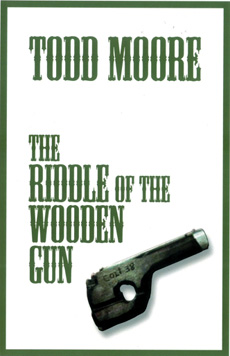
I am reading in my basement in Belvidere, Illinois, with Dennis Gulling. We are recording it all over a six pack of beer and each poem makes a swallow taste better. I am reading with Pat McKinnon in Duluth, Minnesota. I am reading with Joe Napora at Woodland Pattern Books in Milwaukee, Wisconsin. I am reading to the seals and the ocean at the edge of the continent in Sea Ranch, California. I am reading with Tony Moffeit and Charles Plymell in Great Bend, Kansas. Plymell wants to know if he can cop some codeine strictly for medicinal purposes. I am reading with John Macker in Mountainair, New Mexico. He’s performing some new poems out of UNDERGROUND SKY. I am reading at the Gerald Peters Gallery in Santa Fe NM with S. A. Griffin. He’s doing poems from the manuscript of NUMBSKULL SUTRA. I am reading poems with Mark Weber in his living room. We are surrounded by equipment and collaborating on a series about a desert reprobate/outlaw called Cherokee Hawkins. I am reading Relentless at Gary Wilkie’s Acequia Books on Fourth Street in Albuquerque. There is a guy sitting near the back of the audience who makes me think of Cormac McCarthy’s Chigurh. If I didn’t know any better I’d say he has a peculiar bulge just under his jacket. I am reading some pages from The Riddle of the Wooden Gun to Gary Brower at the Flying Star up in the Albuquerque Heights. Cormac McCarthy is sitting three tables away talking to someone who looks like some big shot Hollywood agent. I am reading at the Blue Moon head to head with Joe Pachinko while Christopher Robin paces the room while Misti Rainwater-Lites dreams of reading poetry to rock star crowds while an old dog takes a hard shit just outside the door. I am reading Death Song in my office to no one. Slowly, the shadows begin to inch closer and closer. I am reading out of DILLINGER with Tim Wells in The Cellar, a pub in Covent Garden, London. Miles Bell sits near the back. Niall O’Sullivan presides over it all. The nonstop pints are flowing.

Poetry readings are as much missed opportunities as they are mortally charged moments. For every Ginsberg reading HOWL there are ten thousand poets reading poems that don’t work and never will. For every William Carlos Williams reading out of PATERSON there are a hundred thousand poets who can only dream of writing as well as the thrown out lines from PATERSON. Or substitute Stevens here or Robert Duncan or Robert Creeley. My own missed opportunities are legion. I missed Charles Olson reading at Beloit College because I was studying for the finals of my master’s degree. I was right on the cusp of writing poetry then, of just saying fuckit I’ll do it no matter what. I never once heard Bukowski read and wish I had. I missed hearing Jack Micheline read, I missed hearing William S. Burroughs read, I missed hearing Jack Kerouac read, I missed hearing Robert Lowell read, I missed hearing Ray Bremser read. I missed Raymond Carver read because he died before he could travel to the college near where I lived. And, I wanted to hear him read, I was really looking forward to it. I missed hearing Neruda read. Somehow, just witnessing a great poet read is an act of completion. Waking up into that barrage of the raw language of origins is the primal absolution for any poet, any writer who longs to be healed by the tidal wave of a poem.

And, every reading is an echo of every other reading. If Cormac McCarthy ever gave a reading, I think I would hear echoes of Melville and Faulkner. Or imagine Shakespeare reading scenes out of HAMLET to Ben Jonson and realizes that he has never heard anything quite like it before but also knows that he will hear echoes of it replay for the rest of his life. Or, imagine Dante reading THE INFERNO to a bonfire made up of broken sticks and bloody rags and he is standing as close as he can without getting burned and he can actually see the lines from his poem go inside the flames and dance around in there. Or, imagine Rilke getting up enough nerve to read one of his poems to Tolstoy. Or, Whitman is trying to read Song of Myself to the Atlantic and every once in awhile a big wave will come in and try to swamp him. One great reading contains the history of all language, the shadow heart of all the best talking.

I’m trying to dream myself back to Café Voltaire. I’m trying to dream myself back to 6 Gallery in San Francisco. I’m trying to dream myself back to the Irish Rose in Rockford. I’m trying to dream myself back to Woodland Pattern in Milwaukee. I’m trying to dream myself back to the Super Chief Diner in Las Vegas, New Mexico. I’m trying to dream myself back to the Mercury Café in Denver. I’m trying to dream myself back to the Stray Dog in Petersburg, Russia. I’m trying to dream myself back to Dillingers in Chicago. I’m looking for one of the dives where Rimbaud may have performed in Paris. I’m looking for that bar where right in the middle of a poem Ray Bremser arm wrestled death and won and death said, This isn’t over. I’m looking for a café so rich and primal and dangerous and dark with the word that all you would have to do is write a poem on the wall in blood and the place would start shaking and strange words would slide out of cracks in the bricks.

And, I’m looking for that drop dead reading where the poet gets up and throws out all of his performance gestures, his cooked phrasing, his timed pauses, his raised eyebrows, his little band that dutifully backs him up for nearly every word, I’m waiting for him to throw it all out, and instead of relying on memory he resorts to the scorched page where the poem is still writhing, still a huge part of the ether and oozing with the suck and pull of duende packed dark matter. Because the page has blood on it and because the page has spit on it because the page has drink rings on it and because the page stinks all to hell of the poet’s and the poem’s DNA. I’m looking for the poet who has just written seven poems in a row one two three four five six seven just like that and then gets up to read all of them cold, with all of his heat and all of his violence and all of his glorious futility. No time to practice, no rehearsals for this kind of shit, just gets up and does it, what I want is all of it, the complete comic tragic collision, Beckett doing KRAPPS LAST TAPE as though he knows it is also his last go round, Bukowski heckling the hecklers, Mark Weber at his raw Okie best, Kell Robertson swilling the vodka and beer and reading Pretty Boy Floyd, Ed Sanders roaring through Hymn To The Rebel Café, I want Gerald Locklin reading from TOAD, doing the Charleston and missing some of the steps, I want the ghost voice of Tony Moffeit doing Wanted Dead Or Alive only this time his voice box almost comes out of his body along with the words, I want all the fluffed lines, the skipped words, the coughing fits, the beer runs, the throat choking, the dry heaves, the pratfalls, the breath gaps, the pounding bang bang bang of the poem pouring out nervously on a mike that contains the accumulation of the earth’s rank sounds or maybe the mike isn’t working at all and it’s up to the poet to project, to spew it all out in some kind of toweringly huge rage, and he’s yelling at the corrosive edge of his voice, and when he looks up he loses his place and then gets it back but is off a couple of beats and he is drunk with his fuckups and the power of the poem, and he has strained his voice so much that blood is coming out along with his words. He is speaking with all the rawness of his pentup blood. This is where the cuteness of poetry is gone, this is where all of the well timed punch lines have been burnt off and blown away, this is where the wreckage of language piles into the void. This is where Homer really started to write the ILIAD. And this is where I have been rummaging for bits and pieces of DILLINGER nearly all of my life. And, I’m still searching, yet. For as long as it takes.

1 Comment

Filed under essays by todd moore

the old man’s waiting

There are a handful of writers

I wish I’d have known. It’s a fairly short list. I’ve tried to keep it simple. Let’s start with Rimbaud. He probably would’ve been dangerous to know at any time in his life, but what the hell. It would’ve been better to go to the edge with him than hang out with some chickenshit poet who never takes chances. The most dangerous time of all to be around Rimbaud might’ve been during Scorpio when anything can happen. Try to picture Rimbaud and William S. Burroughs shooting wine bottles off each other’s heads. And, later, stoned playing russian roulette.

And Hemingway. Knowing Hemingway at any time in his life would sure as hell have been a ride. Hemingway in Paris. Hemingway in Africa. Hemingway on the Pilar. Hemingway under fire. Hemingway with the most beautiful woman in the world. Hemingway in Montana. Hemingway bellying up to any bar in the world and making it how own. And, Hemingway anywhere with a gun in his hand.

And Dashiell Hammett. The idea of hanging out with Hammett in Butte, Montana, in 1917 when the copper kings tried to hire him to kill some union guy. Hammett shadowing a fugitive for the Pinkertons down a dark Frisco street. Hammett gloriously drunk on his ass in Hollywood for years and years. Hammett in the Aleutians during World War Two and Hammett telling the House Un-American Activities Committee to fuck themselves in hell.

Last of all Bukowski. In 1970 I was just starting out as a poet. I was thirty-three years old, a college grad, stupid as hell, and had bounced out of public school teaching and then back into it. This time I’d made up my mind to write poetry. It was a do or die thing. A jump into the bonfire, a throw of the dice, an all out run to the edge. Sounds like the same old story with a slightly different twist. And, I’d been reading poetry by the carloads, the truckloads, the boatloads, the trainloads, whole libraries of poetry just to catch up. Or, at least I thought that’s what you had to do if you wanted to slap the words on the paper. I didn’t realize all it took was opening a door to the blood.

Strangely enough, it wasn’t Bukowski who pointed the way. LIFE STUDIES, Robert Lowell’s book, somehow got me digging into my own background and origins. And, I started to write about my alcoholic father and the whorehouse hotel I’d lived in with my parents, my two brothers and sister. We were holed up in two rooms, it was a cockroach infested cave. Still, we had our own toilet which was one of the perks.

For at least half of the half of the fifties I lived the life of a con artist and small time thief. Some of my best friends would graduate to burglary, arson, stickups, and murder. The only thing that saved me was an abiding idea that I was going to be a writer. Somehow, some way I was going to be a writer.

And, when I finally was able to put it all together at thirty three, I started mining the memories of what I had seen and what I had been. And, that’s when I began to read Charles Bukowski. Not in big gulps at first, because I still wanted to hold onto my own voice, my own staked out piece of authenticity and I wasn’t going to compromise that for one second. But, I still read Bukowski in quick outlaw snatches. I stuck mostly to the poetry, though I did end up reading some of the novels.

This was sometime in the late seventies when I finally knew who I was as a poet. By this time, I was writing DILLINGER and had a few chapbooks out and finally felt I had the world by the ass. Which was an illusion.

The one thing that I began to realize was that Bukowski and I were appearing regularly in some of the same little magazines. I’d known for some time that I had a writing style all my own. The short line, the quick stroke of in your face violence was my little noir invention. And, now here I was being published in the same magazines with Charles Bukowski. That, alone, gave me the added illusion that we were competing, going at it, head to head, toe to toe, mano a mano. It was an illusion that would carry me along for ten years. Maybe as many as fifteen tops.

The thing is I was competing with him but he probably had no more idea of who I was than he had of the hookers who passed him on the street. Still, it gave me something to go on. It was the gas I poured into the engine of poetry.

That whole time it seemed as though Bukowski was indestructible. I suppose it was part of his tough guy persona. Every time I think of Bukowski, I see him as a slim fortysomething show off sitting on a park bench smoking a cigarette. Just the way he holds himself there in that photo reminded me of so many guys I used to know who did the same damned thing. Or that shot of him chugging a bottle of beer as he walks along some city street. He’s oblivious to everything except the beer and maybe the way it’s washing down his throat. Or that snapshot of him bent over a book during a reading, half smirking into it, maybe in the act of heckling a heckler. Or maybe just tell the world to go get fucked.

Bukowski always came across as the Bogart of poetry. The Bogie who went straight from DEAD END to THE TREASURE OF SIERRA MADRE, without so much as THE MALTESE FALCON or CASABLANCE to soften the image. His face was craggier than Bogart’s. His head was oversized and almost too big for his body. The same was true of Lorca but Lorca was handsome and Bukowski was simply straight out homely. And, yet, despite his pocked looks, Bukowski head a peculiar kind of charisma. Or call it whatever you want to. Still, he gave off something like an energy charge that got your attention. It probably didn’t matter if you were watching him on video or you were there with him in person. The camera should have hated him, but instead it fell in love with his face. With that large, beaten, totalled out wreckage of a face.

And, suddenly, he was just simply a celebrity. He’d been talking about being famous for years and then it happened. And, I have a sneaking hunch it scared the shit out of him. Otherwise, why did he move out of L.A. to that little out of the way tree-lined street in San Pedro? I’ll always wonder about that.

Also, somewhere in the late eighties or early nineties the toughness went out of him. You can catch glimpses of a certain fragility in some of his later poems. The way he became obsessed with death and the way he looked in the late snapshots. Like someone or something had sucked the life right out of him.

I wasn’t surprised by the news of his death but I was shocked. Shocked in the way that I was shocked by the news of my own father’s death even though I knew he was dying of cancer. Shocked because both Bukowski and my father had been such vital and alive men.

And, for a long time, it seemed as though there was a gaping hole in that part of American poetry where Bukowski had been such a large force. And, the illusion of competition had passed away along with Bukowski. And, there were no more lies I could tell myself. Now, there was only the void to write against. Maybe that was the way it had been all along. And, I’m sure Bukowski had known that.

If anyone possessed an authentic voice in twentieth-century American poetry, it was Charles Bukowski. There was none of that mincing academic pretentiousness that you see in so many of our official poets. No attempt to be nice, obliging, or politically correct. He belonged in the company of giants, writers like Ernest Hemingway, Jack Kerouac, William Carlos Williams, Thomas McGrath, Allen Ginsberg. He was an original. Which is to say he had that certain something that makes you want to say, yeah, I’d know that voice anywhere.

Bukowski wasn’t as sophisticated as Hemingway, though neither one had a college education. Bukowski was strictly L.A. and Hemingway was the man of the world. Yet, what Bukowski lacked in sophistication he more than made up for in energy, drive, the balls-out way that he lived, and his unerring honesty about the way things are out on the street.

Even now, years after his death, his work is still as strong as ever and it’s not going to go away. Not long ago a young slam poet came up to me at a reading and said, “You know that Charles Bukowski. Shit, i’m gonna kick his ass.” I just smiled and said, “The old man’s waiting.”

This essay appeared in a slightly different form in DRINKING WITH BUKOWSKI: RECOLLECTIONS OF THE POET LAUREAT OF SKID ROW, edited by Daniel Weizmann, Thunder’s Mouth Press, New York, 2000.

Leave a Comment

Filed under essays by todd moore

the fevers and sweats of the nightmare poem

THINGS I DIDN’T KNOW I LOVED

is both a poem and the title of a book of poetry by one of my all time heroes, the Turkish poet Nazim Hikmet. Published by Persea Books back in 1975, this book is what got me into Hikmet’s work. But, more than that the title poem is one of those books I wish I’d written along with SONG OF MYSELF, HOWL, POST OFFICE, BLOOD MERIDIAN, MOBY DICK, HAMLET, and the list goes on. Anyway, every time I read this poem it just knocks me out. It floors me with the immense blood and breath and authenticity. I know this is a translation and not the original Turkish that Hikmet wrote in but I love it anyway. The thing is some poems open you up like a fifty caliber machine gun slug. Just one. Then the rest of the burst just blows you apart.

The first time I read HOWL it was like that. I was sitting in the Clifton Café trying to write something. Some days I get jumpy if I don’t write something. It was the summer of 1958. I had taken a year off from the university. I had had it up to my ears with classes and lectures and footnotes and bullshit. I wasn’t quite twenty one years old and I knew I was going to become a great novelist but I was really a poet the whole time and somebody I forget who had given me a copy of HOWL. It was the 1956 edition and it was filled with marginal notes like fucken a, holy shit, and I know these people.

Before I got into HOWL I forced myself to write something. Twenty lines maybe in the style of Rimbaud out of Edith Starkie. When I finished, I opened HOWL. The first line hooked me. Then the next line sunk the hook deeper, third line even deeper yet. And, I was going and I didn’t stop until the end and even then I could feel the force of that voice still hitting me. Some poems are like fevers that you never get over. HOWLis one. Before I left the café I tore up the poem that I wrote and dropped the scraps into my coffee cup and the waitress said, what a goddam mess you left me with. Poets have a bad habit of leaving messes, but I knew the poem was just no good to begin with. You simply know that about some poems going in and you have to tear them to shreds, destroy them because they are lies to the voice and lies the dream. But not HOWL . HOWL is a poem you have to reckon with. Straight or gay, it is one of the doors you have to open to get to someplace else.

I think I remember once telling the only writing teacher I ever had that I wanted to write a book of poems about James Dean. The guy nearly lost it. He was lighting a cigaret and he dropped it and the match on the floor. Then he gave me a look and said, you can’t do that. My god, man, you’d make a fool out of yourself. You’d be much better off getting a PhD in English. Then you could write all the poetry you’d ever want. That’s what I’m going to do. He got the doctorate. He taught. I don’t know if he ever wrote anything. At least I never heard. He’s been dead a long time now.

Maybe the trick is to fuck up. Just fuck it all up. And, then write something out of that failure. I personally have fucked up so many ways I can’t even begin to count them all. Walt Whitman was a fuck up. Hart Crane was a fuck up. John Berryman was a fuck up. Charles Bukowski was the all time american fuck up. And, Rimbaud was definitely a major fuck up. Poetry somehow comes out of fucking up. Great poetry comes out of huge, monster fuck ups.

Back in the early seventies I was looking for a way into DILLINGER. I’d write fifty short poems and then hate them. I’d try writing something longer and then quit. It went like that for a couple of years. And, then by accident or maybe a fuck up I decided to publish a short chapbook with a guy from Chicago. He was supposed to show up on a Saturday, but he never made it. Never even called. A couple of months later I heard from a friend of his that he had gone to India to discover himself. I’m not even sure that he made it as far as Des Moines, Iowa.

I know I made it to the couch that night with a bottle of beer. The late movie on the local channel was THE PETRIFIED FOREST. That was one movie I’d never seen, but I’d heard that this was Bogart’s breakout film so I sat back and relaxed. The minute Bogart made his entrance as Duke Mantee, it hit me. This was Dillinger. There was no doubt about it as far as I was concerned. Bogart could have been Dillinger’s twin brother, though I think Bogart was really four years older. Still, he had the same rough and ready, kicked bark look that Dillinger had. And, the way that Bogart moved. Let’s put it this way. Bogart’s strut and those moves he did with his arms and the way he hitched up his trousers had to be very similar to some mannerisms. Not many days after that I started to get the opening lines to The Name Is Dillinger of Dillinger’s. My friend’s fuck up was just what I needed. It knocked me toward something larger than I could have imagined.

And, maybe that’s what Hikmet’s THINGS I DIDN’T KNOW I LOVED is all about. Hikmet didn’t know he loved the soil and trees and rivers and roads and the sea and the cosmos. He is looking out the window of the Prague-Berlin train and all of this is just coming to him as a poem, like a kind of psychic auto biography and also like little movies of things he sees as he rides along. Little scraps of his life occur to him, short scenarios of women he’s been with, translating WAR AND PEACE into Turkish, nightmare visions of prison life. Even if Hikmet had not written another poem as good as this one, I’d still count him as a major poet simply because this is a poem that should be read as long as we break our eyes with impossible dreams.

Some poems do this to you and you can’t help it and if you could help it you wouldn’t be a poet in the first place. John Yamrus’ Bukowski’s Property is just such a poem. I remember reading his book ONE STEP AT A TIME and having this poem jump out at me and wrestle me to the ground. This is the part that really got me going.

this poem
isn’t mine these
thoughts aren’t
mine these
sentences aren’t
mine these
cadences
aren’t
mine these
lines aren’t
mine

A whole generation of poets have been strongly influenced by Charles Bukowski including John Yamrus, but in this poem Yamrus somehow wrenches himself free of Bukowski’s influence by admitting that influence in a stark, bald language that is totally John Yamrus. And, in this one poem Yamrus creates a style and way of talking in poetry that is unmistakably his and his alone. And, I love this poem in a way that Hikmet might have understood.

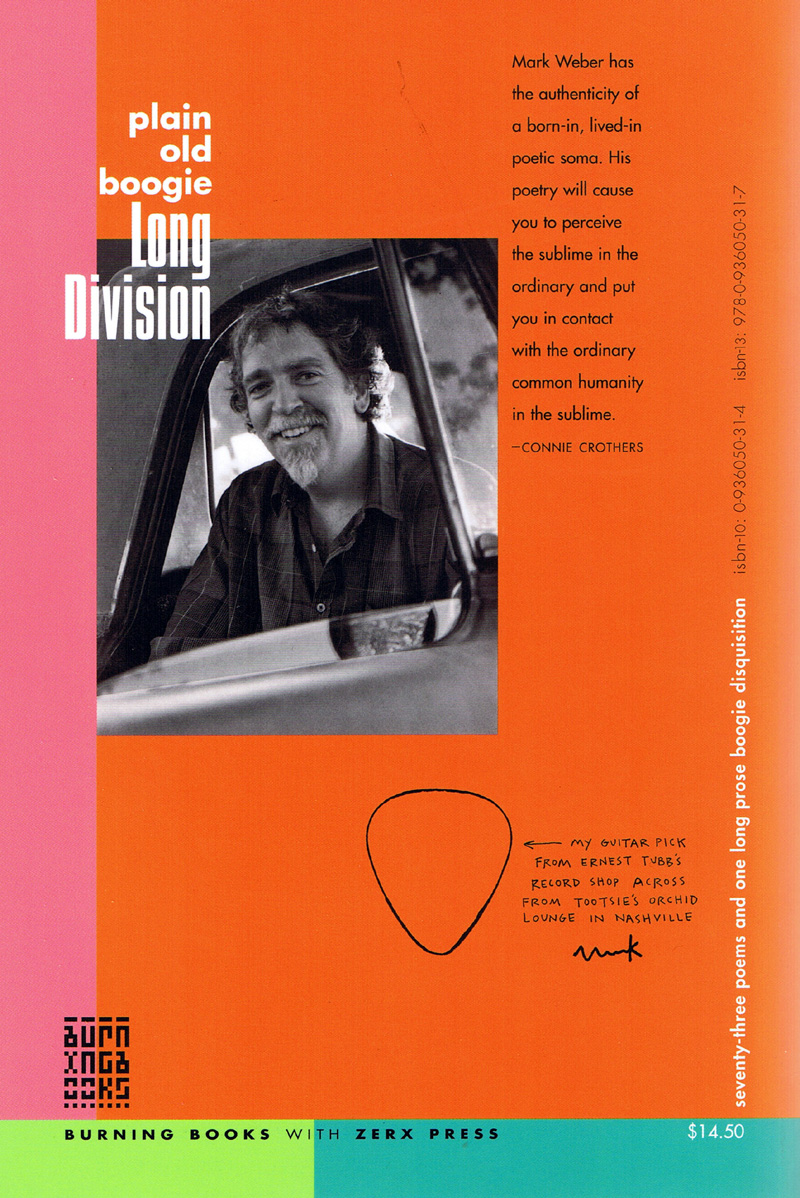
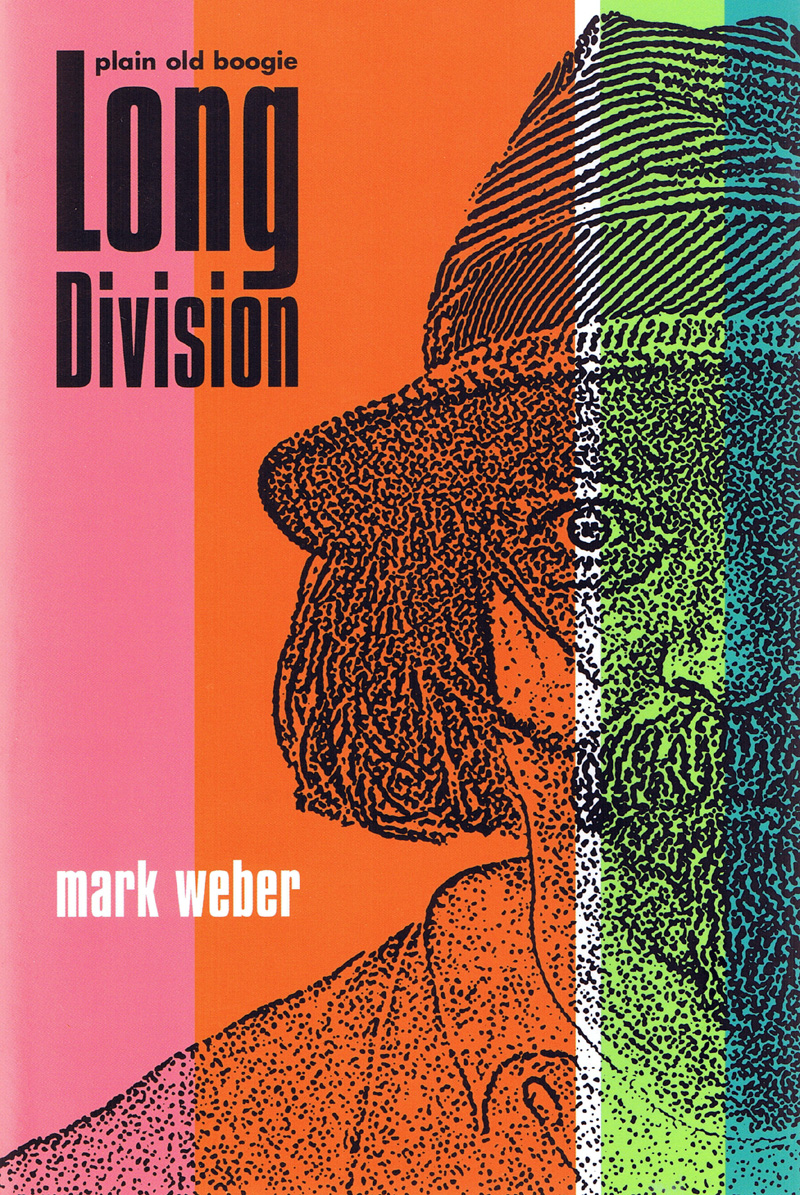
Or, let’s take these lines from PLAIN OLD BOOGIE LONG DIVISION, Mark Weber, Burning Books/Zerx Press.

the baddest of the totally bad cats
was Little Walter, no question
overblown distorted and completely
in your face harmonica
hypnotic
long wailing swoops
hard stops
grab your jugular up against a wall
hard driving
hard bitten
crazy intimidated knife edge of a gamble
drunken coil of malevolence
spine tingling
crazy mixed up world
intensity beyond intensity
growling & incandescent
make your hair stand on end
make you run
make you dance
make you laugh crazy
blow your speakers out
57 Chevy w/flames

The intensity of these lines almost makes me want to sit in that 57 Chevy w/flames and listen to Little Walter send those long wailing swoops into that fire. What I love about poems like this is they just naturally have the power to set you on fire.

It’s just a short leap from Mark Weber to I WANT TO WEAR YOUR SKIN AND WRITE YOUR NAME IN BLOOD. This is a line from Moffeit’s novel in progress BLUES FOR BILLY THE KID. The novel is unique for its intense exploration of the myth, legend, and dream of the outlaw Billy the Kid. And, the line from the novel is maybe the sub text for everything Billy and maybe even the sub text for poetry itself. You really are not a poet if you don’t somehow shake and burn for another poet’s words. It’s probably impossible to count how many poets Lorca has influenced. I often wish I had written his essay THE PLAY AND THEORY OF THE DUENDE. Personally, I think it is his version of a hybrid essay/prose poem. It works on so many levels that it feels like a movie playing out in the skull.

I wish I written Kell Robertson’s The Gunfighter or Pretty Boy Floyd. Either one of those poems is a masterpiece. I wish I’d written PATERSON or THE WASTE LAND. I wish I’d written MOBY DICK or BLOOD MERIDIAN. I wish I’d written ADVENTURES IN THE GUNTRADE or BLUES FOR BILLY THE KID. I wish I’d written POET HEAD or NUMBSKULL SUTRA. I wish I’d written POET IN NEW YORK or A CLOUD IN PANTS. I wish I’d written GUNSLINGER but I didn’t so I’ll have to make do with DILLINGER.

That won’t stop me from stealing with intensity from everyone else. That’s the outlaw in me. It’s all about loving the fevers and sweats of the nightmare poem.

Things I Didn’t Know I Loved

it’s 1962 March 28th
I’m sitting by the window on the Prague-Berlin train
night is falling
I never knew I liked
night descending like a tired bird on a smoky wet plain
I don’t like
comparing nightfall to a tired bird

I didn’t know I loved the earth
can someone who hasn’t worked the earth love it
I’ve never worked the earth
it must be my only Platonic love

and here I’ve loved rivers all this time
whether motionless like this they curl skirting the hills
European hills crowned with chateaus
or whether stretched out flat as far as the eye can see
I know you can’t wash in the same river even once
I know the river will bring new lights you’ll never see
I know we live slightly longer than a horse but not nearly as long as a crow
I know this has troubled people before
and will trouble those after me
I know all this has been said a thousand times before
and will be said after me

I didn’t know I loved the sky
cloudy or clear
the blue vault Andrei studied on his back at Borodino
in prison I translated both volumes of War and Peace into Turkish
I hear voices
not from the blue vault but from the yard
the guards are beating someone again
I didn’t know I loved trees
bare beeches near Moscow in Peredelkino
they come upon me in winter noble and modest
beeches are Russian the way poplars are Turkish
“the poplars of Izmir
losing their leaves. . .
they call me The Knife. . .
lover like a young tree. . .
I blow stately mansions sky-high”
in the Ilgaz woods in 1920 I tied an embroidered linen handkerchief
to a pine bough for luck

I never knew I loved roads
even the asphalt kind
Vera’s behind the wheel we’re driving from Moscow to the Crimea
Koktebele
formerly “Goktepé ili” in Turkish
the two of us inside a closed box
the world flows past on both sides distant and mute
I was never so close to anyone in my life
bandits stopped me on the red road between Bolu and Geredé
when I was eighteen
apart from my life I didn’t have anything in the wagon they could take
and at eighteen our lives are what we value least
I’ve written this somewhere before
wading through a dark muddy street I’m going to the shadow play
Ramazan night
a paper lantern leading the way
maybe nothing like this ever happened
maybe I read it somewhere an eight-year-old boy
going to the shadow play
Ramazan night in Istanbul holding his grandfather’s hand
his grandfather has on a fez and is wearing the fur coat
with a sable collar over his robe
and there’s a lantern in the servant’s hand
and I can’t contain myself for joy
flowers come to mind for some reason
poppies cactuses jonquils
in the jonquil garden in Kadikoy Istanbul I kissed Marika
fresh almonds on her breath
I was seventeen
my heart on a swing touched the sky
I didn’t know I loved flowers
friends sent me three red carnations in prison

I just remembered the stars
I love them too
whether I’m floored watching them from below
or whether I’m flying at their side

I have some questions for the cosmonauts
were the stars much bigger
did they look like huge jewels on black velvet
or apricots on orange
did you feel proud to get closer to the stars
I saw color photos of the cosmos in Ogonek magazine now don’t
be upset comrades but nonfigurative shall we say or abstract
well some of them looked just like such paintings which is to
say they were terribly figurative and concrete
my heart was in my mouth looking at them
they are our endless desire to grasp things
seeing them I could even think of death and not feel at all sad
I never knew I loved the cosmos

snow flashes in front of my eyes
both heavy wet steady snow and the dry whirling kind
I didn’t know I liked snow

I never knew I loved the sun
even when setting cherry-red as now
in Istanbul too it sometimes sets in postcard colors
but you aren’t about to paint it that way
I didn’t know I loved the sea
except the Sea of Azov
or how much

I didn’t know I loved clouds
whether I’m under or up above them
whether they look like giants or shaggy white beasts

moonlight the falsest the most languid the most petit-bourgeois
strikes me
I like it

I didn’t know I liked rain
whether it falls like a fine net or splatters against the glass my
heart leaves me tangled up in a net or trapped inside a drop

and takes off for uncharted countries I didn’t know I loved
rain but why did I suddenly discover all these passions sitting
by the window on the Prague-Berlin train
is it because I lit my sixth cigarette
one alone could kill me
is it because I’m half dead from thinking about someone back in Moscow
her hair straw-blond eyelashes blue

the train plunges on through the pitch-black night
I never knew I liked the night pitch-black
sparks fly from the engine
I didn’t know I loved sparks
I didn’t know I loved so many things and I had to wait until sixty
to find it out sitting by the window on the Prague-Berlin train
watching the world disappear as if on a journey of no return

19 April 1962
Moscow

Nazim Hikmet

Translation by Randy Blasing and Mutlu Konuk (1993)

Leave a Comment

Filed under essays by todd moore

reading the movies, watching the poems

I love to play movies in my head.

Just little scenes that come out of nowhere and go back to the chaos of nightmare and dream. Maybe I’ll have Billy the Kid talking to Pat Garrett. The Kid is in jail waiting to be hanged and Garrett is sitting at his desk playing two handed poker and the Kid says, who are you dealing cards to? The chair on the other side of your desk is empty. And, Garrett takes the roll your own out of his mouth, balances it on the edge of the desk where there are burn marks from other cigarets that had been previously parked there and says, I’m playing against death. And, the Kid says, that’s a game you can never win. And, Garrett replies, I know but that doesn’t stop me from trying. And, the Kid is thinking, I’m playing, too, and I’m gonna win. I love scenes like that where the odds are impossible. Harrison Ford jumping off the falls in THE FUGITIVE. Paul Newman and Robert Redford jumping off the cliff into the river in BUTCH CASSIDY AND THE SUNDANCE KID. I love it when somebody fucks with death. I live in those moments. The electricity is eating me alive.

I love to play scenes from the classics in my head. Like where Alfonso Bedoya is telling Bogart, we don’t need no stinking badges. And every time I play that part I always change it just a little. Maybe I’ll have Bedoya saying badges so hard that spit will shoot out of his mouth in all directions. Or, maybe I’ll have one of his eyes start to turn toward the dark place where his eye socket and nose bridge meet like it’s trying to turn toward the darkest region inside his skull.

In THE MAN WHO SHOT LIBERTY VALANCE, I really wanted to know more about Liberty Valance and not nearly so much about Jimmy Stewart because Stewart was so noble that he was boring. Maybe that’s why John Ford made the movie in black and white because there was so much black and white in the characters and hardly any in between. Hardly any neutral darkness that could lead to real evil. I really wanted to know how low down killer badass John Wayne could be because it took a John Wayne to kill Lee Marvin’s Liberty Valance. But, it was Lee Marvin I was really interested in. Marvin had something that was hair trigger and unpredictably archetypal that I loved. I knew kids like him back in the old hotel days. Kids who played with guns and kids who liked to burn people’s houses down.

The interesting thing to suppose is that John Wayne wasn’t lurking in the shadows when Stewart met Marvin on that dark deserted old west street. Wayne was off somewhere getting nastily drunk and Stewart had decided to let Marvin shoot him but to somehow keep walking, somehow hold onto that little pistol and Marvin being Marvin kept putting slug after slug into Stewart. The right arm, the left arm. The hip. But Stewart steadfastly holds onto that pistol and Marvin makes the mistake of letting Stewart get close because he figures he can finish Stewart any time he wants to. And, when Stewart does get close he somehow brings that wounded arm up. Camera closeup of Marvin’s face is laughter mixed with colossal surprise. Then Stewart fires and the bullet hole shows up very black in Marvin’s forehead. And, Marvin opens his mouth to say something and we get to see all that darkness inside.

REBEL WITHOUT A CAUSE. The chickie run. James Dean and Buzz are getting all ready to climb into their cars for the race to the edge to see who will jump first before the car goes over. And there is a short silence between them. Then Buzz takes the switchblade out of his pocket and slides it into James Dean’s hand and says, you won’t mind holding onto this for me, will you? Dean gives him that quirky Dean look, winks and says, see you at the edge. Because Dean is more in love with the edge than Buzz could ever be. Dean has been racing toward the edge all of his life.

CHINATOWN. Right near the end when Faye Dunaway has been shot dead behind the wheel of her car and she has gone head down on the steering wheel triggering the horn and Jack Nicholson is standing there while Joe Mantell who plays Lawrence Walsh, one of the associates in his detective agency tries to calm him down. What he says is, forget it, Jake. It’s Chinatown. I love that scene and have reshot it from who knows how many angles in my head. And, when I’ve exhausted them I have to go back and watch the movie all over again. Because movies like that have become national myths, places where we can go to live, places of immense psychic residence. I know I often go to those shadow houses again in my dreams.

Can you think of any poems written during the last fifty years that have the same kind of impact as LIBERTY VALANCE, REBEL WITHOUT A CAUSE, CHINATOWN? Or, lets go more recent. How about Clint Eastwood’s UNFORGIVEN where Eastwood says, we all have it coming. How about the way that Sean Penn gets completely unhinged and takes on that haunted look in MYSTIC RIVER? Or consider the end of MYSTIC RIVER where Kevin Bacon points his gunfinger at Penn and Penn just shrugs? Or, how about that crazy flashpoint second when Javier Bardem says, call it friendo, in NO COUNTRY FOR OLD MEN? And, I’m just using scenes from movies I picked at random. How many lines from poems written in the last fifty years have had the same effect on you? Have driven you out of and back into your blood. How many lines from poems have you tried on like fantastic old clothes, they jump you, they bushwhack the living shit right out of you. How many. Come on, how many?

Lets just cut to the chase and ask the question, if I am so goddam all knowing, why haven’t I been making movies instead of writing poems for the last forty years? Because those little movies I run in my head are the origins of poems. Among them, DILLINGER, WORKING ON MY DUENDE. Because I am compelled to write poetry the way that Dillinger was compelled to rob banks. Because I cannot deny the line or the breath or the blood of the poem. It is the angel that fights me And, I think the question is still valid. Are there any poems that haunt you the way that movies do? Personally, I am haunted by Plath’s ARIEL and I am haunted by Ted Hughes’ CROW. I am haunted by William Carlos Williams’ To Elsie and I am haunted by Allen Ginsberg’s HOWL and I am haunted by Charles Bukowski’s BURNING IN WATER, DROWNING IN FLAME and I am haunted by Lorca and I am haunted by Neruda and I am haunted by the very intense best of Vladimir Mayakovsky. And, this is the tip of the tip of the iceberg.

The big difference between great movies and great poems is that movies are instantaneous. Wham. All we have to do is shove a DVD into the machine, hit play, and settle back. Or else, just go to the movies, kick back in stadium seating with that big drink in the rich rich dark where everything is waiting and let the movie dream you. With a poem you have to work for it. And even though you make yourself comfortable, you still have to read it, you have to give yourself up to the very first line, you have to immerse yourself in the words, drown in them, go so far down in them that for a second you might think you are not coming back up, you have to push yourself into the dance, the murder, and the play. Someone once said, writing poetry busts guts. Well, reading poetry requires almost as much effort. The way I read poetry is I pretend it’s a movie. It’s dark inside and I’m in there all alone and I have the best seat in the house and anything can happen and I want it to I want it to so much that it hurts.

What happens with me is that somehow I have learned to bring the movies into the way that I read. Think of it this way. The only way to read is to read dangerously. To read so that you veins are exposed to the words. I can be reading THE WASTE LAND one more time and also thinking about that ear getting cut off in RESERVOIR DOGS. I can be reading LETTERS TO AN IMAGINARY FRIEND and thinking about Warren Beatty getting all shot up at the end of BONNIE AND CLYDE. I can be reading Jim Thompson’s THE KILLER INSIDE ME and also getting lines for a new section of DILLINGER where Dillinger says every bullet in his Thompson is dreaming. The thing that I’ve discovered is that scenes of certain movies invade me at the oddest of moments, especially when I’m writing, and sometimes a line from a poem will go through my head while I am watching a movie. And, then the line and the movie get all mixed together. I can’t help it, this is the way I have been wired, it’s the way that I am. Going to a movie is the psychic equivalent to getting a blood transfusion. The blood of the movie, where the rolling credits turn into a poem.

I need movies in the eyes, I need poems in the dreams. Reading is watching, watching is reading. I read movies the way I watch poems. I float in a movie river of darkness and dreams.


4 Comments

Filed under essays by todd moore

love, longing, dillinger, disaster

Have you ever wanted to talk to Ernest Hemingway? Just wanted to sit down at a table in some Paris bistro and ask him when he knew that Jake Barnes belonged to him, was his totally and absolutely. When THE SUN ALSO RISES was his book to write and that nobody else was meant to do it? Have you ever wanted to look into Hemingway’s eyes, just look into his eyes while he was talking about Barnes the way he might talk about his nightmares or his best fantasies?

Have you ever wanted to talk to John Steinbeck? Have you ever wanted to ask him about when he realized that Tom Joad wasn’t just any Okie? Have you ever wanted to ask Steinbeck when he knew that Tom Joad was becoming enormous inside the words, that Tom Joad was starting to have veins and arteries and was actually dreaming on his own? And, maybe you were sitting with Steinbeck in an old shot and beer saloon and Steinbeck was just starting on his third round and he was talking about how Joad would sit down with him and start telling him parts of the book as though they were stories Joad had heard in prison or from other drifters, america’s famously and infamously dispossessed, and the more that Steinbeck talked the more that Tom Joad talked and was really coming into the miracle of his voice. And, when Steinbeck finally put THE GRAPES OF WRATH out on the table, there was a bloody fingerprint just above the word WRATH on the book jacket.

Have you ever wanted to sit down with Faulkner in Musso and Frank’s in Los Angeles and have a ham on rye and a tall cold beer while Faulkner talked about THE BEAR. He wasn’t eating, just talking and occasionally doing a shot. And, he wasn’t talking about the people in the story. Instead, he was just concentrating on Old Ben, the bear. He was telling about the day he thought of Old Ben and just the idea of that animal gave him fever chills and goose bumps and he couldn’t wait to sit down and start writing. And, while Faulkner told about Old Ben, his voice went hauntingly low and his eyes got that southern, victoriously defeated look about them, and pretty soon his talking made my sandwich and my beer taste so much better.

Have you ever wanted to meet Cormac McCarthy accidentally in an Albuquerque restaurant way up in the heights. McCarthy thinks nobody knows who he is. But, he is wrong, I know him, or at least what he looks like. He is talking to maybe an agent or a Hollywood producer. Who knows, the man looks like some kind of big shot. But, that doesn’t matter. What does matter is the way that McCarthy is talking. He’s gesturing and is very animated and excited about something. Maybe he’s telling about how Chigurh, the killer of NO COUNTRY FOR OLD MEN, came to him. Maybe it was a nightmare. Maybe it was a newspaper story. Or, he might be talking about Judge Holden, BLOOD MERIDIAN, the novel that he will never be able to shake from his memory and dreams. I am sitting half a room away, can’t hear the conversation, but in a peculiar way am almost a part of it. I’ve wanted to ask him about Judge Holden. I would love to spend five minutes with McCarthy about Holden or even Chigurh. But it is a part of McCarthy’s personal code, he despises strangers who approach him for autographs or questions. So, I respect that code. But, I know there is something I can do. When his friend gets up for a coffee refill, I decided to leave by the exit door which is located just behind McCarthy. To do that I need to approach his table and walk around it to reach the exit. What I am interested in is not so much conversation. I just want to look into his eyes. I just want to see what his eyes are like. And, I want to play a kind of psychic chickie run just to see who will blink first. I want to see what his reaction will be like when I look like I am heading straight for him.

So, now I am on my feet. McCarthy is looking down at the table at nothing in particular, dirty plates, soiled napkins. This takes up a second or so. When he glances up, I am walking in a straight line toward him. He is aware of it now. He still has a calm expression on his face but that changes in the next second or two. Suddenly, he begins to shift around in his chair, but just slightly. Maybe he’s looking for a place to escape to. Maybe he doesn’t want to make eye contact. Now I am just a few feet from his table. He has stopped shifting around and he is staring straight at me, but it isn’t a friendly look. I can sense some anger in it, maybe some rage. And, it is now occurring to me that maybe I would be looking this way if the situation were reversed. Maybe I’d be pissed off, too. But now I am in this thing right to the end. And, I need to really look into his eyes. I need to see them up close and personal, as though this is some kind of psychic combat. I notice that McCarthy has tensed himself. It looks as though he might stand up. I am sliding around his table and his face has flushed and he looks as though he might stand up. Now, I am on the other side of the table walking past him and I can just barely see him watching me out of the corner of his eye and then it is over and I am going out the door.

I never did see Judge Holden in that stare. Or Chigurh. Or anyone else from his novels. And, maybe I didn’t want to or need to. A signed book is useless, an artifact, an object that may or may not be worth money. But it does nothing to conjure that writer’s characters or dreams. The fact is that I didn’t discover a thing from that encounter. Nothing, nada. Except the primal fear of a famous man who seriously wants to be left alone.

And, in that moment I also realized that it would do no good to talk to Hemingway, to Steinbeck, to Faulkner either. That Jake Barnes and Tom Joad and Judge Holden and Chigurh don’t really live in that blood anymore. Even though I was hoping against hope that they could.

Later, in a coffeehouse halfway across town, I sat thinking about what had just happened. Dillinger was sitting across from me. Or, lets just say that I imagined Dillinger sitting across from me maybe the way that McCarthy might privately conjure Holden or that Melville in the depths of his depression would conjure Ahab. Dillinger didn’t say anything, he just sat there and let me have my silence. And, that’s when I realized that a character like Judge Holden or Huck Finn or Jay Gatsby or Dillinger become more than just someone found in a book. You can’t own Ahab. Melville cobbled him out of flensing blades and harpoons him but he couldn’t own him. You can’t own Joseph K. Kafka put him together with blood angst and longing but he couldn’t own him. You can’t own Moosbrugger. Robert Musil hammered him out of knife blades and hatchets but you can’t own him. And you can’t own Chinaski. Bukowski found him among the beer rags and racing forms but you can’t own him. Somehow the memorable, the great characters all slip their moorings and become free. The critics would like to think that they own them, but that won’t happen even on their best days. Bloom could never own Hamlet, no matter how many theories that he devises. Hamlet will always have a dream tie to Shakespeare who can’t really own him either. The great characters are very much like great outlaws. They step outside the bounds. They belong to no one except maybe an archetypal wind. They are the sum totals of their books and then they become the world as well.

Nights Dillinger comes and goes. I hear him enter, then leave the house. He carries the dream machine gun I gave him. I know he drives out into the desert looking for something. Maybe it is the next section of the poem that he’s in. Or, maybe it’s the blood rich darkness of an america longing for the black pour, the expectation of love and disaster.

1 Comment

Filed under essays by todd moore

nightmare frenzy

Kenny G. wasn’t looking for a blackjack in the face. He was the kind of guy who wanted to talk shit to you before he kicked your ass. He wanted to scare you by telling you what he was going to do to you. High and low. Maybe if you just took it, he’d give you a fat lip and let you go with a warning. Or, maybe he’d just beat the living hell out of you for the fun of it just to watch you yell. Then he’d go from there to giving you a shove or punching you hard in the chest or guts. It was his idea of fight foreplay.

So, the blackjack surprised him. Surprised and hurt him both at the same time. I’d found it down in the Illinois Central railyards between two freight cars. It was stamped Illinois Central Railroad on one side and had some initials on the other. I figure some railroad cop had accidentally dropped it and suddenly it was my lucky day. If you can call a tool made specifically for crunching bones luck.

The best advice I ever got from my old man was when you hit a guy, give it to him straight in the face and make it hard. As hard as you ever hit anything because when you land a punch in the face just right the pain radiates everywhere. And, it really fucks up the eyes. So, that’s where I hit Kenny G. with that jack. He was still talking when I swung and the sound it made was like a hammer sinking into meat. Kenny G. finished his sentence spitting by out a tooth and a whole lot of blood. And, while he was bent in half, I hit him again. A drunk coming out of The Rainbow Tap I was standing in front of said, you didn’t give him a chance. And, I said, he didn’t deserve one. I had let him become one of my demons until I caught his blood in my hands.

We dream our assassins. We open that psychic door and we invite them right in. Hemingway kept inviting them in until he became them. Isaac Babel played gangster games with them until they morphed into the secret police and got him. And, Benya Krik was absolutely no help at all. Mayakovsky performed with the demon assassins until one of them handed him a pistol and said, you know what to do. Lorca thought that if he conjured the duende assassins they would love him so much they’d leave him alone. Instead, they loved him so much they shot him dead.

The thing is you can’t write a decent line of poetry until you invite the demons in. The demons who are also the assassins. Lorca knew that and included the threat of death in the theory of the duende. It doesn’t matter if you call that phantom death, demons, or assassins. They all amount to the same thing. And, if the poems you write aren’t seasoned with the blood that the demon assassins provide, they won’t be worth the paper they’re written on. And, by the way, the blood is usually yours.

Lorca had already invented his assassins long before they came to arrest him. I’m absolutely sure of that. I can see him having a midnight snack with one on a candle lit veranda while he’s writing the lines, If I die, please/ Leave the window open (Farewell). I think Lorca knew his assassins intimately. Which ones loved red roses because they resembled wounds, which ones loved the black holes their pistols made when they shot them into the blinding light of high noon.

In certain ways we all know our demons intimately. Their dreams are our nightmares. And, in a secret way we know those demons will become our assassins. Especially if we are poets. Undoubtedly, if we are poets. Maybe we are even hoping for it. A poet who believes he is also an outlaw might keep a loaded pistol in his desk drawer and tell himself it’s for the demons. It won’t do any good against the demons but it’s comforting to know that a loaded pistol is just waiting to be held. William S. Burroughs knew that. He had lots of pistols and the demons loved him dearly. And, he loved them beyond human love itself.

You can’t be an outlaw poet and not love weapons. It’s part of your weakness, it’s part of your nature, it’s just part of what you do. You may not rob banks, you may not shoot people, but there is some secret part of your being that is attracted to weapons and head over heels in love with danger. You may not own any guns, but that doesn’t stop you from loving them. Lorca may not necessarily have been in love with weapons but he was attracted to violence, he was attracted to danger and that was the door he let the demons pour through.

A powerful poem is as visceral as a gunshot wound. When it’s new it just smolders in the air all around the poet who wrote it. Smolders and burns. Later that poem wound congeals and becomes a kind of molten thing. It still burns internally but not like that first few minutes after it was written. A powerful poem is visceral and burns like a gunshot wound and death can smell the wound’s rot and also himself. And, while some poems are meant to heal, others are meant to annihilate, destroy.

A SEASON IN HELL can destroy you. THE NAKED LUNCH can destroy you. OEDIPUS REX and THE BOOK OF JOB can destroy you. THE BLIND OWL, which is not a poem but reads like a poem, can destroy you. Judge Holden’s sheer strength can crush every bone in your body, destroy you. The rage of Ahab and Dillinger can destroy you. The madness of HOWL can destroy you. Some poems are weapons all by themselves. Some poems are like wolves, they devour us. They eat us alive heart and soul, even down to the bones. Chigurh will destroy you, he knows where you live.

So, why is it we are drawn to the worst ones? Or, if we is not appropriate here, then why am I drawn to the worst ones? The outlaws who live apocalyptically, darkly, created through some kind of special dispensation with nightmare, fever, poison, and frenzy. Even Dillinger dreamed his own assassins. Everything was available to him. Dillinger dreamed his assassins so he could drain off some of their dark energy for the robbing of banks. And, yes, that might be a stretch because Dillinger was definitely not an intellectual. And, he really wasn’t interested in the black arts. But, I believe that he dreamed powerfully, that he dreamed lethally. And, I believe that in his unconscious he was betting against the odds that the demons would get him. He was betting against the odds because somewhere subliminally he believed he was above the odds. He knew against all knowing that he was better than any demon out there. Nietszche believed the same thing and he was betting Zarathustra that he was right. And, Dostoevsky was betting Raskolnikov, Melville was betting Ahab, Shakespeare was betting Hamlet, Goethe was betting Faust, and I am betting Dillinger. The bet is always outlaw and fatal. Archetypal characters are stronger than anyone’s demon assassins. Archetypal characters are the real outlaws of poetry and somehow they will always win.

Leave a Comment

Filed under essays by todd moore