Category Archives: essays by todd moore

the long way home and the blood on the floor

Think of those flash moments since 1989

which have defined poetry in America. The deaths of Bukowski, Ginsberg, and Micheline. The birth and the cultural impact of the internet. The publication of that audacious anthology THE OUTLAW BIBLE OF AMERICAN POETRY. Nine eleven. The founding of the Outlaw Generation. The appearance of St. Vitus Poetry Review the first zine totally dedicated to publishing Outlaw Poetry. The emergence of Monsieur K’s  Metropolis and Outlaw Poetry and Free Jazz Network websites open to the work of Outlaw Poets everywhere. The recent election of Barack Obama. And, maybe not on quite the same scale, but still important as a cultural high point is that moment which occurred when Raindog Armstrong started a modest black and white monthly zine called the Lummox Journal. Published from October 1995 to 2006, this literary mag was anything but modest as far as writerly ambitions were concerned. The way I gauge a magazine is how much I look forward to reading it and Lummox was the one zine that I really looked forward to receiving in the mail. As an editor, Raindog Armstrong has one of the most discerning eyes in the biz. He always seemed to know which essay, which interview, and what poems would work and he never let you down. The best poets in the small press, at one time or another, appeared in Lummox. The various tables of contents were an honor roll of the really important poets working the line in America.

And, it somehow just made sense that Raindog would branch out into chapbook publishing. However, these weren’t the kinds of slash and burn publications I was used to or had previously experimented with myself. These Little Red Books became distinctive in both size and color. You could grab one of these blood red babies off the dining room table, shove it into your shirt pocket and you had something to read over a Latte or a brew. And, this wasn’t simply casual reading. This was and remains the meat and potatoes of contemporary poetry. This was the real deal, equivalent in my mind to those first stark black and white chapbooks that City Lights icon Lawrence Ferlinghetti brought out in the late fifties early sixties. You don’t even have to open HOWL to know it’s a City Lights publication and you don’t have to crack the cover on a Little Red Book, you just simply know it came from Lummox. My prediction is that these LRB’s will shortly become very collectible on the rare book market if that isn’t already the case. And, this isn’t just due to the fact that they are pleasing to the eye. It’s also because the fifty nine chapbooks that were published between 1998 and 2008 are representative of what became a crucial time period in American poetry and in the culture as well.

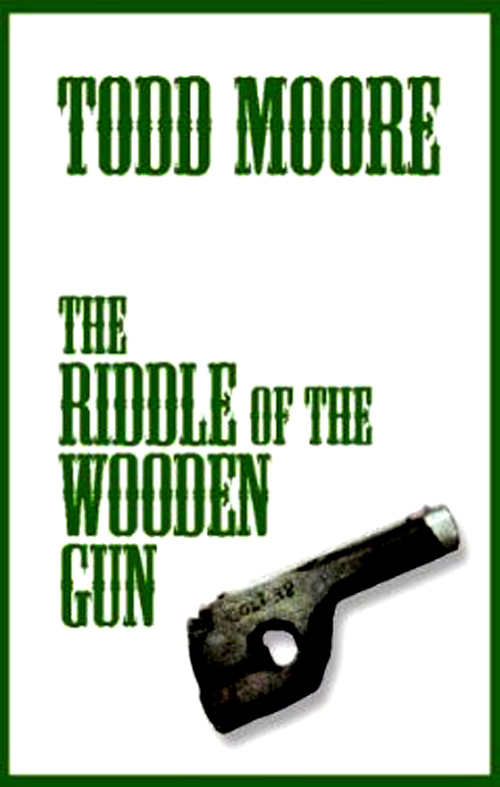
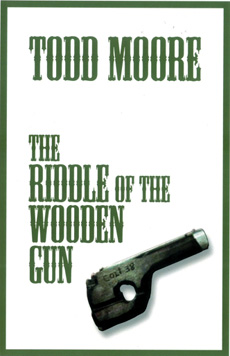
I use the word crucial because this truly is a time of change, not just in politics but in the culture as well. And, it’s exciting to witness this change in Lummox itself. Or, instead of change maybe I should say subtle explosion, because Lummox, like the Phoenix has been reborn, reconfigured, reconjured into something striking, even splendid. And, if you don’t believe me, take a look at John Yamrus’ NEW AND SELECTED POEMS, or my latest book length section of DILLINGER entitled THE RIDDLE OF THE WOODEN GUN, or the most recent Lummox publication THE LONG WAY HOME. This anthology is a compendium of the best poetry published in those Little Red Books from 1998 to 2008 and, if you just simply happened upon THE LONG WAY HOME on a bookstore shelf and if you are like me, you’d be unable to resist reaching for this volume. It’s one of the most attractive anthologies of poetry I’ve seen in awhile. The cover is set off in a stark black at top and bottom with a fire engine red swath across the middle. This is the kind of anthology which appeals to the primal instincts beginning with cover design and following through with the contents. And, if you think this is an exaggeration, try this poem by Scott Holstad.

Time to Fly

there are things inside you
and me

aaaaaaaatrocities

waiting to be committed
like my shoving this knife
into you
aaaaaaaaor me
and we love and hate
with equal madness

lets kill each other

please

Some poems contain within them the ability to inflict serious damage on the reader. This is one of the major reasons I believe that ultimately the best poetry of the age can take on any novel, anywhere, any time, and hold its own because this kind of poetry inflicts the deepest of psychic wounds.

Every Poem I Write

by Philomene Long

Every poem I write
Is a suicide

It will say
“I am your death
Hidden in a spasm
Of clay

Dazzling, ferocious
Now only a
Flame in your hand.”

THE LONG WAY HOME is one of those anthologies I can’t help but quote from because all the poems contained in this book are strong. You just know that they are going to be when you have poets like Scott Wannberg, Glenn Cooper, Linda Lerner, William Taylor Jr., nila northsun, Anita Wynn, and Gerald Locklin represented. The truth is, I couldn’t find one poem I didn’t like. For me the critical test when I read an anthology is, did I find any lines that I couldn’t help but repeat, any lines that played themselves over and over in my head, any lines that I quite frankly was tempted to steal.

I wanted to steal all of Normal’s BLOOD ON THE FLOOR. From the first line to the last this is one of those poems that got me, that hooked me into it and kept me reading. A. D. Winans’ Feeling Like Hank Did At Age 61 is an out and out classic. It’s classic Winans and a great memory of Charles Bukowski. And, I love Lawrence Welsh’s The Queen Of Odessa. We’ve all been there whether it’s Odessa, Texas or Rockford, Illinois and we’ve seen those wrecked queens of poverty standing on the side of the road with their grease penned signs reading, anywhere but here.

Like Tu Fu

by Mark Weber

poetry has eluded me for months
i spend the morning painting the window trim
on my house it is the writing that has eluded
me not the poetry i light an incense stick
and have a cup of coffee those poems by Tu Fu
have stuck with me until noon
his neighbor’s broken willow tree
wine that dispels a thousand cares
i should call that lady who asked me
to paint her house it is not so important
to write poetry all the time

This poem has been calling to me ever since the moment I read it about ten years ago. It’s one of Mark Weber’s quiet poems, a subtle conjuring. And, when Weber finally reaches the realization that “it is not so important/to write poetry all the time,” he actually has reached the heart and soul of the poem.

robert johnson

by Tony Moffeit

soil sifting
through lean
fingers that
pluck those
steel strings
tightened by
bottleneck to
give a sensual
groan that
unchains his
throat cuts
loose his
blues it’s
what makes
mud sanctify
blood anoint
watch his
hands his
fingers the
way they
gesture with
the glint of
his eyes call
the skies to
rip loose
the lightning
night for the
devil calling
in his dues

Some books become legends almost before they are published. This is how THE LONG WAY HOME feels to me. In a very real sense this book is the blood on the floor and it’s how I felt while I was reading it. I was both viscerally and intellectually excited and if this anthology is anything, it’s a total conjuring of some of the best small press poetry, if not the best, that has appeared in the last ten years. This is one of those books I already find myself going back to, the poems are that good. I have a feeling it will become one of those landmark anthologies, one I’ll keep next to the desk where I write just to remind me where the big fires are burning.

It will be my Robert Johnson, my Tu Fu, my Blood On The Floor. Todd Moore

Leave a Comment

Filed under essays by todd moore

the nightmare talking


The sound of a machine gun

is the nightmare conversation america is having with itself. Cagney winks at Bogart and says, you think you can upstage something like this. Bogart replies, I have always been trying to upstage death. He gets all the good lines but he can’t talk worth a shit. Snapshot of a man being executed during the Mexican Revolution. The machine gun has already gone off. The wall behind the man has adobe dust rising from it, meaning the bullets have already ricocheted off into some murderous wind. And, the man just stands there for a fraction of a second. He is dead even though his legs don’t know it. His arms are at his side but his hands are starting to come away from his body, as though they are in the middle of a question they are unable to ask. Now, his corpse is preparing to fall backward into the black night of earth.

Tyler liked to tell me stories about his grandfather. Said the old man served in the U.S. Cavalry during the Indian Wars. They put him on the Gatling gun because he used to scare the horses. Nobody ever understood why except that maybe it was the sound he got in his voice. An old shaman captured up in the Bear Paws claimed that death was back inside his throat and was doing the bone breaking sounds and that’s what got the horses so spooked. Anyway, he was good on the Gatling. The old man never talked about the people he’d killed with that gun. I remember him laughing once because he said when he cranked the G gun it was like he was the organ grinder of death and the damned thing was singing.

One thing I’ll never understand is why Sam Peckinpah never made a movie about John Dillinger. He made THE WILD BUNCH, he made THE GETAWAY, he made BRING ME THE HEAD OF ALFREDO GARCIA. Why didn’t he ever make a movie about John Dillinger? At just about the same time John Milius made DILLINGER, a good film, but not the kind of film that Peckinpah could have made, not one that conjured the nightmare thirties. And, all of these movies had Dillinger types in them. THE WILD BUNCH is packed with characters who remind me of Dillinger. But these are all aging Dillingers. These are outlaws caught in fatal endgames of their own violent longings. And, in THE WILD BUNCH and ALFREDO GARCIA the machine gun takes center stage and practically steals the film from the actors. It does because we are a nation in love with our murders.

The interesting thing about BRING ME THE HEAD OF ALFREDO GARCIA is that Warren Oates who plays Bennie spends part of the film driving around rural Mexico with the head of Alfredo Garcia stuck in a gunny sack and the whole time Bennie has a long dark conversation with the head. The idea of that kind of talking is undeniably attractive. The only thing even more appealing would have been if Peckinpah had filmed Oates talking to the Thompson sub machine gun. Because, that’s where all the serious talking in america takes place. It’s in the dark with our guns.

A black Ford cruises to the curb in front of a midwestern bank. It doesn’t matter which bank it is, they all look alike. Maybe it has fake doric columns in front and gold lettering on the windows and a man in a suit and tie is coming out carrying a brief case and a woman pauses in a blue flower print dress to look at women’s hats in a store window next to the bank and Dillinger turns around and says, Hey Charley, can you taste that? And, Makley says, taste what? And Dillinger smiles and says, the money Charley, the money. And, Makley says, almost, but can you feel this. What, Dillinger replies. My machine gun. Tell it to behave, Dillinger says. It has to be a good boy, this won’t take long. Makley smiles and says, whoever heard of a machine gun being good. Dillinger pretends to jack off the Thompson he is holding and says, a machine gun is good only if it is bad.

My old man passes a pint of whiskey across to a guy called Sully and says, do you still keep a Thompson under the bed. Sully takes a hit of the whiskey, holds it in his mouth for a little while, then swallows and says, I like to keep my women in bed and my Thompsons underneath. And, I always tell each one different stories. Does the machine gun ever talk back, my old man asks. Sully takes one more hit of the whiskey and passes it back. Then says, in ways you couldn’t even imagine.

The funny thing is my old man could imagine that kind of talking. He just couldn’t get it down on paper. But once he told me a story about seeing some guy after he’d been shot to death with a machine gun, bullet holes going across his chest, he said. The whole front of him covered in blood. Said they had the body in the police station before the undertaker came to get him. He was sprawled on an oil stain near a cruiser in the garage. One of the cops said, hey Earl, you want a souvenir. The cop took his jack knife out and cut a slug out of the dead man’s rib cage, wiped the blood off with a rag, and said, keep it in your pocket, it’ll bring you good luck.

What’s the secret of Dillinger, Marlowe asked. He leaned back in his chair and stuck a toothpick in his mouth. What secret, I asked, playing his game. The secret, you know, the moxie, the thing, the hook, the deal, the magic. I waited a couple of seconds and said, the secret of Dillinger is Dillinger. Marlowe grinned around his toothpick and said, now you’re fucking with me. Come on, you can tell me. What is it that makes Dillinger tick? His Thompson, I reply. He walks through a door with a Thompson in his hand.

The door thrown into the water ditch was painted pure black and had no doorknob and water coming down from the mountains was swirling all around it. I loved the sound of the water hitting the edges of the door. It sounded like a very gentle knocking. I knew that underneath the door was the cement floor of the ditch, but for awhile I pretended that there was a hole underneath it and if I went down into that hole, the passageway would lead me to some outlaw’s Thompson. A machine gun that had belonged to some nineteen twenties or thirties bandit. Maybe someone who had known Dillinger. And, maybe Dillinger had given him this machine gun as a token of friendship and that the bandit had buried it in this arroyo before cement had been poured into it and the machine gun was talking, was telling its stories to a nightmare america and that I was just lucky enough to be listening in. The trick is to listen as hard as you can to all of the best dreams and

the nightmare talking.

1 Comment

Filed under essays by todd moore

the dark side of america

The dark side of America

in Kansas City, the dark side of America in Pittsburgh, the dark side of America in El Paso, the dark side of America in St. Louis, the dark side of America in New York City, the dark side of America in Chicago, The dark side of America in New Orleans. The dark side of America is always out there and the dark side of America is always in here.

The dark side of America smells like burnt toast, the dark side of America smells like stale wine, the dark side of America smells like vomit laced with red chile, the dark side of America smells like garlic smeared on bullet lead which is just seconds away from being fired into a man’s kneecap, the dark side of America smells like cheap perfume and armpit hair, the dark side of America reeks of soap and crotch, the dark side of America tastes a little like snot, the dark side of America is a fuck finger caked with shit.

Shorty and I saw a red car come down the street and hit a little black dog. Sometimes when a car hits a dog, it will just run over the dog’s body, the car going bump like it hit a branch or a pothole but this time it almost looked like the dog was trying to jump toward the car and got hit full in the chest and flew over the hood. Sometimes I can see it in slowmo even now. At the time it made me feel a little sick but also a little excited like this was death in the raw and I didn’t have to pay any money for it like at the movies where all deaths are fake. And I can remember that dog coming down and hitting the pavement kind of like a pound of ground beef that my old man has slapped into the big iron frying pan that he rescued from the dump. The slap of the meat woke me up and then the driver pulled over to the curb, rolled down his window and said, that your dog kid. And, I said no, and he thought about it a couple of seconds and said, okay but here’s a buck anyhow to keep your mouth shut. Then the red car burned rubber all the way to the telephone pole at the alley. I looked over at Shorty who was touching the dog. He glanced up at me, said it ain’t moving but it’s still warm. He waited a couple of seconds, then said, does it look like it’s smiling to you.

I used to get the old movie stills mixed up with the photographs of real outlaws. The lobbies of the movie theaters in town were loaded with movie stills from the thirties and forties and it was a little ritual of mine to stop before each one like I was pausing before the stations of the cross. And, the kid I was going to the movies with would yell come on for chrissake we’ll miss the previews. And, I’d yell back, we’ll see them after the movie because I’m gonna have to sit through this one twice. I did that with WHITE HEAT, THE TREASURE OF SIERRA MADRE, THE ASPHALT JUNGLE, KISS OF DEATH, THE MALTESE FALCON, THE BIG SLEEP, and I don’t know how many others. Once, some kid said to me, why would you ever wanna see any movie twice, and my reply was, why wouldn’t I. It just seemed natural like learning to dream or stealing something and crime was like breathing, maybe the most natural thing of all.

We always had guns. Toy ones at first. BB guns next. Then the real ones. My old man would never let me have one but I had friends who found ways. The best place to go to shoot anything was down to the river or across that black water to the city dump where the rats were almost as big as small dogs and the shooting was easy and Lucky had a 22 revolver I forget the make I think it was one of those midnight specials and we would shoot at anything that moved in the garbage. I remember once watching a guy shoot the back legs off a feral dog with a 12 gauge shotgun. Somehow the dog got away in the underbrush and the guy kept saying, could you believe all that blood. I never told him but I always believed blood. Blood never lies.

Even in those old black and white movies where they didn’t show much blood, I believed in blood because in those days blood was all we had. A wino is sitting on the pavement behind the hotel. I walk outside and he looks up and smiles and says, this is good shit would you like to try a little and I tell him no. Just twenty feet away the fire barrel is going and the flames are flying up several feet above the rim of the barrel and the wino says, my soul is in there. But you know what, I can’t feel it burning. Then he adds, see all that green in the black smoke, that’s the color of a soul when it’s on fire.

When I was twelve I’d see a movie still of Bogart and think it was Dillinger. And, in a book, I’d see a photograph of Dillinger and think it was Bogart. It was easy to do they could have been brothers. And, even when I finally realized that Dillinger never made any movies and Bogart never robbed any banks I thought to myself that they should have. That maybe in some alternative universe each man had lived the other man’s life and that thought somehow made me feel good.

Rick pulled up his pants leg and showed me the bullet wound. It wasn’t what I had imagined. I thought I would see a hole in his leg that would go to the bone and that there would be blood going all around the bone but it wasn’t like that. I just saw this scooped out place in the pale skin of his leg. It looked like a scar and it didn’t look like a scar. I don’t know exactly what it looked like but it wasn’t what I expected. He touched it with his right index finger and said, I wasn’t supposed to get shot. My old man’s finger just touched the trigger and the gun went off and he was down on his hands and knees trying to make the hole go shut. But it wouldn’t because I don’t think it wanted to. He had another shot of Beam before he called the cops and they said it was an accident. I go to the movies now just to watch guys get shot to see if they do what I did. Some nights I swear to god I can dream with this thing. I never told him but I always thought his dreams were filled with the images of scars.

Red asked me how come you like guns so much? He was going into a prize fighter’s stance and motioning me to come at him. I backed up several steps because I knew he had a really nasty right cross, I’d seen him knock kids down in the gravel and then kick them and I’d made up my mind I wasn’t going to be one of them. What are you, a chicken, he said, doing the thumb on the nose thing like Cagney. You like guns, right, he did a couple of quick jabs at some phantom in the air and moved in low. Yeah, I said. Well, why doncha say why you like guns. You tell me, I said dancing away from an uppercut that was already ten feet out in front of me. You a wise guy, he said, dancing up and down like he was trying to do Sugar Ray and Fred Astaire both at the same time. It’s death, isn’t it, he said, still dancing. It’s history, I said. Gunfighter history like Billy the Kid, Wyatt Earp, you know the Old West shit. It’s death, he said. Guys who say history really mean death, but death is okay, death means you are a little fucked up and that means you are human. I’m not fucked up, I said, even though I knew I was a little fucked up but I never told anyone that. You didn’t talk that way to kids who could beat the shit out of you for just standing in the wrong place. Then he went wham wham, got him, and said, it’s okay to be a little fucked up and you know what, you never heard it from me.

Jerry was just standing there and the freight was starting to crank up the speed. To the left of us was a small holding pen for cattle and beyond that a hobo woods and beyond that the river. Jerry said, you ever wanna drown in the shit of that river. And I yell, you asshole, you trying to get yourself killed and Jerry goes I’m playing chicken and I go that freight ain’t gonna turn away and Jerry gives me the finger so I get up on the tracks with him like okay if he’s gonna stand there then I’m gonna stand there and he shoves me almost like he’s trying to get me to fight him and the train is bearing down on us now, I can feel the tracks shaking and the heat coming off that big engine’s steel and then Jerry shoves me again and that did it something went crazy fucken haywire in my head and I grabbed him as hard as I could and pulled him away and we both went down the weedy embankment and he was screaming fuck all the way down and when I looked up the freight was lunging past dragging bits of scrap paper with it and some of the gravel came down on top of us and Jerry was laughing and I said what the fuck were you thinking and he said my old man said I would never amount to anything and I just wanted to show him. So you tried to take on a train. Was he watching I asked. Jerry smiled and said, fuck no, he’s probably getting shitfaced in some dingy bar. Then if he wasn’t watching, what good was this, I said. Jerry smiled around the dark places in his teeth, pointed to his head and said, he wasn’t watching but he really was watching.

Cowboy liked to play Russian roulette with a Smith and Wesson 32. It was a break open pistol where the barrel would pop down and you’d load the cylinder while all those black cylinder eyes were staring at you. Once he showed me how it was done. We were standing between two garages behind the hotel where no one could see us and he took all the bullets out of the revolver and then put just one in. I watched him do it. He held that bullet between his thumb and index finger and slid it in. Then he clicked the barrel in place and spun the cylinder and it went around a couple of times, maybe three and stopped. He looked over at me. Cowboy had one of those square faces where the skin was drawn tight over bone and if he ever smiled I never saw it. He said, you wanna play. You go ahead, I said. I’ll just stand here and watch. You like to watch shit like this, don’t you. Some guys get off on watching. He lifted the revolver, his hand came up quickly, faster than I expected. He put the gun barrel point first in the hair above his ear, pulled the hammer back and I braced myself for the explosion, but all I heard was a click. Want me to go again, he asked. I gave him a nervous smile and said, fuck yeah. He repeated the motion. Pistol up, barrel in the hair, click. Again, he asked. I didn’t say anything. I was sure he was going to blow his brains all over the garage wall and after that I didn’t know what. Before I could answer, he repeated the action one more time. Click. Then he did a quick gunfighter spin, stuck the pistol in his belt, put his thumb up to the side of his nose and blew snot all over the garage wall. You didn’t have any shells in that gun, I said. Cowboy smiled and said, maybe yes maybe no. Maybe I was just trying to fuck with your mind. Show me the gun, I said. He just grinned, gave me the finger, and walked away. Maybe five steps into the walk, he glanced back and said, sweet dreams kid.

I always liked watching SHANE but I never really liked Alan Ladd for the part. He didn’t fit my idea of a gunfighter I don’t know why. The role had a dark side that doesn’t show up that much in the movie. And, yeah, I know Shane is really the ideal gunfighter, but I wanted him to be the un ideal. I wanted him to be darker than that. I used to think that Jack Palance should have played Shane. Palance was total dark side. Just that way he looked with that gaunt almost skeleton like skull face. To me, that was Shane. You couldn’t really like a man like that for a hero but you could somehow be drawn to him as a gunfighter. And, for Wilson I would have picked either Richard Widmark or Dan Duryea. They both were always bad to the bone, perfect for the bad guy and can you imagine that last shootout in Ryker’s Saloon with Palance mowing them all down. No, you couldn’t love Palance or even like him. He was too dark for that but he was just dark enough to be a stone cold killer who happened to want to help out some farmers on a whim, shoot down all the villains who needed shooting down and then ride out into the night as though he was really part of the night. Because America’s killers are really part of the night, they belong to the night. They belong to the moon.

I remember some nights going to a gangster movie or maybe it was a double bill, Bogart and Cagney, or maybe it was George Raft and Dane Clark and there was always a shootout. And a lot of times they were using machine guns and the sounds of those guns going off always got to me, got me so nervous I couldn’t get to sleep, and then the lights were off and my old man was snoring and I could hear the rat in the hole in the wall above my old rickety fold up bed and I could hear the way his little claws were going over rotten wood and I would lie perfectly still and think he’s staring at me, I can feel his eyes going all over me. I never got him but I wanted to, I wanted to kill that rat more than anything else but when that hole got plugged up I know he went somewhere else in that hotel’s walls, he escaped and was in there waiting and you wouldn’t be able to see him even if you could somehow crawl into the space of that wall, maybe all you would be able to see were his eyes. The thought of his eyes went straight through me. I wanted to get him in the eyes.

Why do you wanna be a writer Roy asked, knocking some ash off his roll your own. I wanna make a lot of money, leave this shit pile of a hotel and be somebody. Roy shrugged and said, maybe you could write a movie. But if you want me to like it, it better have a lot of shooting in it. Like a western, I said. Yeah, a western would be fine. Also, a gangster movie. I just like shooting, he said. You ever see anyone get shot, I asked. A long time ago in Chicago, he said. A guy came running out of this bar, he said. Blood on his shirt, I thought he was faking it. Like he’d poured ketchup all down himself and I was gonna yell some smart ass shit at him and he fell down on the sidewalk and I thought he was just playing dead like you do when you are a kid and I went over and touched him with my shoe and he never moved and some cop walked over and hit me with his night stick and I never even did anything. Then he hit me again and I fell in some dog shit and I was afraid to move and he said, get the fuck outta here kid before I run you in and I did and while I was running I looked back and saw some guy walk over to the cop and give him some money. Roy paused, flicked some more ashes and said, shooting in the movies sometimes clears up the head. From what, I asked. The dreams, he said. The dreams.

When my old man wasn’t drinking or hustling a scheme with some local gangster he was whittling a piece of wood. I still have the jack knife he used to whittle me a wooden gun. He carved it out of a cheap piece of wood he’d picked up while doing a fire department inspection at a lumberyard. This was just before they kicked him off the force for drinking on duty. I remember him sitting on the front step, a bottle of Jim Beam jammed down inside his jacket for quick hits while he worked. At first I didn’t know what he was carving. And, he didn’t volunteer any information. He’d just sit there making little cuts in the wood, then shaving the surface smooth. His pants legs were starting to get covered with wood shavings, when I finally said, are you making a gun. He blew all the little bits and scraps away from the surface, sighted down the length of the wood and said, you know what happened to the guy who asked Machine Gun Jack McGurn too many questions. No, I replied. My old man paused for a couple of beats and said, he was staring through all the holes that Thompson made in his clothes.

After that I went somewhere else so my old man could work and when I got back a few hours later, the gun was finished. He was still working the rough spots on the barrel when he finally just passed it over. It ain’t much, he said. It’s supposed to be an automatic but it’s a little crooked in places and the grip has some bumps. Otherwise, it looks good. One other thing, you’ll have to paint it black if you want it to look like Dillinger’s gun. Dillinger’s gun, I said. Yeah, the one he used when he escaped from Crown Point, he said. He took a hit of Beam, then said, second thought don’t paint it black. No wooden gun could ever be as good as the one Dillinger had. Still, it needs a little something extra. He fished a sack of Bull Durham out of his shirt pocket, took out a cigaret paper from a little book of papers, tapped some tobacco into it, sealed the paper shut with some whiskey spit, lit the end, and inhaled. Then he blew whiskey smoke all over the barrel, winked, and said, if that don’t magic it up then goddamit nothing will.

Kell Robertson is sitting at a kitchen table in his second storey apartment in Raton, New Mexico. He has just poured himself half a water glass full of vodka and cracked a can of beer. Within easy reach is THE EYES OF JESSE JAMES, his fifty page mimeographed book sporting a cover with the title hand painted in garish reds and orange across a green background. I’m nursing a beer and have books one and two that Primal published of DILLINGER, approximately three hundred pages of the poem, placed in front of an ashtray. Kell is just staring at me. Then he drinks the half glass of vodka straight down, chugs the beer, slams the empty down on the table and says, I’m raising and calling you. I take a drink of beer and say, I have Dilllinger. Kell smiles and says, you think you have me beat. Maybe I have a whole book of John Wesley Hardin poems you don’t know about. My big book, the mother lode of poetry. What would you say to that? I’d love to read it, I tell him. You’d love to read it, he replies. He pours himself another four fingers of vodka and sets the empty bottle down. Then he stares at me for maybe the longest minute in the world and says, you’re a son of a bitch, you know that. He takes another drink of vodka, sets the glass down. It’s still substantially full. Then he cracks another beer, licks his trigger finger and touches a guitar which is leaning against the wall for luck and says I was getting all set to write the goddamdest outlaw poem anyone ever saw and you came along. Dillinger, you… he pauses, takes another hit of the vodka, leans forward in his chair. We are just inches apart when he slaps his hand against his leg, brings his hand up, and points his trigger finger at me, thumb cocked up in the sign of the gun. Then he says, you know that it’s dangerous to be sleeping with wolves. You never know when they’ll decide to eat you.

I called him Stick because he was always breaking sticks in half and throwing them out into traffic just to see if any drivers would slam on their brakes or slow down and when they did and it looked like someone was going to pull over, get out, and come running after him he’d take off down the alley and once he did that he could never be caught. Once, when I asked him why he threw sticks at cars he said, I like to fuck with people’s heads. Then the match he held between his teeth would go up and down like he was trying to see if by moving it around he could somehow scratch up some fire in the air.

I always wanted to ask Charles Bukowski what it felt like to be writing out of the dark side. He’s writing very late at night and while he writes he notices that all the words float out of his typer and blacken the air. I always wanted to ask T. S. Eliot what it felt like to be writing out of the dark side. The shadow he walks with every day at noon begins to tell him things he puts into THE WASTE LAND. Maybe that’s why he suddenly became so religious. The whole process had fucked with his head. I always wanted to ask Walt Whitman what it felt like to be writing out of the dark side. I like to pretend that he walked way back in the woods and while walking found an old rusted trade tomahawk with some old blood and hair plastered to the steel. And, because he was so far back in and there was no one around to see what he was doing, he tasted it and discovered that it didn’t taste bad. I always wanted to ask Cormac McCarthy what it felt like to be writing out of the dark side. I have this vision of him buying a human scalp from some antique dealer who specialized in the historically peculiar and while McCarthy was working on the novel he kept the scalp draped over a door knob in the room where he worked and sometimes at the odd moment he could feel some strange energy climb off it and go into the air. I always wanted to ask Ernest Hemingway how it felt to write out of the dark side. Every time I read After The Storm I see him finding a corpse washed up on the beach at Key West and when he searches the body he comes across a jack knife which gives him the idea for the story. And, the jack knife is such good luck he carries it in Africa for all the big kills. I always wanted to ask F. Scott Fitzgerald how it felt to write out of the dark side. I can see him one night coming out of this speakeasy drunk and he looks down, sees a human tooth, picks it up and gets the idea for a character in GATSBY called Meyer Wolfsheim.

The second my old man pulled his molar with that old pair of pliers he passed the tooth on to me, leaned over the sink as far as he could, and puked. It took him three tries to get it all out and the stuff that wouldn’t wash down the drain he picked out with his fingers and threw in the toilet. Then he went in and sat on the edge of the bed, drinking Beam, gagging, spitting blood and pus out in an old rag and then drinking more Beam. Finally, he said, I heard it pop free, didn’t you. Yeah, I said, I could hear it across the room. Son of a bitch, I think the roots are still in there. Maybe they’ll word themselves out. The worst thing is the pus. It keeps trying to go down my throat. He took another hit of Beam. Then he said, take that goddam tooth out and throw it in the fire barrel. Be sure you put enough dry shit in with it so it’ll burn up good.

I took out some old newspapers and rags and got a good fire going and I pretended to throw the tooth in. Instead, I palmed it back into my jacket pocket. For some peculiar reason I wanted to walk around with my old man’s tooth in my pocket. I wanted to feel it there against my hand, I wanted to have it knock against my leg, I wanted to see if I might be able to get a story out of it, I wanted to take it out and look at it in the dark. And, I wanted it to make me feel dark, so very dark all over.

Sonny Paige sat in the dirt behind the hotel. He had a big jagged piece of concrete in front of him and he was using a claw hammer to smash something. His hammer swings went high and came down hard and each time he brought that hammer into whatever it was he was wrecking he’d say, there, now I kill you again. I couldn’t see what he was beating into a pulp until I got close and realized he was pounding a cheap 22 revolver into pieces. The trigger guard was already bent and the snub barrel had gone crooked and nearly flat under the hammerings and Sonny looked up at me. He had a pushed in face and eyes that went sideways whenever he talked. He said, this is the gun my dad used to kill hisself with and now I gonna kill it. Some spit came out of his mouth when he said kill like he was trying to somehow eat the word up so that nobody could ever say it again. Then he hit the pistol one more time so hard that the gun’s hammer broke off and he picked it up and stuck it in his mouth. It kill my dad so I gotta taste it. When he finished I helped him pick up the pieces of the revolver and we walked over to the fire barrel where we dropped them in. He said, the fire burn it up and I shook my head yes knowing that all the fire might be able to do was scorch raw death out of the iron.

The wooden gun my old man had carved for me turned out to be my good luck charm. I liked to carry it jammed inside my coat. And, because it was small enough I’d often stuff it down inside my right trouser pocket. Just to have it there, just to feel it ride against my leg made me feel lucky. Then one day several months later it turned up missing. When I asked my old man if he had seen my wooden gun, he said what wooden gun. I said the one you made for me. He said, I never made you any wooden gun. Then he added, the only kind of gun that is worth a shit in this world is a real one. Bang bang bang bang. I never bothered him about it again.

I was sitting with Eddie G in the Clifton Café. He had just poured a ton of sugar into his coffee. Before he took a sip he said, what do you think dying is like. I said I have no idea. Why, are you dying? He grinned and said, my old man put a knife next to my face last night for not passing the ketchup. You gotta learn to pass the ketchup, I said. Yeah, the ketchup. But what do you think? You stop breathing, I said. But do you stop dreaming, he said. No, but all of your dreams start to smell of ripe shit. He gave me the finger, then said, is that really true? True as that sugar. But, can you smell those dreams that are all turning to shit? No, I said. You can’t smell anything. Eddie smiled and said, that takes a load off my mind. I’d hate to spend eternity smelling my shit.
Leave a Comment

Filed under essays by todd moore

devouring the shadow

I live

somewhere between the click of a pistol hammer and a Molotov cocktail with a rag fuse burning. I write somewhere between the light from a house fire and the night reflected off a shotgun barrel. I dream somewhere between the illuminated sweat piling off Dillinger’s face and a stuttered machine gun flash in the noon of my darkness. It’s 1947. I’m watching a railroad cop blackjack a drifter. First, he dragged the guy out of a freight car by the collar and threw him across the tracks. Next, he gave the guy a hard kick to the face. The blow had a dull meaty sound that resonated between boxcars parked on the siding. Last, he pulled out a flat blackjack and began to give him quick roundhouse shots to the side of the head. And, this wasn’t a sloppy beating. It was methodical, no missed swings. And, when it was over he dragged the drifter over to the steep embankment and threw him down into the brush. The peculiar thing is that he never called the guy any names during the beating. Also, his face was not contorted. He looked like the gamblers I knew who never showed any emotion.

Then

the cop glanced over to where I was standing. I expected him to come after me, maybe even give me a taste of what he had given the drifter, but he didn’t. Instead, he said, What’s your name kid. His voice didn’t fit what he had just done. It was soft, not high pitched, but almost gentle. He said, kids like you could die in places like this. He was walking toward me and I should’ve run away but somehow my feet were rooted to the cinders where I stood.

When

he got close he said, you’re Earl’s kid, aincha. Yeah, I said. He gave me a quick smile like he didn’t want it to stay on his face too long. I thought I seen you around here. I won’t tell your old man. See, we go back. The twenties. We used to do a little you know bootlegging on the side. He took a deep breath, glanced over at the bushes where he’d thrown the drifter and said, times change. Then he took a Hershey bar out of his coat, tore off the wrapper, and gave me half. It was a little soft from being in his coat pocket but it still tasted good.

After

I finished the candy bar, he reached inside his coat and straightened his shoulder holster. What was really funny was his gun looked happy. Then he took a flask out of his pocket and did a hit of what I think was whiskey. He said, you get home you tell your old man Tracy says hello. You got that. Yeah, I replied. As an afterthought, he reached into his pocket and fished out a spent 38 cartridge. He said, take this, it’ll bring you good luck.

there is

no aes
thetic
left
just long
worth
waiting
for the
last train
out &
trager
sitting
on a curb
trying
to hold
onto what’s
left
of his
blood
while the
cabs
go by
nobody
cares
where you
break the
line or if
you use
the word
fuck the
only real
question
now is
can you
hear the
way the
poem ends
before the
night
comes on

Billy Ray

used to haul his grandmother around in a wheelbarrow. I don’t think she weighed ninety five pounds, even with her coat on. And, she always wore the coat which had holes where her dress showed through. In the warm weather she would take it off and spread it over her because she didn’t want any demons getting into her clothes. Once, some kid made fun of Billy Ray for taking his grandmother around like that. He called her a scrawny old chicken because her head was bent slightly forward, the skin under her chin was all bunched together, and she used to make strange clucking noises when she laughed. I was never sure if that was done for show or if that was real. Anyway, Billy Ray took great offense to those remarks and stepped around the wheelbarrow. When the kid tried to give Billy Ray a shove, he caught a right left combination to the face that sent him flying into the gutter. After that nobody called Billy Ray or his grandmother any names.

What

Billy Ray used to do was stand on streetcorners with his grandmother in the wheelbarrow. A different one every day. She would hold a sign that read, I am an old christian woman and have no money. Could you please spare me some change. She had an old beaten up stetson hat sitting upside down in her lap and people would go by feeling sorry for her and before long the hat would begin to fill up with nickles, dimes, quarters, even one dollar bills. After she thought they’d collected enough she’d say, it’s time to go to Larry’s. Larry’s was a diner down on Main Street that had the greasiest fries in town.

Billy Ray’s

grandmother never liked to talk much. She’d say things like, ain’t it a fine day or I think the weather’s gonna turn cold, I can feel the black wind in my bones. Sometimes she’d say, it looks like it’s gonna be dark today. I don’t like it when it gets dark in the daytime. Billy Ray and his grandmother lived on the second floor of the Clifton Hotel. The first time I met her I wondered how she could ever make it up and down those steps, but when I saw her race up the steps two at a time, I realized that there was more to the grandmother than I might ever know. Billy Ray never liked it when she did that. He’d say, it’s gonna be bad for business. All she did was put her finger to her lips to hush him up and it never failed to work.

Billy Ray

and his grandmother only stayed at the hotel just that spring and summer. Then they caught a bus out of town. It didn’t surprise me that they didn’t take the wheelbarrow along. It was probably borrowed or stolen anyway. The day before they left, I said to the grandmother, where is your husband. Billy Ray said, don’t tell him nothing. The grandmother gave Billy Ray a look and said, nonsense. Gimme a dollar and I’ll tell you all about it. I took a dollar out of my wallet and the grandmother did a funny little dance, stuffed it down her dress and said, he was a good for nothing. Never did anything that amounted to a lick so I shot him. I tried not to act surprised. Does Billy Ray miss his father, I asked. Heavens, that man wasn’t his father. And, Billy Ray isn’t my grandson. He’s my man. Just a little small for his age is all. But, it works to the good for the business.

if the

wolf
can’t find
anything
to eat
it will
devour
its shadow


Leave a Comment

Filed under essays by todd moore

the nightmare of poetry is war

There are times

when simple human emotions well up so powerfully and darkly inside the blood, you are left with just two choices. Write HOWL or ARIEL or CROW or DILLINGER or load a machine gun. Because nothing else will do. Nothing else will satisfy. Nothing else will oppose the violence in a violent world like a poem as dangerous as a Molotov cocktail with a short rag fuse that is lit and burning. Ultimately, writing poetry is nothing less than an act of total war. Only this is a war waged in and through the human psyche. This is a war fought in the ditches and the trenches of your worst nightmares. This is really what writing poetry is all about. This is what really defines Outlaw Poetry.

Kell Robertson is standing out behind some scorpion infested New Mexico bar. Maybe it’s called Miguel’s or Angel’s or The Black Sombrero and he has a 22 caliber pistol he is using to practice the fast draw and the more he pulls that pistol the more he claims he can feel some kind of gunfighter energy inside it and he turns to the wind which is also the angel of death and says, Do you think it’s possible for the dark stuff of poetry to pour out of the ground and before that death angel can answer he waves the phantom off and starts doing the fast draw again only now he is talking to himself, he is saying the lines to a poem that won’t stop coming and suddenly he runs inside, asks the bartender for something to write with and a shot of tequila and he sits at an old wooden table that has been notched and carved with hundreds of names and initials and writes a poem called The Gunfighter and doesn’t touch the tequila again until he is finished and then he sits there touching the six shooter’s wooden grip and then the poem. And, the tequila scorches him all the way down.

I never wrote anything at the Clifton Hotel that was worth a shit. I think I might have been able to. Maybe. I had all of that darkness packed inside me. But it was mostly the smell. The rotting carpet, the shitted furniture, the gone wood, the whiskey and body odor stench, the whole visceral gut wrenching vomit reek of the place. It was as real, as palpable as the people who lived there. Now, when I write about that place I practically have to reinvent it brick by brick.

fuller went

down on his
knees on
the first floor
landing &
puked a
red stream
down the
hotel stairs
the shit
went up
in a ragged
arc &
came down
hard
splattering
every step
except the
last one
then he did
the dry
heaves
3 times
wiped his
face on

his sleeve
& sd i
can still
taste the
chili
that rita
smeared on
her cunt

Some poems are like house fires, it is dangerous to go into them, it is risky to even consider entering them because they’re so outlaw lethal they can mark you by just thinking about them. Still, Lorca couldn’t resist thinking about POET IN NEW YORK, Ted Hughes found dark places on his arms and legs where CROW had touched him, Tony Moffeit’s dreams are all splashed with the shadows of the Kid, and Dillinger has shot my aura full of holes with his spirit machine gun. Walking into the big fire of an Outlaw poem will change you forever. From that time on you will always be walking through the smoke.

And, you can always tell an Outlaw poem from all the rest because it bleeds. Not on your lapel but in your nightmares. It bleeds all over your dreams because it haunts you. It haunts you until you want to cry mama, it haunts you until you want to run to see if your daddy will still save you, it haunts you because it doesn’t scrape all the skin off your knees. It scrapes all that gauzy feel good stuff off your soul. Because what an Outlaw poem really does and what most mainstream mfa poets know beyond all other knowing is an Outlaw poem will fuck you up. And, there is no coy faux scholarly Dana Gioia inquiry of Can Poetry Matter here. Because the question is irrelevant in the first place. You write the poem regardless. Even if it means a lifetime of total neglect or a bullet in the head. Or both. The muse of poetry is a mean motherfucker and won’t let you alone. Won’t let you take a day off and nights the muse rides your silly ass all over the ceiling. Lorca had no choice he wrote in his blood. Hart Crane had no choice he gave himself up to the sharks of the word. Sylvia Plath had no choice she cooked her brains before she ever stuck her head in that oven. d. a. levy had no choice he tried to eat the sun and settled for the rifle. Mayakovsky had no choice his heart couldn’t digest the bullet. They all got caught in this psychic war. Because the nightmare of poetry is war.

Which is why I want to fuck you up just a little bit. Just enough for you to realize that that this is what the Outlaw Poet does. And, that great poetry is not one of hearts and theory and flowers and craft but of blood and guts. I want to fuck you up the way Guernica fucked up practically everyone who really looked at that painting. I want to fuck you up the way that David Lerner’s poem Mein Kampf will fuck you up when you read it because you can’t just read it with your eyes. The only way you can read it is by opening a dream vein. I want to fuck you up the way that William S. Burroughs’ NAKED LUNCH will fuck you up. I want to fuck you up the way that BLOOD MERIDIAN will almost certainly fuck you up in ways you haven’t even dreamed of being fucked up. I want to fuck you up with Tony Moffeit, I want to fuck you up with Ron Androla, I want to fuck you up with Mark Weber, I want to fuck you up with S. A. Griffin, I want to fuck you up with Lorri Jackson, I want to fuck you up with Gary Goude, I want to fuck you up with Gregory Corso, I want to fuck you up with Allen Ginsberg, I want to fuck you up with Jack Kerouac, I want to fuck you up with DILLINGER.

With DILLINGER most of all.

1 Comment

Filed under essays by todd moore

all the dark talking to the angel of death

I’ve never really been absolutely sure

how a poem starts with me. Sometimes it begins with a line, sometimes an image, something that takes me so far out of myself I can’t help but write the poem down. The true beginning of DILLINGER started out with a name and then a name under the sound of that name, and maybe a name even deeper down than that. Call it an under name. And, the name became a dare to see where it all would go from there. That subterranean talking. That talking going on just underneath the regular talking. An outlaw conversation, a demon dialogue, a place to dredge up all the dark dreams and the nightmare murders in the soul.

When I was a kid I remember watching an old alkie dancing with himself and humming strangely out by the fire barrel behind the Clifton Hotel. It was like he was saying words but I couldn’t make them out. It was like he was using dark words overlaid with more dark words. I’d only been watching him for just a few minutes when he stopped, staggered a few steps toward me and said, What’re you staring at. He looked as though he had just returned from a dying. When I didn’t reply, he pulled a bottle of Jim Beam out of his back pocket and took a swallow. I don’t like people watching while I do my little dance with the angel of death. I don’t see any angel of death, I said. He smiled and it almost looked like a dark moth flew out of his mouth. He said, You never see the angel of death, but it sees you. It sees you all over in the night of your being. Three days later my old man found the alkie dead in his room. His mouth was wide open as though surprised by some kind of phantom talking..

All great poems contain talking that goes on just underneath the talking. Whenever I start to read the best of Bukowski, lets say it’s BURNING IN WATER, DROWNING IN FLAME, I can hear the hum of his voice going. It isn’t even necessary to have heard the sound of Bukowski’s voice, but if you read this man with the intensity that builds up way down inside your own blood, you will begin to hear a kind of low hum that insists on coming out, breaking out, knocking itself free. It exists somewhere between a laugh and a growl. That hum, that gravel on gravel sound is always there, even though the poet may be dead, may have been dead for many years. But that hum is the soul of all of his talking in search of a language burnt up in the wind.

I’ve heard Whitman talking just under the skin of SONG OF MYSELF. But you have to listen for it. Except that it isn’t any kind of talking that you can understand. It’s almost as though Whitman is talking to himself about the poem and then the poem interrupts and he writes some lines down. Then the ghost talking starts in again and then there are places where it almost seems as though Whitman is talking, it’s like he’s talking directly to the poem, then he is saying the lines to himself so that he can get the direction of the way the poem is headed, then the poem is telling him intimate things about itself, things Whitman didn’t realize like the way the poem wanted to sound in certain places and Whitman fights it doesn’t want it to go like that then decides to let the poem have its way, then the under voice is talking only sometimes it almost feels as though the poem is singing in competition with the undertalking and Whitman is barely able to catch patches of that talking, then quick patches of other talking comes in from Shakespeare and the Bible quick nonsense patches that even Whtiman doesn’t understand but he loves the night chatter music of that kind of talking and he stops to listen and is enraptured with all that dark talking and then it all gets mixed together and together and together until the music is hypnotic. I sometimes wonder if Whitman had been able to get all of that down, especially the night whispers the midnight elegies of SONG OF MYSELF.

I have heard the nervous talk talk talking of Allen Ginsberg going on inside HOWL only it isn’t the studied OM that he is known for. It is something much earlier in him, something earthy and primal, something that exists along a line extending from early fear to early rage in him. I can hear the arc of the poem build up in his sound, the nuances of his nervousness, the words all wet with the way that he talks. The big city schizoid underground talking of his sound. I can hear the rush of the poem going on just under the floorboards of the poem. I can hear the frenzy of the poem talking to him as though it is a street preacher leaning in close and telling him about an apocalypse just beyond the apocalypse and I can hear the way that Ginsberg listens, the unbelievable focus of his listening. The way that Ginsberg hears contains the sound of his blood, the way it slams its frenzy through him. And, HOWL is the sound of the american night in his blood. HOWL is the soot of his nightmares.

I don’t know the sound of Shakespeare’s voice. No one does, no one can. But, for me, especially with HAMLET I think I know the way that his language boiled up inside him. I can hear the force of his resonance just under the words, the force of the sonic way that he says the words, the silence and the velocity of the way his lines must have gone out of him. That great rush of language pouring out near the candle burning low on the table. Who wouldn’t give a king’s ransom for that candle even though it couldn’t speak? But that dumb attendance to the speaking must somehow be worth everything. And, I can hear the way that the angel of death must have answered him, line for line, word for word. Not so much in the way that the angel of death must have talked to him, but the way that angel of death must have scorched the air with all of those mocking silences that it notched the air with. All of the undertalking is still there in HAMLET but the words have careened so hard against themselves down through the centuries that all I can hear is the mumble and the buzz of what used to sing there. The night chatter and the soaring mumbles of Elizabethan undertalking combined with Shakespeare’s heightened gibberish.

And, this is where Harold Bloom gets it all wrong. His theory of overhearing is one more fiction to deal with in what passes for literary criticism. What it really is, and HAMLET is the best example of all, is that the night chatter and mumbling and gibberish of Elizabethan English so mixed itself up in Shakespeare’s psyche that he created a character who doesn’t so much overhear himself speaking as he pays attention to all the undertalking that goes on inside. Shakespeare’s so called overhearing is nothing more than the natural result of all the undertalking that went on in his mind while he wrote the play and that undertalking became the central part of Hamlet’s character. You first listen to the night chatter in your mind, it’s all about night chatter and the rhetoric of mumbling. If anything, Hamlet listens intently to all of Shakespeare’s undertalking. Or, maybe once Hamlet fully became Hamlet he also became the name for Shakespeare’s undertalking. Or, if you prefer to believe that Hamlet and Shakespeare waged a kind of psychic civil war, then that war was waged for the control of all of that undertalking.

Undertalking is what all poets rely on and have relied on from the beginning of the poem onward. Oedipus is the name for Sophocles’ major undertalking, at least while he was writing the play. Satan is the name for all of Milton’s best undertalking, at least as long as he was writing PARADISE LOST. And, as far as Eliot was concerned, THE WASTE LAND is almost all undertalking. Pound instinctively knew this to be true before Eliot realized. There may be some truth to Bloom’s theory of overhearing, but I truly believe that it is the excitement of undertalking that gets a poet’s blood going.

All undertalking comes from death’s country, the republic of broken sticks and shattered bones. All conjuring, all poetries, all of our dream geographies emanate from there. And, nothing deletes death in the writing of poetry. Nothing deletes the damaged voice of death going on just under that thin membrane of poem. More than anything else Roberto Bolano knew this while writing his last novel 2666. He could hear everything going on in that novel as though it were an impossible poem, as though it were a huge riot of a poem. He could hear all of his characters’ voices. He could hear all of their ongoing nightmares. But, most of all he could hear all of that gorgeously grotesque undertalking, all of death’s anti songs competing for control of the narrative. Because death competes with the poet for control of all narratives from all time. Death has to compete because he knows that all primal language is blood. This might be the real reason for Hamlet’s death at the end of the play. Hamlet knew he could compete and maybe even win against Shakespeare for the control of the undertalking, but he couldn’t win against death.

Nothing deletes death in the writing of poetry because death is the muscle and the gristle wrapped intimately around the poet’s blood and bones of the poem. And, if you don’t believe me read Ted Hughes’ CROW to get the full of effect of what death or the metaphor for death can do in a poem. And, if you don’t believe me read Sylvia Plath’s ARIEL for one of the most powerful collection of death songs ever written. If for only a short period of time, both Hughes and Plath had entered into an archetypal menage a trois of undertalking with death itself. An undertalking that in reality is a witching out of the poem, a conjuring beyond all conjuring. And, all poems are negotiated, bargained for, and fought for in the country of witches.

I lost count of all the failed attempts I made to locate Dillinger or the essence of Dillinger in the early seventies. He stayed dark for me for a long time until I became dark for him. And, then it just seemed as though he walked into the room and sat down. Though, I’m not as sure it was a casual as that. When Dillinger finally appeared, he came with all of his rage and violence and murder intact. And, yes, he was a bankrobber but he knew all about the metaphysics of murder. And when he finally appeared was just suddenly there, full blown, with a separate consciousness all of its own.

The Name Is Dillinger is a shout into the void and an echo of all dark armerican undertalking. If Song Of Myself is the call and response of Whitman’s talking and undertalking, then The Name Is Dillinger is the call and response of the dark american dream talking and its murderous undertalking. Dillinger is the archetypal american outlaw because he embodies Samuel Mason licking blood off a scalping knife on the Natchez Trace, Ahab kissing the harpoon he plans to kill the White Whale with, Billy the Kid licking the barrel of the ten gauge shotgun he is getting all set to kill Bob Ollinger with. Dillinger is familiar with the visceral feel of weapons, he knows the intimate details of robbery and murder. He knows them the way he knows the nightmares living in his blood.

Even before I finished writing The Name Is Dillinger I somehow realized that I was writing the counterpart to Song Of Myself. I was involved in creating its murderous twin. Because I somehow knew I was going to be working out of america’s dark side. This was 1976 and no one had ever tried writing out of america’s dark side this way. Not with THE CANTOS, not with PATERSON, not with THE MAXIMUS POEMS. No poet working the long poem in the tradition of Pound, Williams, or Olson had ever made a central character an outlaw. Not like Dillinger. Which means that DILLINGER changes that tradition, forever.

As much as Hamlet wanted to die at the end of that play, Dillinger never wanted to die, ever, at all. For years I knew that somehow Dillinger had to die at the Biograph Theater and yet he would somehow conjure himself before me, make a good case against it and I was back to where I started again. The theory that it wasn’t Dillinger who was shot down that July night not far from that theater marquee was almost too appealing but something that churned out of all of the rubbish of my undertalking insisted that he had to die and Dillinger was right there again arguing just as strongly against it. Not just arguing. Some nights I know that we had knockdown dragout fistfights in my dreams over the ending of the poem.

Then one night while I was getting into bed, the first line came to me. The corpse is dreaming at the Biograph Theater. I wasn’t thinking about anything or maybe I was really thinking about everything and the line slipped out. Or, escaped. But I felt it almost literally twist out of my thinking, the words became palpable, I could touch them and they were asking almost demanding to be expanded on, to be made into a poem and I didn’t have a real choice. Or, if I had a choice, it didn’t really matter.

I let the line float around in my head for a couple of days. They say when you shoot a man in the head with a twenty two caliber pistol, the slug does not exit. Instead, it ricochets around and fucks up everything. I wanted that line to ricochet all over the place. I wanted it to fuck up everything inside my thinking. I wanted it to trigger just about everything it could with regard to what I thought about dying. I wanted it to make me think of everything related to death and then I wanted it to make all of my thinking which was also Dillinger’s thinking start to disappear, start to go away. And, I wanted that kind of thinking, lets call it death wish thinking, to be so appealing to Dillinger that he would would be drawn into it, sucked into it, the way some people are sucked in an undertow in the ocean. Somehow, what I wanted to do more than anything else was to find a way to show how all of Dillinger’s normal talking would converge with all of his undertalking. And, I know for a fact that Dillinger possesses a powerful river of undertalking. I wanted to find a way to make all of his talking and undertalking flow together and become simpler and simpler and simpler and tragically fragmented in his dying.

I think it might have been very powerful if Shakespeare had tried that with Hamlet. I get the rough hewn feel of that in Faulkner’s AS I LAY DYING. Joyce’s FINNEGAN’S WAKE is all rhetorical mumbling, gurgle, gibberish, and the night chant of living and dying. The thing that makes Dillinger still so much alive for me is that he finally relented and joined in that shattered conversation of all the dark talking with the angel of death. The most peculiar thing of all is that a character does and does not die in his dying. I’m sure that Shakespeare realized that Hamlet’s undertalking survived his death. I would be more than willing to bet that Shakespeare heard Hamlet talking to him in the middle of the night and that Hamlet’s voice brought him out of more than one seemingly sound sleep.

And, on any given day or night I can hear the way Dillinger’s undertalking flows in the deepest cisterns of my being and it never fails to sweep me away.

2 Comments

Filed under essays by todd moore

the last good movie I made was a poem

Writing a poem is like making a movie.

If it’s a short poem it cascades down me the way water pours across a cliff face and then plunges down. It’s almost always one single dive toward the explosive unknown beginning with the first word and continuing all the way through until the cosmic darkness at the end. Mostly, I never know what’s going to happen in a poem though I always know that something will happen. That’s what makes a poem so much like a movie. Gimme action gimme action gimme action. Something has got to happen or I’ll know it’s no good. Nicholson getting that knife in the nose in CHINATOWN, Kell Robertson’s image of The Gunfighter taking a leak out behind some outlaw saloon, the Reb getting shot down and dying in that sea of mud in SHANE, Holden saying If they move killem in a black and white bleed in THE WILD BUNCH, that look on Bogart’s face when he starts to go crazy in THE TREASURE OF SIERRA MADRE, that layering of chant, song, poem, dream in Tony Moffeit’s BLUES FOR BILLY THE KID. I swim in poems filled with movies and I swim in movies filled with poems. I can’t often tell the difference and I really don’t want to. What I really want is the way a poem morphs into a movie and back again.

When I’m writing I’m always writing and when I’m watching I’m always watching and sometimes I am doing both at the same time. Poem movie movie poem. And, when I’m writing an essay I might be dreaming a poem. And, when I’m writing a poem I’m almost certainly dreaming an essay. It almost feels as though I am a movie that I can drop into any time I want to and walk around inside that action. Or, out of, and then come back to because that part of my dreaming is on a continual loop. It’s something I have no trouble accessing. A dark something that pulls me in even when I don’t particularly want to be pulled in. And, if I fight it I always lose so I usually don’t fight it.

And, I don’t know how many times I have gone to the movies and started getting a poem while I’m inside the movie, like that time right in the middle of HEAT where De Niro and Pacino sit facing each other in a diner during a pre showdown conversation and the poem is telling me it wants me to write it it wants to have a presence it wants to be out there to be part of the talking and singing and dreaming world but I have learned how to let it sing itself to me while I am watching. Pacino is a shadow up there on the screen. He bleeds his energy all over the white space. He has his own way of singing. The poem I am getting wants to counter sing his singing and Pacino is almost coming out of himself the way he does in a lot of movies. The way Nulla sings people to him in AUSTRALIA. The way the old Navajo sings Dillinger to him in Death Song. The way Billy the Kid sings Tony Moffeit to him over and over again, the song is always different, a variation of a ghost dance, a blood song. Poems sing themselves to me again and again and all I have to do is stand still and let it happen.

Writing a poem is like making a movie because I always see parts of it or I hear parts of it or I start hearing and seeing big jagged pieces of it which float all around me and I have all I can do to get it down the way it should be written, the way that it longs to be written because poems insinuate themselves into the secret rhythms of your being and it is your responsibility to get it right. Or, let s put it this way. It is my responsibility to get it right. I really don’t know about other people. I have no accurate idea how anyone else writes poetry or anything for that matter. The act of writing is one of the biggest human mysteries going and every writer stakes out his own little claim in the dark of that dark. All I really know is what happens to me and writing a poem that feels like a movie is what is happening to me.

Poems happen to me as though I am dreaming. One minute I am perfectly fine. The next something happens and I am inside a story. This feeling might have the same effect as an icicle going straight down my spine or a burning stick branding my arm. It’s that intense. And, while that kind of real pain never occurs, I can always feel a peculiar inner shaking as though I have caught some kind of chill and the only way to get rid of it is to write it out, to dream it out, to dance it out, to kick it out of my psyche and into a metaphor I may not understand but I know I have to use because it has dreamt its intensity into my veins and all the way through my skin.

This happened to me with Relentless, this happened to me with Death Song, this happened to me with The Sign of the Gun, this happened to me with Russian Roulette, this happened to me The Corpse Is Dreaming, this happened to me with All The Dark Talking. this happened to me with The Riddle of the Wooden Gun. All of these poems are sections of DILLINGER. In fact, this has happened to me with virtually all of the important sections of DILLINGER because this poem has gathered into itself an enormous dark energy that is just simply undeniable, irresistible. It contains the darkest of undertows that drags me back to it, it drowns me in its midnight exuberance, the noon of its darkness.

How many times have you seen CASABLANCA? How many times have you seen THE GODFATHER? How many times have you seen STAR WARS? How many times have you seen THE BIG SLEEP? How many times have you seen THE FRENCH CONNECTION? And, I am sure you could add ten or twenty or thirty more films that you can’t resist watching. This is what it is like with me and DILLINGER. For some reason this poem which is also a movie has become a bottomless pool of darkening energy filled with a magnetic force that I cannot resist. I know that there is only a discrete amount of work I will ever be able to use for this poem. Otherwise, it will simply be too long and repetitive. But there are those electric moments when something new happens and this is after having written maybe two or three thousand pages of a monster called DILLINGER, something so radically different occurs to me. Something I cannot deny any more than I could deny my own dreaming. And, suddenly, I am writing another section which is different from all the others I wrote in the past and I know I have to write it, I have no choice in the matter. Poems compel me to give them voices. Voices and destinies beyond my own.

DILLINGER is the poem I have to see over and over. It talks to me even in dreams. DILLINGER is the movie I have to write again and again, even if it’s just to get another way of seeing that world. Or, maybe I just want to reinvent myself in that lightning slit darkness again and again. That irresistibly archetypal haunted darkness.

There are no characters like Dillinger in poetry and currently in fiction I can only think of Cormac McCarthy’s fascinating Judge Holden from BLOOD MERIDIAN who stands out. Dillinger and Holden rise above the ordinary realistic characters of contemporary fiction. They’re not cartoon super heroes like Superman or Batman or Spider Man. Super heroes only satisfy a superficial desire for catastrophe leaning toward apocalypse. Dillinger and Holden plunge toward the apocalypse and drag us all with them. And, for all the dark reasons we are willing to follow.

I can’t help but think that McCarthy, in his private moments, is drawn back to Holden and BLOOD MERIDIAN. He can’t help but be pulled back to that black pool of energy, Holden’s murders followed by his lecture meditations. I wonder if McCarthy gets the night sweats and shivers just thinking about his seven foot tall albino killer. And, it had to be that way with Melville and Ahab. Ahab haunting Melville at night for years after the novel had failed. Coming back and coming back and coming back covered with a whiteness that obviously had rubbed off Moby Dick. And, Shakespeare and Hamlet. Maybe Shakespeare is having a drink in a pub with Ben Jonson and he sees a man sit at an adjoining table and he thinks this is the one, this is the man I was thinking of for Hamlet Burbage yes always Burbage but this man is the spiritual Hamlet and the stranger looks at Shakespeare and nods as though they both understand who Hamlet is the nod an inscrutable sign a movie and a poem in that gesture and then Shakespeare has a dream where this stranger comes back and in the morning the skull Shakespeare keeps on the table beside him the skull which was always facing the bed has been turned away as though it can no longer stare at Shakespeare all through the night or maybe Hamlet came in and turned it the way the moon turns away from the earth and Shakespeare understands that Hamlet does not want Shakespeare looking at him that intensely anymore. Though Shakespeare will anyway. Hamlet is Shakespeare’s psychic movie. Ahab and Hamlet and Holden and Dillinger. There are no limits for the way that I think about Dillinger stare at Dillinger watch everything that he does everything that he dreams. No limits for the way that I make twenty page movies of that poem. No limits for the way that I dream him in the darkness of the movie of my mind.

Or, the way that he dreams me.


1 Comment

Filed under essays by todd moore

coyote death mask outlaw

Right next

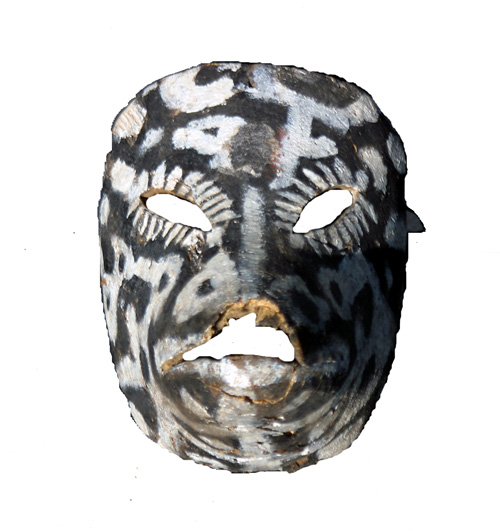
to my computer desk I have a coyote death mask nailed to a bookshelf. It’s the top half of the head skinned down to the slashed off nose. The ears are curled knobs, the eyes are nothing more than furry slits of black air. And, I love this flattened wreck of fur more than I should and I love touching this thing for luck either before I start a poem or sometimes right after I finish one because I know I’m touching what is left of a real outlaw. The face of an outlaw. The eyes of an outlaw. What’s left of its outlaw breath caught in all that fur.

If you

asked me to absolutely define Outlaw Poetry I’m not sure that I could even though I have been writing this way for nearly forty years. I can tell you what I know. I know that we have been living through the biggest poetry drought that I’ve ever seen. And, how can I say that since thousands of poems are published in this country every year? It’s easy to say because it’s true. All you have to do is look around and ask yourself, where are the levys now? Where are the Whitmans now? Where are the Ginsbergs now? Where are the Bukowskis now? Where are those poets who can easily equal what these giants have accomplished, now?

The problem

is they are gone and we are swimming in hordes of writing school educated idiot poets who couldn’t write a decent line of poetry if their lives depended on it. Who survive as half assed teachers and so so translators but will never make that breakthrough into authentic poetic genius. And, I mean never. Here are two questions. When was the last time you read a Pulitzer prize winning book of poetry that did not eventually put you to sleep? Right out cold. And, when was the last time you heard of an excellent small press poet who won the Pulitzer prize? My answer to the first question is that I find it difficult if not impossible to read any mainstream poet, prize winner or not, without either nodding off or becoming just plain bored. And, as far as the second question is concerned, I have never heard of a small press poet winning the Pulitzer prize.

We are

currently living in a cultural trash heap, a literal as well as metaphoric poetry shithouse. The great poets we have are the ones we import from Ireland or England or the Antilles or Latin America or Europe or China or Africa to teach at Harvard and Yale and Princeton. The greatest american poets in academia are all citizens of some other country. The american poetry coming out of the mainstream including commercial publishers and academic publishers might be okay for starting your fireplace wood with but it’s really no good for wiping your ass. There are no great poets in the mainstream press now. Nada, zero, kaput. The only time I will read the American Poetry Review is if an issue is featuring a good translation of Cavafy, Lorca, Hernandez, Celan, Neruda, Rimbaud. Otherwise, why read any poets published in APR writing in English? They are simply not worth the trouble.

And because

we have reached almost total bankruptcy in american poetry, we have come to the place where the authentic american voice needs to come out from under the floorboards, where the next first poets need to drag the shit and the night and the angst and the primal violence out of the guts of an america we have almost forgotten and certainly neglected. This primal american voice needs to be heard or maybe reheard in all of its national death wish frenzy. And, this is what Outlaw Poetry is really all about. Outlaw Poetry is not another phase of Beat Poetry. Outlaw Poets for the most part aren’t interested in sitting crosslegged on the floor chanting Om. Outlaw Poets are not trying to out Burroughs Burroughs, out Ginsberg Ginsberg, out Kerouac Kerouac. We’ve been there, we’ve done that. In a very real sense most of the arts and especially poetry has hit the cultural wall. We are at a veritable dead end in the arts. We have been trading on Whitman and Eliot and Stevens and Williams for far too long. They’re all dead and they’ve been dead for years and we can’t use them to prop up a nothing poetry world that monster monied foundations and hustler poetry mavens have had supervision over for what seems like an eternity. We’ve seen this dead end coming for a very long time and we’re ready for something new.

And new

is Outlaw. Outlaw poetry is as nightmare visceral as a Basquiat painting. I love the tremendous energy he crams into a something like Riding With Death where a dark red figure is crudely mounted on four white bones and a fucked up skull. I want to put that kind of energy into a poem because this is the frenzy that jumpstarts a sensibility and I want that in poetry the way that I want speed and velocity and violence raw violence in poetry where it belongs, where it sleeps in the belly of the wolf. Haven’t we had enough bullshit garden party politeness and poems about our awwwwwwnnnnnts in poetry? Outlaw Poetry works against this kind of tricked out craft and careens down the raw. The meat on a stick, the turd pour glistening from the asshole. Outlaw Poetry, or at least Outlaw Poetry as I know it and see it and hear it wants to dream itself back into the unholy spurt of blood. Dream itself back into the death in the life of the fire of the blood. I love Basquiat’s painting Anybody Speaking Words where the entire body is intense black and the mouth has been disjointed and hovers just inside the ghost outline of a face with all the teeth showing. Where are those poems with all the teeth showing? Where are those poems with all the bones showing? Where is Paul Klee’s Angel of Death? That’s what I dream a poem looks like when someone is grinding it out of a mouth like night sausage. I say grinding it out because performance is too nice a word. Too professional. Too artificially correct. Which means controlled. I want it to be uncontrolled, slipped raw and bleeding into the black onyx darkness of evening. That’s Outlaw. The ferocity of a painting like Baquiat’s or Klee’s or like anything that is taboo is pure pure Outlaw and I love it. I want to be knocked sideways by a poem that somehow traps Death’s high voltage inside its whip thin lines.

Pure Outlaw

rips out the jugular. Pure Outlaw slams through the crotch. Pure Outlaw steps on the gas and heads straight to the edge of things. Pure Outlaw tells Robert Pinsky to kiss its unwiped ass. Pure Outlaw is a kick in the ass of good taste because the best poetry comes directly out of bad taste. Oedipus in bed with his mother is definitely Outlaw. Baudelaire cruising the Paris streets for hookers is definitely Outlaw. Raskolnikov butchering an old woman with a belt axe is definitely Outlaw. Is CRIME AND PUNISHMENT a poem? It is in the murder and the frenzy of the way it was written. Chigurh killing people with a slaughterhouse gun in NO COUNTRY FOR OLD MEN is Outlaw. And, is this a poem? Forget the prose look, it’s an american death song cranked to the max. Dillinger fucking his girlfriend Billie Frechette with the barrel of a thompson sub machine gun is a love letter death song fuck you poem to the american collective unconscious. To the american outlaw dark so long denied. And, I can see it all happen and I can hear the way the black steel slides into her. I want an american death song only an Outlaw Poet knows how to sing. And, if no one steps up to do it I will sing it myself.

This essay will be published in print form by Dancing Carrot in 2009.

1 Comment

Filed under essays by todd moore

the fever of writing

The fever

of writing gathers in the air all around me and brings with it a peculiar kind of darkness, a cloud of black stars that sets in and thickens even when it’s noon. Even when I am drowning in sunlight. And, if the fever of writing finds me in a crowd, it has the overwhelming power of suddenly making me feel all alone. People might be shouting while I’m getting the lines to a poem and all I’ll really hear are the lines just the sound the lines make in the electric blue and little else. The fever of writing begins with an energy that won’t let me sit down if I am standing up and won’t let me stand up if I am sitting down. I’m almost flying, but flying in place. The fever of writing defies explanation and yet longs to be explained. The fever of writing is the blood in its dreaming and the lightning that throws quick flashes across the page I am working to fill up with the speed of my scattergun words. The fever of writing always becomes part of the way that I slash the lines down on paper. I want to T bone the american sentence. The fever of writing is the total lunge of the words flying out of me. They darken certain corners of the room where I work and wait until I can catch up to them. The fever of writing is my skin dreaming near the raw speed of light, the poems soar off me toward an electrical, a dark matter darkness.

The fever

of writing is a bet with the void. You know the game is rigged but you make the bet anyway. What else can you do? The fever of writing is a shout down the canyon. The fever of writing is the risk of meeting Death in the alley. My poem is a switchblade, I’m going to cut him, cut him to pieces. The fever of writing is an all or nothing race to the edge of my lengthening shadow. The fever of writing is the way that I scoop patches of darkness right out of Dillinger’s face and suture them into the skin of the poem.

Every poem

I’ve ever written has bushwhacked me into fits and trances and quick brawls of words. Every poem I’ve ever written lays claim to the way my blood pounds through my veins. Every poem I’ve ever written knows the secret name of my sabotaged talking. Every poem I’ve ever written gives me a pour of red lava before it gives me the words. Every poem I’ve ever written wants to write me with all of its wounds and all of its frenzy. Every poem I’ve ever written sends me torn ransom notes from the unbearable void. Every poem I’ve ever written is a crime scene report on the american lingo. How it was murdered and kicked back into breath. Every poem I’ve ever written is a hard slap in the tricked out face of scabbed over Death.

Sometimes

I like to have a 22 caliber six shot revolver on the desk when the poem is coming. It’s a little game I play, five in the cylinder, the sixth chamber empty. I love to keep that sixgun there, murderously close, within quick Grand Inquisitor Mayakovsky reach so that I can grab it, cock it and hear the way that the cylinder indexes with all that precise midnight rotating inside. I always wanted to ask William S. Burroughs if he kept a cocked pistol at hand while he was writing NAKED LUNCH, maybe the one he used to kill his wife with. I’m betting he did. He had to, he was in love with the writerly night of all his firearms. And, every once in awhile he’d reach over and touch it, cop a feel cheap feel of Death, especially when he was improvising with Doctor Benway. Because when you are writing, you aren’t writing from the outside in, you are writing from the inside out. You go to the cave and you should have weapons with you. You journey to the blood painted walls of the cave, in the shadows of all the wild animals, the monsters submerged in all the shadows there. And, if he was writing that way, then he’d have to keep a pistol close so that he could always get out, even if he had to shoot his way out. In my imagination I can see Burroughs grabbing that piece and walking from room to room between cutup paragraphs, pretending to shoot through the windows, touching Death where he sleeps and rolls and knocks in the walls.

The other

reason to keep a revolver on the desk is that writing poetry is a sophisticated form of Russian roulette. It requires a little something with a lot of Death in it. You don’t stick the barrel in your mouth and pull the trigger if you fuck a poem up, but you need to have it there as a reminder of what the odds are. The tremendous, the staggering, the bone shattering odds. Death knows what the odds are but you never ask him. That’s the rule. That’s his game and he plays it for keeps. He runs all the numbers and he loves to see you lose. He loves to see you fuck it all up. The odds for writing a good poem are beyond enormous. The odds for writing a great poem are almost beyond dreaming. And, there are times when the revolver knows this better than you do. The revolver is a free pass to all of your most intimate nightmares. And, if you write poetry you watch them the way you watch movies. Your nightmares are the best horror movies you will ever watch and you watch them with fear and you watch them with love.

The fever

of writing is the way I get lines. When a poem is coming, it comes very quickly. It has no time for workshop rules. It has no time for long meditation. It has no time for polite aesthetics so I let the lines ricochet inside me, fuck the line breaks, fuck the way it should look as it pours down the page. The poem is ravenous, it needs to kick its way out of the skin of my dreaming.

The fever

of writing is the equivalent of the duende, but is writing performance? If I read a line back to myself is that a real reading or just something I give back to Death, a scrap of my breathing. What does it matter? Death eats poetry the way I eat meat. He chews it up and swallows the garbage. And, black is the color a line brings to the page. Black is the color that the page is dreaming. Black is the color that the poet is tasting. And, the raw fever’s darkness doesn’t appear whenever you want it. It doesn’t even come when you are desperate for something, require it into the nightmare, sleeptalking, and roaring part of your cankered existence. It teases you with little flashes of something that turn out to be nothing, fake words that fuck up your rhythms, fleeting ghosts of sounds you swear might have been words. Or, large flashes and mountains of nothing that threaten to set you on catastrophic fire. And, when you do catch fire with the fever of writing, there is nothing that can slow the dance of its burning, the avalanche of its sweet toxic explosions. Besides, you really don’t want the fire to go out no matter what, you need to have it fly behind the deathrow corridors of your eyes. You have to burn yourself up and into the ache of the poem. It’s like that line from Geeshie Wiley’s song Last Kind Words Blues. “Just leave me out and let the buzzards eat me whole.” That’s the way I feel when I have gone so far into a poem I can’t get out. I am open to whatever the poem is going to become, the anarchy of it, the wreckage of it, and I am also open to where this oblivion will take me. I want to be devoured by the buzzard of words. I want to be eaten alive and transformed into the blood of the poem.

I often

wonder just what Hart Crane felt when he wrote Proem, the introductory section of THE BRIDGE. Could he feel himself ignite into it? Were his clothes just beginning to catch fire? Was his face being scorched? And, did he really care? I imagine him sitting in a sparsely decorated room, the burnt boards of the air floating up into his vision like kindling, just begging him to set them on fire with his words. And, I can see him almost levitated while he is writing. He is beginning to lift up off his chair but he doesn’t feel it yet because the words have fallen in love with his hands and just as soon as he gets them down on paper they fly up like the black ghosts of cinders.

I felt

that way while writing THE CORPSE IS DREAMING. But, instead of the fire burning out of my body and into the air, the fire went inside. The flames shot into the core of my being, searing everything along its circuitous path. I could feel it go through me like the hottest of winds, like some fire engorged santa ana in a Raymond Chandler story. I could feel it travel up my arms and down my legs, I could feel its sparks swimming hard behind my eyes. And, I had the strangest sensation of watching Dillinger burn all the way into his spectacular dying. My fire was going into him and his fire was going into me. And, even though he had been shot and was already half eaten by a canyon of darkness, I could see all the damaged words that were still inside him lunging against his black skeleton frame, trying to escape and I had to write that poem to make them stop howling.

The fever

of writing is the french kiss of language. The way that all the words roll around in your mouth and you never want them to stop ever, even when you are dead. The fever of writing is the shotgun barrel jammed into Hemingway’s mouth. He’s trying to cram it in and in and in and maybe he doesn’t want any of his beard hair in there, just the words and the juice in there the spit and the phlegm that shit taste of longing to taste Death some of his ashes he wants to blast all of the words out of his mouth because they are no good for writing anymore and he has condemned them to gunfire.

Writing

RELENTLESS had the skin on my arms crawling. I was stuck inside Baby Face Nelson and I couldn’t get out no matter what and the only escape left was to write myself free and the space inside him was so dark and cramped I could barely move and I think I was in there with Death though I couldn’t see anything but I could hear something like black negative breathing. Which is the breath going in, in, in and not ever coming out. And, something was talking to me in there. The words were all cracked open infected and damaged when they came to me and I had to do what I could in that wounded velocity to reshape them, make them less damaged, and help them come out. And, the flies that Baby Face was slapping away from his eyes were real. I could hear their demon trajectories slit the wind across and across and across.

Now I

am watching the police car chase in THE BOURNE IDENTITY. Matt Damon is Jason Bourne and Franka Potente is Marie. They sit tensed behind the wheel of a car careening down a European city street, ramming and sideswiping other cars, constantly skidding, swerving, spinning, colliding and while I am watching I am thinking goddam this is the way that I write. All out, high speed, everything wagered, nothing held back. This is the fever of the words when they come. The eye is a handheld camera but it can’t get it all so it sees images the mind invents. This is the fever of writing as it explodes from oblivion then returns to oblivion. It slams me up against a wall and I love it. It almost seems as though I am broken, all splinters, blown down to smithereens and those pieces of me are daring everything to go even faster. Almost out of control, but there is a kind of sideways, out of control control that I love in writing that brings out all of the fevers and all of the heat. Without fevers and heat there is no good poetry, there is no great poetry whatsoever.

And

DILLINGER is THE BOURNE IDENTITY of poetry. DILLINGER is THE FRENCH CONNECTION of poetry. DILLINGER is the BULLITT of poetry. DILLINGER is the HEAT of poetry. DILLINGER is the chicken run in REBEL WITHOUT A CAUSE. Vroom, vroom, vroom, floor it, baby, drive he sd. DILLINGER is the fever and the velocity and the electricity of the american poem because it is the ultimate throwdown, the first and last challenge of what a long poem has to be, now, right here, Muther, in action central, the real the authentic the blow you away america. DILLINGER is the biggest and best risk of them all. DILLINGER is the fuck you, the machine gun fever slammed into the dare. And while this poem is long beyond long, it travels at tremendous speeds. Nothing about it is slow, even those sections where the fire is the talk and the talk burns the walls down all the way down. DILLINGER is maybe the first moviemovie poem to appear anywhere the world. DILLINGER is my fever of writing. And, after working on a section of D

I have to stand still and shake so I can slow myself down.


1 Comment

Filed under essays by todd moore

the nightmare of reading

When I’m not writing poetry

I’m reading poetry, warp speed. Or, simply put I’m looking for something to read. Some sign some monstrous absolution for swimming through millions of words. I’m prowling bookstore shelves, I’m rummaging through a thousand books in my closet. I’m eyeballing another thousand books on the shelves next to my desk. I’m kicking through a trash of books scattered all around my computer, the books stacked on chairs, the books in boxes, the books emptied out on the worn carpet, the books under my desk. The books at church rummage sales, the books at estate sales, the books in the black cellars of america, the lost books of the world. The incessant books piled and teetering in the universal darkness. I want to taste them and taste them. I’m always looking for something. It’s hard to describe a feeling like this because it feels sort of like a wolf prowling for meat.

Sometimes I’m looking for a novel that reads like a poem but not any old novel will do. It has to have the intensity of DOUBLE INDEMNITY. It has to have the savagery of THE KILLER INSIDE ME. It has to have the coming in and going out of thinking that goes on in AS I LAY DYING. It has to grab me by the front of my shirt and yank me up against the wall. It has to give me no choice but to read it. Sometimes parts of NO COUNTRY FOR OLD MEN will do that. The novel and the movie trading scenes back and forth so that sometimes they both get mixed together. But I have to hear Chigurh talking. Or, I have to imagine Chigurh talking. I have to hear the sound of pure pure murder in someone’s gone voice or it’s no good, it doesn’t work, it’s just the same old boring blah blah blah of reading across and down the page with nothing really jumping out. No angst, no passion, no fury. The description of the description of the description of the description going on forever. No wonder Weldon Kees jumped off the Golden Gate Bridge. He wanted to read every inch of his fall all the way down.

And, it is that jumping out that I need more than anything. It is the fact and the feel of that jumping out, that total verbal assault, that all or nothing surprise that I long for and need, call it addictive, call it fucked up, call it the homicidal serene, call it crazy. Sometimes I’ll drift back to Joan Didion’s PLAY IT AS IT LAYS because there is a kind of savvy crazy floating around in that book, a hovering cruising ennui that plays out in impulsive drives across the desert, some I’ve dreamt of, some I’ve read of, some I’ve done. Driving in the desert late at night is like reading a thriller where the desert darkness, the razor blade moon, the glam automatic in the glove box, and the pulsing promise of skinwalkers somehow keep everything stoked.

When I’m in moods like this, I pretend I’m talking to Roberto Bolano about how he wrote parts of THE SAVAGE DETECTIVES while out on the Sonoran Desert, I pretend I’m listening to John Macker tell how he got the idea for writing ADVENTURES IN THE GUNTRADE, I’m interviewing B. Traven about where the origins for THE TREASURE OF THE SIERRA MADRE came from, I’m asking Tony Moffeit if channeling was part of writing BLUES FOR BILLY THE KID, I’m pointing a 45 auto at William S. Burroughs’ head while I’m telling him to give me the coordinates for NAKED LUNCH. Wouldn’t you?

Some things I have to know in a hurry and a frenzy and the facts won’t do. I read like I write, I plunge through the words searching for something, anything, the scorched debris of the dream and the mind. Even when I know nothing is there, I’ll look anyway because looking is part of both reading and writing. But this is reading and writing revved to the max. This is reading and writing done at high speed, punch it, baby, I have to be gone. This is reading and writing where the sound byte explodes into the metaphor. If I’m reading THE STRANGER I’ll race down the page looking for all the best places, the place where Meursault is shooting the Arab. I need the action, I need to be the action. I need to see M inside the action. Only this time gimme more of it, Camus. And, don’t be stingy. Gimme the blood, I need to see the trajectory of the bullet and if Camus doesn’t give it to me, then I invent it, I give it to myself. What I want in a novel or a poem, it doesn’t make any difference, it can be either one as long as the fireball of the moment morphs toward the agony of seeing that comes out as a scream.

Have you ever read something and at the very same moment you are reading you also want to be writing because what you are reading is so unbelievably good? I’m reading Bukowski’s “something for the touts, the nuns, the grocery clerks, and you” for maybe the ten thousandth time and I want to write a poem. No, not want, have to write a poem. But, not like Charles Bukowski, not like Gerald Locklin, not like Ron Androla, not like Kell Robertson, not like John Yamrus, not like Tony Moffeit, not like S.A. Griffin, not like Raindog Armstrong, not like Mark Weber. They’re all good, they’re all way beyond good, they’re the best. I have to do something. I am getting up out of my chair and then I am sitting down. You can’t write poetry this way, you have to write poetry this way. I am looking for a white bone compass and the dream of all possible dreams. I just want to bleed a poem all over the floor because something about Bukowski’s poem digs into me like a knife point into skin an ice pick through the eye and the intensity of the way that that poem hits me makes me roam the house scrounging for a ball point pen and a torn sheet of scratch paper and by the time I get the paper I know I can never write a tout nun grocery clerk poem like Bukowski though I know I can do something as good and I will burn it all up inside me to find the place where my poem is and the whole time that I am fucking with the pen and the paper I am still reading Bukowski’s poem even though I don’t have the book in front of me now, all I have is a big switchblade knife, a forty five slug, and my unforgiveable emptiness that sinks me toward the abyss and I am reading that poem while I begin a poem of my own and I know it will be a good poem because I have the first line but I also know that I am beaten down and through the corridors of language no matter what I write and it is this sense of still being able to write and knowing that I am beaten that gives me the energy the frenzy the rage to keep kicking through all the desperado lines collapsing in my head to find just the right ones. Not Flaubert’s le mot juste but the absolute raging frenzy of the thing. The way the electricity of it goes so deep into the writing that it burns a sign into space itself.

And, I want to write The Legend of the Grand Inquisitor except that I want to edit it down, make it travel, give it some killer velocity. And I want to write The Last Wrecked Night of Ernest Hemingway where Hemingway actually conjures the shotgun he will use to kill himself with. And, I want to be Old Ben in THE BEAR and I want to feel all those long white scars in the fur. I want to read with all of my skin coming through my clothes, just lunging toward the void.

I am reading the first paragraph of Raymond Chandler’s RED WIND because it is just maybe the best first paragraph of anything I know of. And, I’m always sorry when it comes to an end because it seems as though Chandler had hooked into something a secret energy here and that maybe somewhere Chandler had written more and then dumped it because he wanted to get on with the story and it is that next paragraph which is the continuation of Chandler’s secret poem that I long for.

I am reading Orhan Pamuk’s SNOW but I want it to go faster, I want Ka’s anxiety to be revved to the next level, I want his longing his paranoia his fear to be amped way up I want it to be snowing in his room as well as out on the street I want the snow to be following him everywhere even in his dreams. I’m looking for a poem that reads like a novel. I am looking for a poem that reads like THE GREAT GATSBY. I am looking for a poem that reads like THE VIOLENT BEAR IT AWAY. I looking for a poem that reads like THE RED BADGE OF COURAGE. I am looking for a poem that reads like DILLINGER. I am searching for my other who is writing that version of DILLINGER in an alternate universe.

I am rereading Michael Ondaatje’s THE COLLECTED WORKS OF BILLY THE KID because I want to psychically rewrite his poem/novel as I read it. Now, I want it to hear the narrations going so fast I can just about hear the Kid skip talking while the lines pour ahead of me. It almost sounds like I’m on a cell phone where the voice is breaking up and I can only catch every third or fourth word. Skip talking is where the poem is going all by itself. Skip talking is where the novel is dreaming and I know for certain that all the best novels dream.

I am reading Borges’ Library of Babel because I want to get lost there, because every book I ever looked for, even the ones that haven’t been published yet, even the ones in my sweatiest greasiest darkest of nightmares are waiting in there for me. I want to find the ultimate Hemingway war novel in there, the one he was meant to write but never did. I want to find the novel that Tolstoy dreamt while dying at Astapovo Junction in there. This is the novel that he writes about dying while dying and he wrote it quickly, all three thousand pages of it while rolling through a series of comas and visions. I want to feel the texture and the essence of the poem the novel and the dream. I want to find Bruno Schulz’s novel Messiah in there. I imagine that the footnote in Borges’ dream catalog states that it is both finished and unfinished, depending on the day of the week, the time of the day, and where the pole star is in the night sky. I’m playing russian roulette with a KGB agent for the handwritten manuscript of Isaac Babel’s novel BLOOD which is about Benya Krik tracking down an Odessa murderer who just happens to be Death. In the novel Krik knows he is on Death’s trail because the stink is unbearable. And, Krik who is now a grittier version of Philip Marlowe walks around without a gun because he knows that guns can’t save him. Guns could never save him. This book is a must find or all searches are for nothing.

And, if I can’t read at white heat, then I won’t read at all. If I can’t read a poem as though it is a pistol pointed at my head, then I won’t even read the first line. If a poem doesn’t feel like a grenade with the pin pulled, I’ll stop and go no further. I need poems that read like ransom notes, like suicidal words scrawled on soiled paper, like the last words of a homicide victim finger painted in blood along a dark wall.

I look for poems that are like lit fuses waiting to go off way back in the head. I look for those time bomb poems that go tick tick tick with the very first word and rarely ever stop even at the end. They go on exploding and exploding inside the unconscious for days and no matter how hard I try I can’t shake them out of me, they still have thousands of little explosions left to go off. Like William Carlos Williams’ “To Elsie.” I knew this woman before I read the poem. She washed floors in a loan shark office, she hooked at the hotel, she was maybe the best shoplifter around. And, even now there is still no one to drive the car because driving the car is also like the act of reading and sometimes when my eyes are jumping all over the page it feels so much like driving out of control not driving at all being behind the wheel not being behind the wheel I am reading the poem I am also somewhere else I am writing a poem and reading both at once and that last line is what makes me love this poem so much. I read Hemingway’s stories looking for guns. I read Raymond Carver’s stories looking for the scum of despair, despair so thick I could cut pieces of it out of the raw air and wear them like third eyes all over my body.

I can’t read Kafka’s THE TRIAL without trying to slip Joseph K. a 38 special. He won’t use it but I want him to have it anyway. I can’t read Kell Robertson’s “The Gunfighter” without trying to provoke the poem’s killer into a shooting because I want to see how fast he really is. I can’t read Lorca’s essay on the Duende without trying to discover a black hole in some shaman’s forehead. I am careening through HOWL, I want the words to go fast. Reading is the nightmare of all possible thinking.

The thing is, even when you’re reading, if you slow down, you die.

1 Comment

Filed under essays by todd moore